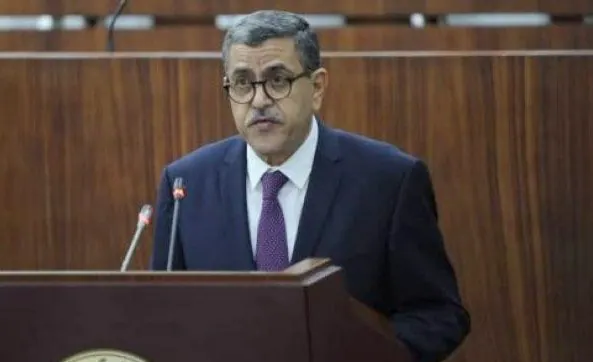
Algerian Prime Minister Abdelaziz Djerad presented his government's plan to parliament, outlining key actions to address economic and social challenges. In his first speech before parliament, Djerad emphasized the government's commitment to building a new Algeria through a new pact. The pact encompasses political, economic, and social governance, with a focus on human development, energy transition, and a knowledge-based economy. Djerad's speech was more political than numerical, with few specific figures mentioned.
The new pact aims to promote economic and social development, with measures such as increasing the national minimum wage and reducing unemployment to below 10%. Djerad announced that the government will prepare a complementary finance law to review certain tax provisions. The government also plans to encourage hiring through fiscal incentives for businesses. According to Djerad, the president has committed to increasing the national minimum wage after consultation with social partners.
However, Djerad acknowledged the fragile state of the national economy, citing a significant decline in oil prices, which has resulted in a trade deficit of $10 billion and a decline in foreign exchange reserves of over $17 billion. He emphasized the need for a new approach to economic governance, highlighting the importance of democracy, individual and collective freedoms, and social justice.
On the political front, Djerad stressed that restoring trust between the people and their leaders requires a democratic system based on alternation of power, respect for individual and collective freedoms, and social justice. He aspires to a society where there is no room for differences between Algerians, regardless of their social status, and where everyone has equal opportunities.
Djerad was critical of the previous government and those under former President Abdelaziz Bouteflika, vowing to work towards cleaning up the legacy of previous governance. He accused previous administrations of catastrophic management of the state, authoritarian practices, and pillage and dilapidation of the country's wealth.
The Prime Minister highlighted the consequences of these practices, including the marginalization of national competencies, destabilization of the state's foundations, and threats to national unity. He recalled that the Algerian people took to the streets on February 22, 2019, to condemn and reject attempts to weaken the country.
Djerad concluded that the Algerian people demand a global change in the system, which is outdated, and aspire to healthy political practices, genuine democracy, and modern and transparent economic governance. The government aims to prevent corruption, nepotism, and disinformation, and to promote a new Algeria built on the principles of democracy and social justice.
Key points
- The Algerian government aims to reduce unemployment to below 10% and increase the national minimum wage.
- The government plans to prepare a complementary finance law to review certain tax provisions.
- The Prime Minister emphasized the need for a new approach to economic governance, highlighting the importance of democracy and social justice.