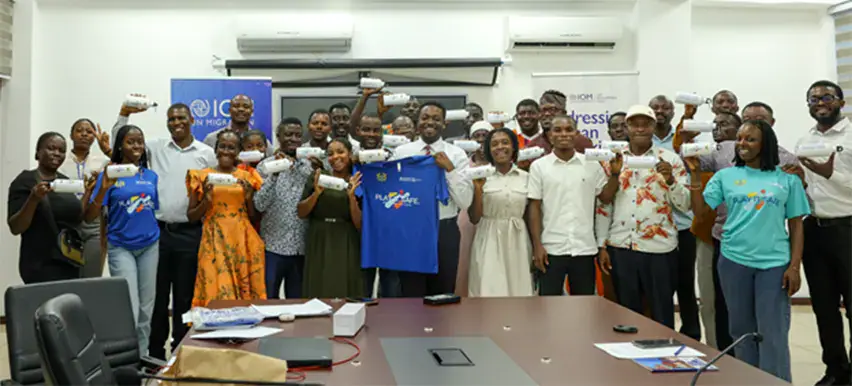
The International Organization for Migration (IOM) has issued a warning to young Ghanaian athletes about the growing trend of human traffickers exploiting their aspirations for overseas sports opportunities. IOM's communication consultant, Maaweh Tanga, spoke at a media training event on communication strategies to combat human trafficking in sports. He highlighted that traffickers often prey on the dreams of young athletes by promising them opportunities to play for international clubs and secure better futures abroad.
According to Mr. Tanga, the desire among young people to become professional athletes, combined with limited awareness of the risks involved in overseas recruitment, creates an opportunity for traffickers to exploit unsuspecting victims. Many victims are introduced to fraudulent opportunities through people they know and trust, including coaches, scouts, and other influential individuals in the sporting community. This makes it difficult for young athletes to distinguish between legitimate and fake opportunities.
Traffickers often display an attractive lifestyle, promising young athletes opportunities to play for international clubs, while the victims are subsequently asked to pay fees for documentation, flight arrangements, and registration, usually in secrecy. Mr. Tanga cautioned athletes against relying on photographs and videos as proof of legitimate sporting connections, particularly with the increasing use of artificial intelligence to generate convincing images of individuals posing with famous footballers and other sports personalities.
Mr. Tanga also urged media practitioners to exercise due diligence before promoting overseas sporting opportunities, warning that their credibility and influence could unknowingly help traffickers attract victims. He encouraged journalists to investigate recruitment advertisements, verify the legitimacy of sports academies and agents, and ask critical questions before publishing information about opportunities for young athletes. This can help prevent the spread of misleading information that traffickers can use to lure victims.
The IOM consultant emphasized the importance of promoting awareness and challenging misleading narratives about overseas sporting careers. He called on media practitioners and other stakeholders to use their platforms to ensure that young athletes can pursue their dreams without falling victim to human trafficking. By working together, they can help prevent the exploitation of young athletes and promote safe and legitimate opportunities for those who aspire to play sports abroad.
The training event was organized to equip media practitioners with the skills and knowledge needed to combat human trafficking in sports. By educating journalists and other stakeholders, the IOM aims to reduce the vulnerability of young athletes to exploitation. The organization recognizes that the media plays a critical role in shaping public perceptions and can influence the decisions of young athletes and their families.
The IOM's warning to Ghanaian athletes highlights the need for vigilance and awareness in the sports sector. Key points to note include:
Key points
- Traffickers often use social media and fake sports academies to lure victims.
- Athletes should be cautious of opportunities that require payment for documentation or registration.
- Media practitioners have a critical role to play in promoting awareness and preventing human trafficking in sports.