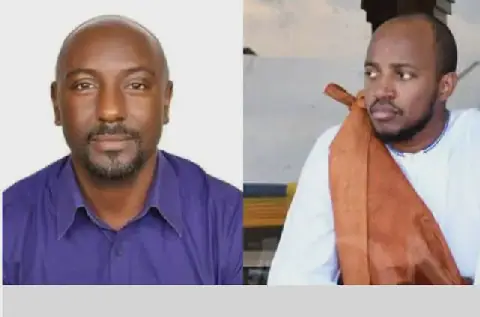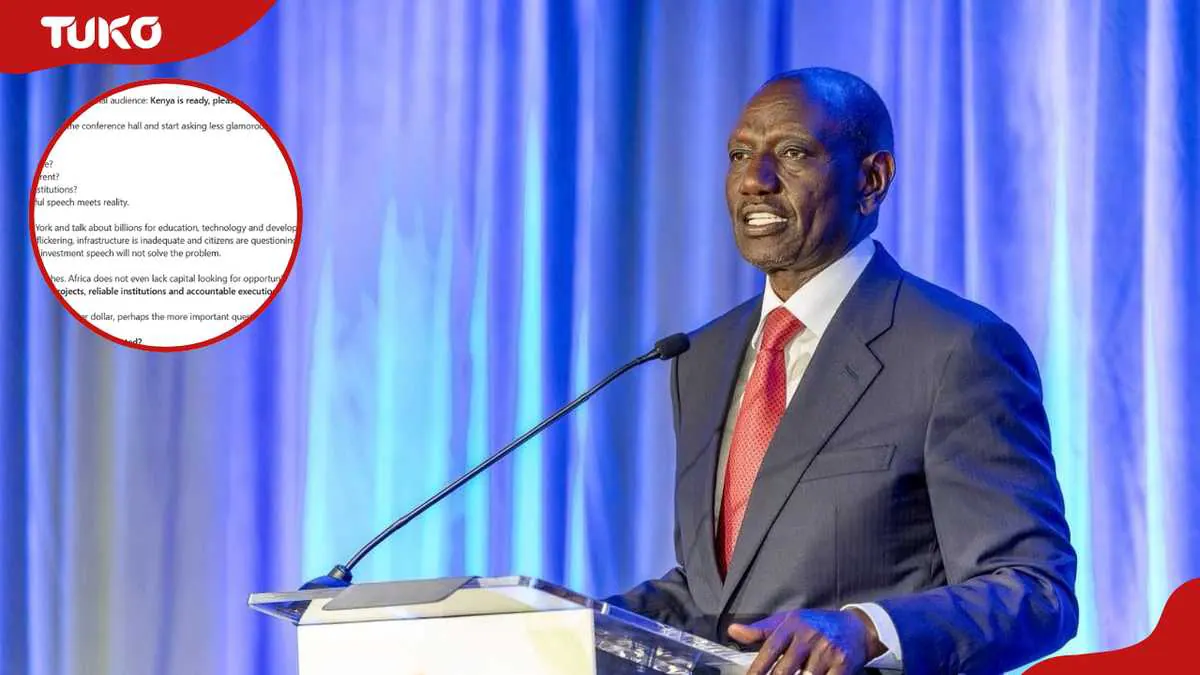
Vietnamese business executive Doanh Chau has publicly challenged the value of President William Ruto's high-profile international pitches, arguing that compelling speeches at forums such as the United Nations General Assembly do not automatically draw real investment into Kenya or the wider continent. Chau, president of Vietnam Gas/Energy Science Group and founder of Silicon Valley-based healthcare startup MED21, acknowledged that Ruto's messaging to a global audience carries weight. He noted that the message is powerful enough to tell the international audience that Kenya is ready for investment.
However, Chau warned that the rhetoric is quickly tested once investors begin asking practical questions about conditions on the ground. He laid out the specific concerns that drive investment decisions, including the reliability of electricity supply, road infrastructure, contract enforcement, procurement transparency, and trust in public institutions. According to Chau, none of these concerns is resolved by a speech delivered in New York. He emphasized that investors look for more than just a compelling speech.
Chau identified execution capacity, rather than the availability of ideas or funding, as the continent's central obstacle. He argued that Africa does not lack speeches or capital looking for opportunities, but rather bankable projects, reliable institutions, and accountable execution to turn that capital into development. Chau posed a direct challenge to leaders seeking fresh external financing, asking what happened to the dollars already invested.
Chau also addressed Kenya's involvement in the push to reform the UN Security Council, contextualizing it within a broader continental position. He noted that the proposal for African permanent seats is not uniquely Ruto's but reflects the African Union's long-standing stance rooted in the 2005 Ezulwini Consensus and Sirte Declaration. The declaration calls for at least two permanent African seats and stronger non-permanent representation.
While Chau acknowledged the historical case for correcting the current imbalance, he cautioned against treating representation as an end in itself. He observed that giving Africa permanent seats may correct a historical imbalance, but it does not automatically make the Security Council more effective. Chau emphasized that the deeper question is not about who occupies a seat but about whether those at the table can make the institution function.
Chau concluded that the real challenge is not simply who gets a seat at the table, but whether those sitting at the table can actually make the institution work. He stressed that the focus should be on making the institution functional rather than just seeking representation. This, according to Chau, is the key to effective reform of the UN Security Council.
Doanh Chau's comments were reported on September 25, 2026, at 7:46 PM by Asher Omondi, the Head of Business Desk at TUKO.co.ke. Asher has over seven years of experience in digital media and previously worked in various organizations as a social media manager and monitor. He was a Broadcast Journalism student at the Kenya Institute of Mass Communication class of 2013.
Key points
- Vietnamese investor Doanh Chau questions the impact of President Ruto's UNGA speeches on Kenya's investment.
- Chau argues that Africa's core problem is not a shortage of ideas or capital but the ability to deliver bankable projects and accountable institutions.
- Chau cautions that representation alone will not make the UN Security Council more effective.