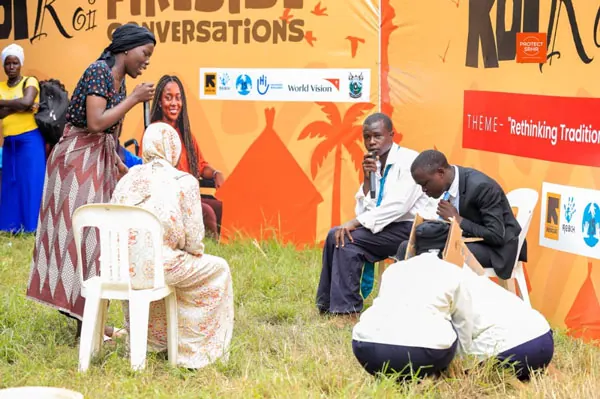
In a recent Koi Koi Fireside Conversation in Yumbe, Uganda, elders and cultural leaders discussed traditional Aringa practices that guided young people to prevent teenage pregnancies and child marriages. The conversation was organized by the Protect SRHR consortium. Yumbe has high rates of teenage pregnancies, with over 7,000 cases recorded during the COVID-19 pandemic and 5,740 cases in the 2023/2024 financial year. Elders believe that some cultural practices that once helped prepare children for adulthood have weakened over time.
Historically, Aringa traditional culture did not approve of early pregnancy. An Aringa girl was expected to marry at around 25, after going through a process of preparation for adulthood. The Deputy Prime Minister of the Aringa Kingdom, Ali Abdli Adaku, says that the cultural institution is sometimes blamed for marrying girls off at a young age, but this does not reflect traditional Aringa teachings. He emphasizes that both girls and boys must undergo a process from childhood to prepare them for adulthood.
In traditional Aringa culture, older family members would sit with young people in the evenings to teach them about discipline, respect, love, identity, and responsibility. Uncles and grandfathers would talk to boys, while mothers and aunties would talk to girls. The whole family would sometimes come together to discuss these important issues. This helped young people understand the boundaries within which they were expected to live and prepared them for adult responsibilities.
According to Nuru Ajaga Kambason, the Minister for Culture, Wildlife, and Community Development in the Aringa Kingdom, marriage was traditionally a family affair. The boy's father would approach the girl's father, and the families would discuss the matter. The boy was also expected to understand that the girl was mature enough for marriage. Young people were taught about relationships and the consequences of their actions, and were discouraged from engaging in sexual activity outside of marriage.
The traditional Aringa approach to preparing young people for adulthood emphasized maturity over age. Engule Juma Allahai, the Minister for Constitutional Affairs, says that young people were expected to marry at around 25, but this was not solely based on age. Instead, parents watched their children's behavior and assessed their ability to take on adult responsibilities. For a young man, this could mean having a garden, growing crops, and having his own house.
In traditional Aringa culture, the community played a significant role in preparing young people for adulthood. Parents, relatives, and elders all contributed to guiding young people towards responsible adulthood. This included teaching girls about arts and crafts and assessing their behavior as they grew. The community's involvement helped ensure that young people were mature enough to handle the responsibilities of adulthood.
The cultural leaders and elders who shared their insights during the Koi Koi Fireside Conversation hope to revive these traditional practices to help prevent teenage pregnancies and child marriages in Yumbe and beyond. They believe that by revisiting and learning from their cultural heritage, they can provide young people with the guidance and support they need to make informed decisions about their lives.
Key points
- The Aringa culture traditionally expected girls to marry at around 25, after going through a process of preparation for adulthood.
- The community played a significant role in preparing young people for adulthood in traditional Aringa culture.
- The traditional Aringa approach emphasized maturity over age in preparing young people for adulthood.