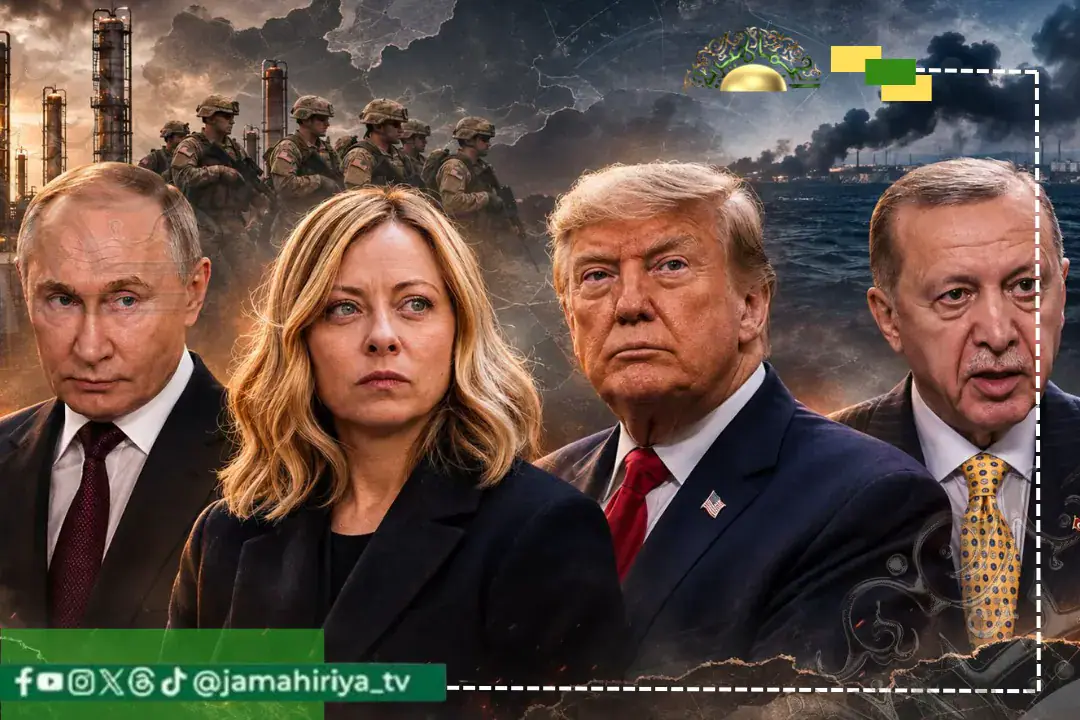
A recent report by Euronews has highlighted the complex map of international influence in Libya, where global powers are competing for military, political and economic footholds. The report comes as Ukraine's recent attack on Russian ships in the port city of Benghazi has added a new layer of complexity to the country's already fraught situation. Libya has been embroiled in divisions and violence since the 2011 ousting of Muammar Gaddafi.
The United States has stepped up its diplomatic and military engagement in Libya, driven by security concerns related to terrorist groups in North Africa and the Sahel, as well as a desire to limit Russian influence. Washington is cooperating with Libyan authorities on intelligence and counter-terrorism, while also seeking to bolster its presence in the country's energy sector. US companies have signed new deals in the oil and gas sector, and American diplomats are working to bring the country's divided institutions together.
Turkey is one of the most significant military players in Libya, having intervened in 2019 and 2020 in support of the Tripoli government. Ankara has maintained a strong military, political and diplomatic presence in western Libya since then. However, in a significant shift, Turkey has also opened channels of communication with Libyan National Army commander Khalifa Haftar, and the Libyan parliament recently ratified a maritime border deal between Ankara and Tripoli.
Italy has a long-standing presence in Libya, with a particular focus on the energy sector through its state-owned company Eni. Rome is seeking to protect its oil and gas investments, while also cooperating with Tripoli to control irregular migration. Italian companies are also investing in Libya's healthcare, infrastructure and trade sectors, with a major investment forum held in the city of Misrata in early November.
France has historically been aligned with Haftar's camp, seeing him as a partner in the fight against terrorism and a key player in securing its strategic interests in the Sahel region. However, French energy company TotalEnergies has significant interests in Libya's oil sector, and Paris is competing with Rome for influence in the country. France and Italy have different approaches to engaging with Libya's rival factions.
The United Kingdom is seeking to rebuild its presence in Libya through diplomacy, security cooperation and intelligence sharing, rather than direct military engagement. British diplomats have met with Libyan officials to discuss military training and capacity-building programs, and London is working to restore consular services in the country. The UK is supporting the UN-backed political process in Libya.
Russia and China have significant interests in Libya, but their approaches differ. Russia is providing military support to Haftar, while China is focused on economic and commercial opportunities in the country. Moscow is using strategic military bases in eastern and southern Libya to support its operations in North Africa, while Beijing is investing in Libya's energy, infrastructure and reconstruction sectors.
Key points
- Global powers are competing for influence in Libya's oil and gas sector.
- The country's divisions have created opportunities for external powers to gain a foothold.
- Libya's instability has significant implications for regional and global security.
Reporting sources
- شبكة يورو نيوز تكشف خريطة النفوذ الدولي وتواجد القوى الكبرى في ليبيا · Aljamahiriya TV