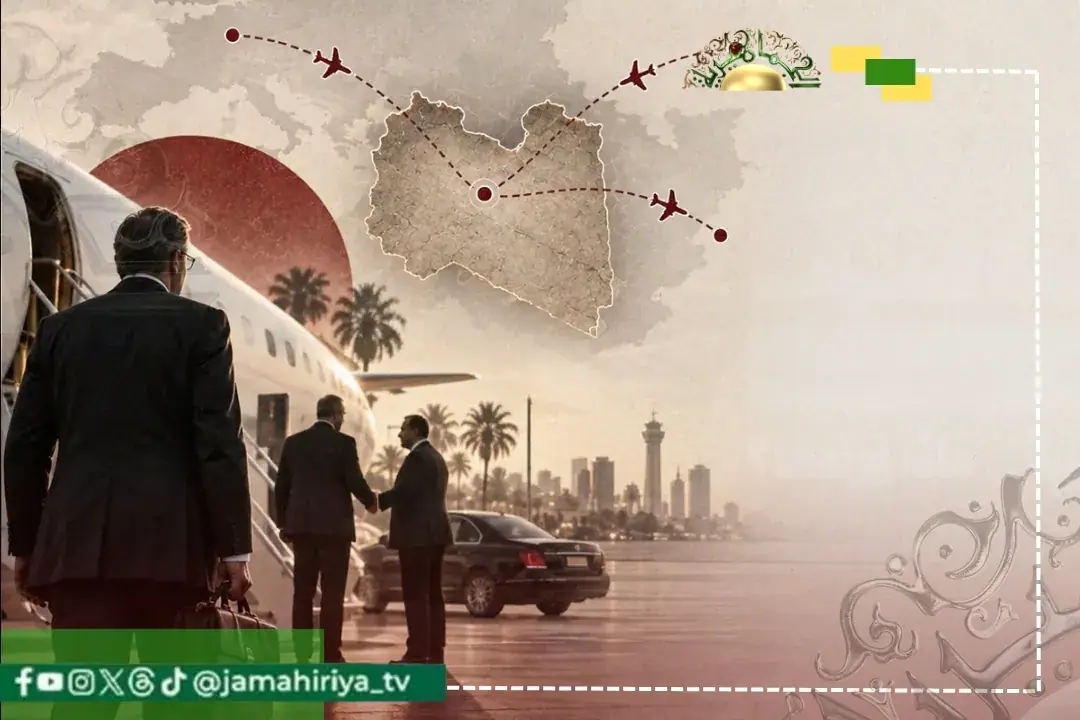
The Libyan Center for Security and Military Studies has reported a surge in diplomatic efforts by international actors in Libya, including Qatar, the United States, and France. These efforts aim to revive the country's stalled political process and pave the way for elections. In recent weeks, Qatari State Minister for Foreign Affairs Mohammed Al-Khulaifi has met with various Libyan figures, including Khalifa Haftar, in an attempt to foster dialogue between rival factions.
The Qatari envoy's visit to Tripoli and Benghazi is seen as part of a broader effort to create an environment conducive to negotiations between Libyan parties. Qatar's experience in international mediation could be leveraged to facilitate talks. However, it remains unclear whether Qatar's actions are directly coordinated with the US. The Libyan Center for Security and Military Studies suggests that Qatar's involvement may be part of a larger international initiative to resolve the Libyan conflict.
The United States has also expanded its diplomatic engagement in Libya, with US officials, including Jeremy Brent, holding multiple meetings with Libyan politicians, economists, and security officials. These interactions have covered issues such as economic stability and military unification. The US has maintained a strong interest in Libya's economic and security sectors, and its increased diplomatic outreach signals a commitment to supporting Libya's transition.
France, another key player in Libyan affairs, has continued its diplomatic efforts, with French President Emmanuel Macron's special envoy, Paul Soler, meeting with Libya's Central Bank Governor, Najib Issa. France has officially expressed support for UN-led mediation and the organization of presidential and legislative elections across Libya. This engagement is seen as an attempt by France to maintain its influence in Libyan politics, particularly as international competition in North Africa and the Sahel region intensifies.
The increased diplomatic activity by Qatar, the US, and France has raised questions about the potential for a unified international approach to resolving the Libyan crisis. While these efforts may share the goal of promoting stability and elections, the various international actors may have distinct interests and strategies. The complex landscape of Libyan politics, with multiple factions and external actors, poses significant challenges to achieving a lasting resolution.
According to the Libyan Center for Security and Military Studies, the current situation is characterized by a multiplicity of initiatives and mediators, which may either facilitate a comprehensive solution or create new opportunities for international competition. The center has questioned whether these diplomatic efforts will ultimately converge to support a single, cohesive solution or fragment into competing international agendas.
As Libya's international partners continue to engage with various stakeholders, the country's future remains uncertain. The success of these diplomatic efforts will depend on the ability of international actors to coordinate their actions and support a genuinely inclusive and Libyan-led process. With multiple external actors involved, the path to elections and stability in Libya is likely to be complex and challenging.
Key points
- - Qatar, the US, and France have intensified diplomatic efforts in Libya to support elections and stability. - The multiple international actors involved may have distinct interests and strategies, potentially complicating the path to a unified solution. - Libya's complex politics and external influences pose significant challenges to achieving a lasting resolution.