The official launch of Algeria's saffron harvest for the current agricultural season took place in Khenchela, with optimistic predictions of a bountiful and top-notch yield. According to Samir Ghodbane, secretary general of the Algerian Association for Saffron Promotion and a biological saffron producer in Khenchela, the initial indicators suggest an excellent productivity compared to previous years. This is attributed to favorable climatic conditions and the experience gained by farmers and investors engaged in saffron cultivation.
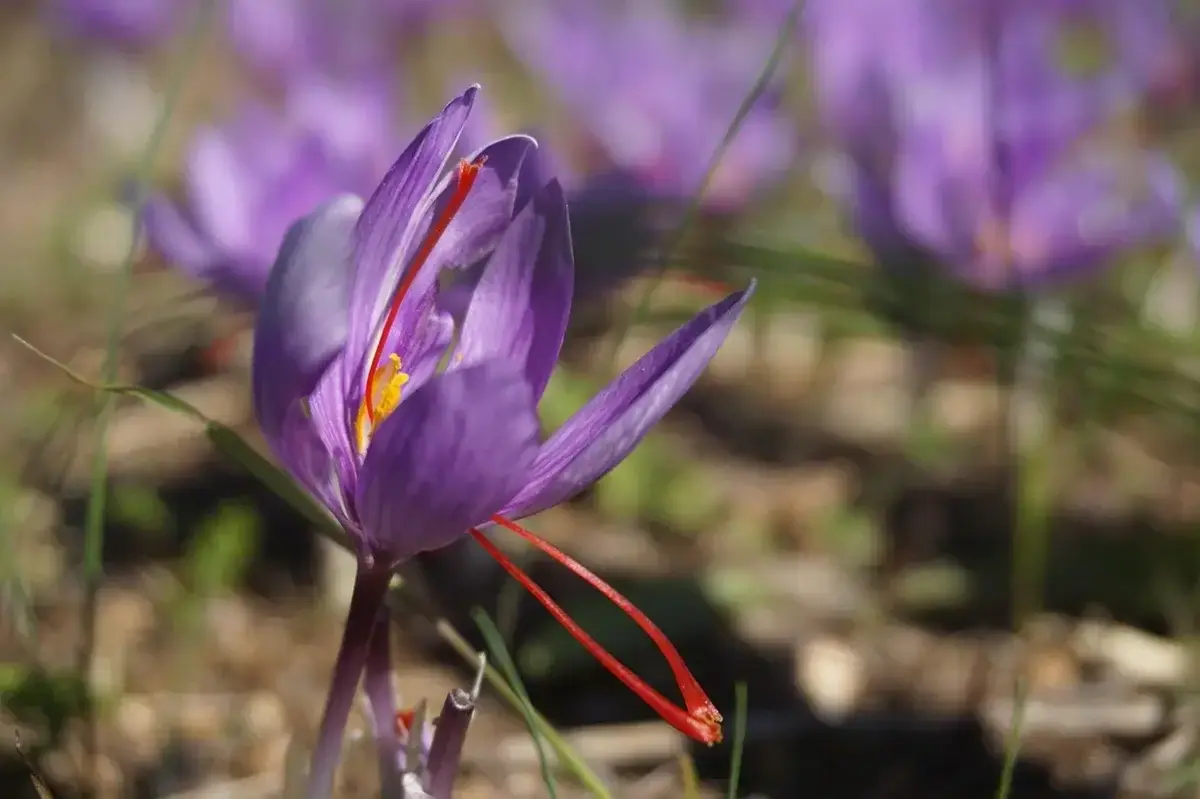
Saffron, also known as "red gold," requires specific conditions for its cultivation. Ghodbane mentioned that harvesting necessitates an early morning pick-up of saffron flowers, preferably in daylight to preserve the characteristics of this spice. The process involves separating the red filaments, or stigmates, with great care, a task often assigned to rural women. This is followed by drying, either naturally or mechanically, according to scientific standards and strict health measures to ensure the product's quality, taste, color, and nutritional properties.
The saffron farms in Khenchela produce high-quality saffron, with analyses showing a high crocine content, a natural chemical compound responsible for the spice's red-orange color, which can reach up to 20%. Ghodbane highlighted that the gram of saffron can sell for up to 2,000 Algerian dinars. The culture of saffron, practiced by farmers for 12 years, has expanded significantly due to the substantial income it generates when producers can market their entire production.
Saffron producers aspire to expand their market reach, particularly for export, by adopting modern techniques for processing and packaging the final product. Ghodbane emphasized the importance of integrating scientific research into the development of the saffron sector and simplifying labeling and marketing procedures, especially with pharmaceutical laboratories, both domestically and internationally.
Such a move would enable the transformation of saffron cultivation from a traditional activity into a full-fledged economic sector, creating jobs and contributing to the diversification of national exports beyond hydrocarbons. The Algerian Association for Saffron Promotion advocates for the development of this sector, which has significant potential for growth and economic impact.
The launch of the saffron harvest in Khenchela marks a significant event in Algeria's agricultural sector, with expectations of a substantial and high-quality yield. The sector's development is crucial for the country's economy, and efforts to expand its market reach and integrate scientific research are underway.
As the harvest progresses, farmers and producers will focus on meeting the demands of both local and international markets, capitalizing on the quality and uniqueness of Algerian saffron. The sector's growth will likely have a positive impact on the country's agricultural industry and economy.
Key points
- Algerian saffron producers are optimistic about this year's harvest, citing favorable climatic conditions and increased experience in saffron cultivation.
- The gram of high-quality saffron can sell for up to 2,000 Algerian dinars, making it a lucrative crop for farmers.
- The sector's development is expected to contribute to the diversification of Algeria's exports beyond hydrocarbons and create new job opportunities.