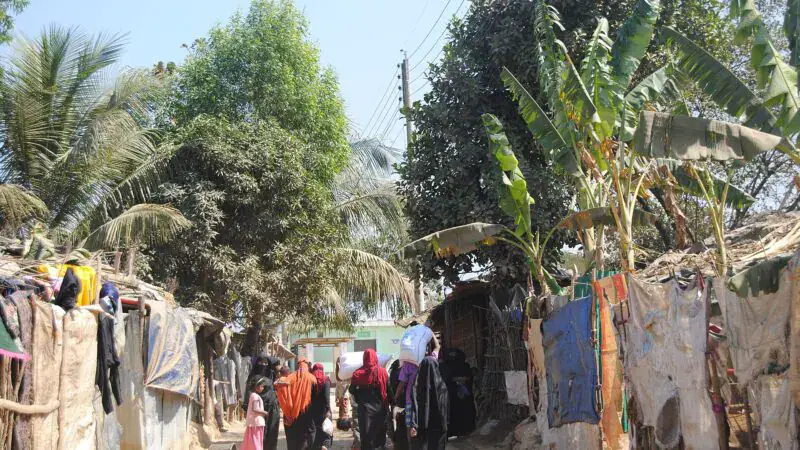
The International Court of Justice (ICJ) ruled on November 19 that Myanmar's military forces committed genocide against the Rohingya people during a brutal 2017 crackdown in the western Rakhine state. The ICJ verdict found the military's "clearance operations" constituted genocidal acts, leading to the mass murder of at least 10,000 people and the forced expulsion of more than 700,000 Rohingya to Bangladesh. This ruling marks the first time the ICJ has found a state liable for committing genocide.
The Gambia, with the support of the Organization of Islamic Cooperation, initiated the ICJ complaint in November 2019. The complaint was brought against Myanmar for its treatment of the Rohingya, a minority group that has faced decades of persecution and violent acts by state forces and hardline Buddhist nationalists. Myanmar refuses to recognize the Rohingya, considering them illegal immigrants despite many being born in the country and having lived there for generations.
The ICJ ruling was eagerly awaited, especially by Rohingya refugees in Bangladesh. Monajat Alam, a 58-year-old Rohingya refugee, shared that the Myanmar military tried to convince the world that they had lied, but the truth has now been recognized. The verdict was met with mixed reactions, with the Myanmar military government describing it as unfair and a "great disappointment," while the National Unity Government of Myanmar, representing pro-democracy forces, emphasized that the pursuit of justice cannot be realized without ending the junta rule.
Human rights groups reiterated that true justice in Myanmar can only be achieved by ending the junta rule. The National Unity Government of Myanmar stated that the ICJ judgment is an important step in the pursuit of justice, but it cannot be the end. Lasting peace requires accountability, protection for all communities, and the dismantling of structures that enable persecution and impunity.
Shwe Maung, a former Member of Parliament in Myanmar, emphasized that unity and national reconciliation cannot be achieved without recognizing the need to attain justice for the Rohingya. He maintained that justice for the Rohingya and justice for the wider population of Myanmar are inseparable and crucial for building a genuine federal democracy and national reconciliation.
The ICJ verdict voted 9-6, finding Myanmar's military forces liable for committing genocide against the Rohingya people. The ruling highlights the need for accountability and justice for the Rohingya and the wider population of Myanmar. The international community is now watching to see how Myanmar will respond to the verdict and implement the necessary changes to prevent future atrocities.
The ICJ ruling is a significant step towards justice for the Rohingya people, but the journey is far from over. The Myanmar military government must be held accountable for its actions, and the international community must continue to pressure the regime to ensure that justice is served. The pursuit of justice for the Rohingya is a crucial step towards achieving lasting peace and stability in Myanmar.
Key points
- The ICJ verdict marks the first time the court has found a state liable for committing genocide.
- The pursuit of justice for the Rohingya cannot be realized without ending the junta rule in Myanmar.
- The ICJ ruling highlights the need for accountability, protection for all communities, and the dismantling of structures that enable persecution and impunity in Myanmar.
Reporting sources
- International Court of Justice rules Myanmar committed genocide against the Rohingya people · Global Voices Africa