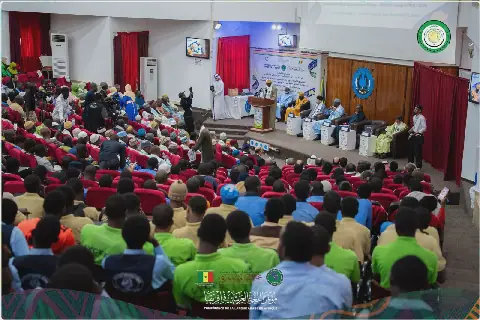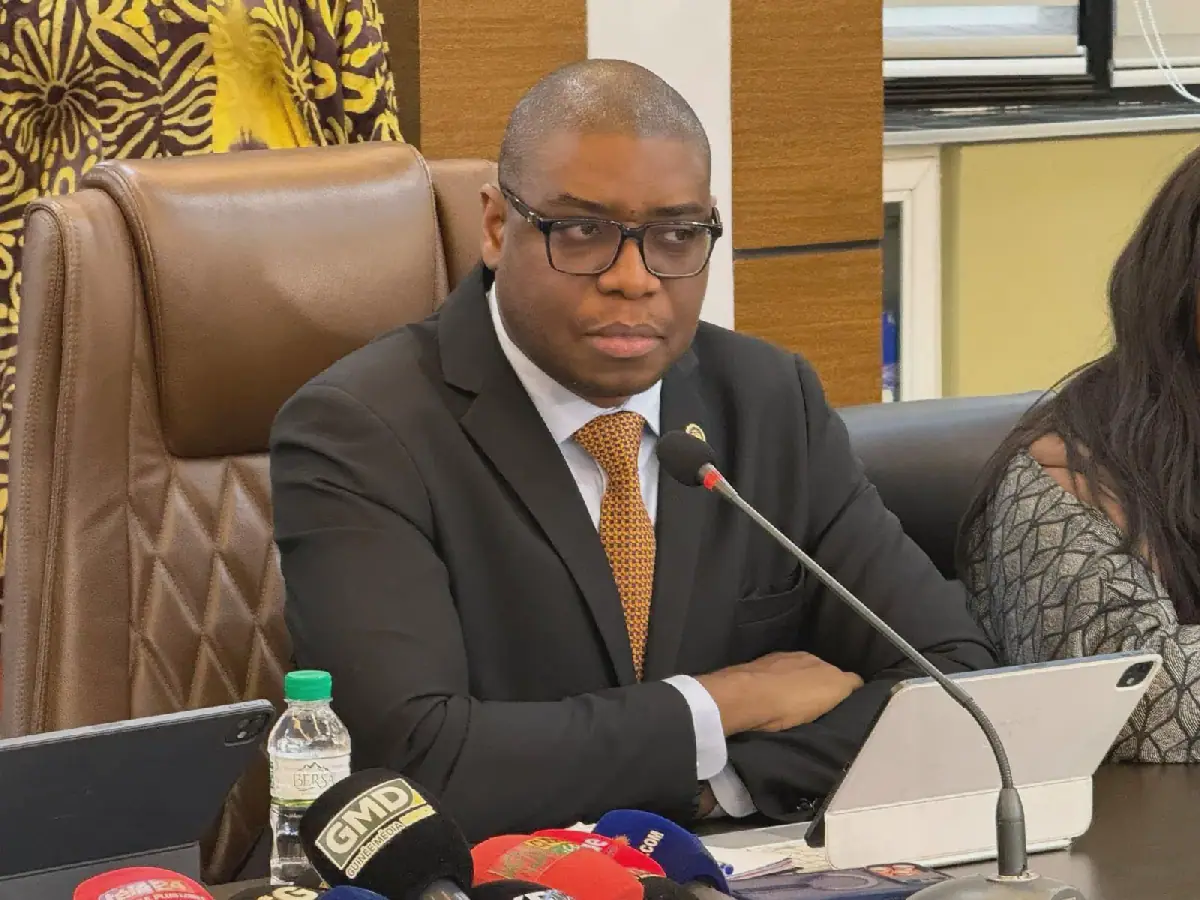
The International Monetary Fund (IMF) has concluded a $425 million agreement with Guinea, with the IMF's resident representative, Nérée Noumon, assuring that the country's debt is among the best and that no measures were imposed on the Guinean authorities. The agreement was announced at a press conference held jointly with the Minister of Economy, Finance, and Budget and the Governor of the Central Bank of the Republic of Guinea. Noumon highlighted that the debt contracted has particularly advantageous financial conditions.
According to Noumon, the agreement aims to support Guinea's economic reforms while ensuring the protection of vulnerable populations. The IMF representative emphasized that the discussions with the IMF's board of directors focused on developing a strategy to gradually reduce subsidies while preserving the most vulnerable populations. He clarified that no measures were imposed on the Guinean authorities, but rather a strategy to reduce subsidies was discussed.
Noumon explained that the program aims to strengthen social protection mechanisms, citing the Nafa program and the Unified Social Register (RSU) as important instruments for identifying and supporting vulnerable populations. He noted that the RSU is not yet fully ready and that the IMF will work with the Guinean authorities to improve its governance. The IMF representative also highlighted that over 80% of subsidies currently benefit the top 20% of the population, emphasizing the need for a more equitable distribution.
The IMF representative acknowledged that the agreement involves additional debt, but stressed that it has favorable financial conditions, including a low interest rate and a four- to five-year grace period. Noumon described the debt as "one of the best" available to governments, given its terms. He also emphasized that the agreement demonstrates the confidence of the IMF's board of directors in the Guinean authorities and their commitment to implementing reforms.
Noumon highlighted that the agreement is a significant achievement, demonstrating the commitment of the Guinean authorities to implementing difficult reforms. He noted that the IMF's programs often involve challenging reforms, but that the agreement shows the authorities' willingness to adopt and implement them. The IMF representative also emphasized that the program's success will depend on the authorities' ability to meet the agreed-upon reform milestones.
In terms of potential risks or "red lines" in implementing the program, Noumon explained that the IMF's monitoring will focus on adherence to a reform schedule and the achievement of predefined quantitative targets. He emphasized that the main fundamentals, such as governance and transparency, are already in place, and that the authorities will have to justify any delays in implementing reforms.
Finally, Noumon noted that any delays in executing reforms do not necessarily imply a reversal of the program. He explained that the Guinean authorities can justify delays to the IMF's board of directors and request a waiver, allowing them to continue with the program. The IMF representative concluded by emphasizing the importance of communication and accompanying measures to ensure that the most vulnerable populations are protected.
Key points
- The IMF agreement provides $425 million in funding with favorable debt terms, including a low interest rate and a four- to five-year grace period.