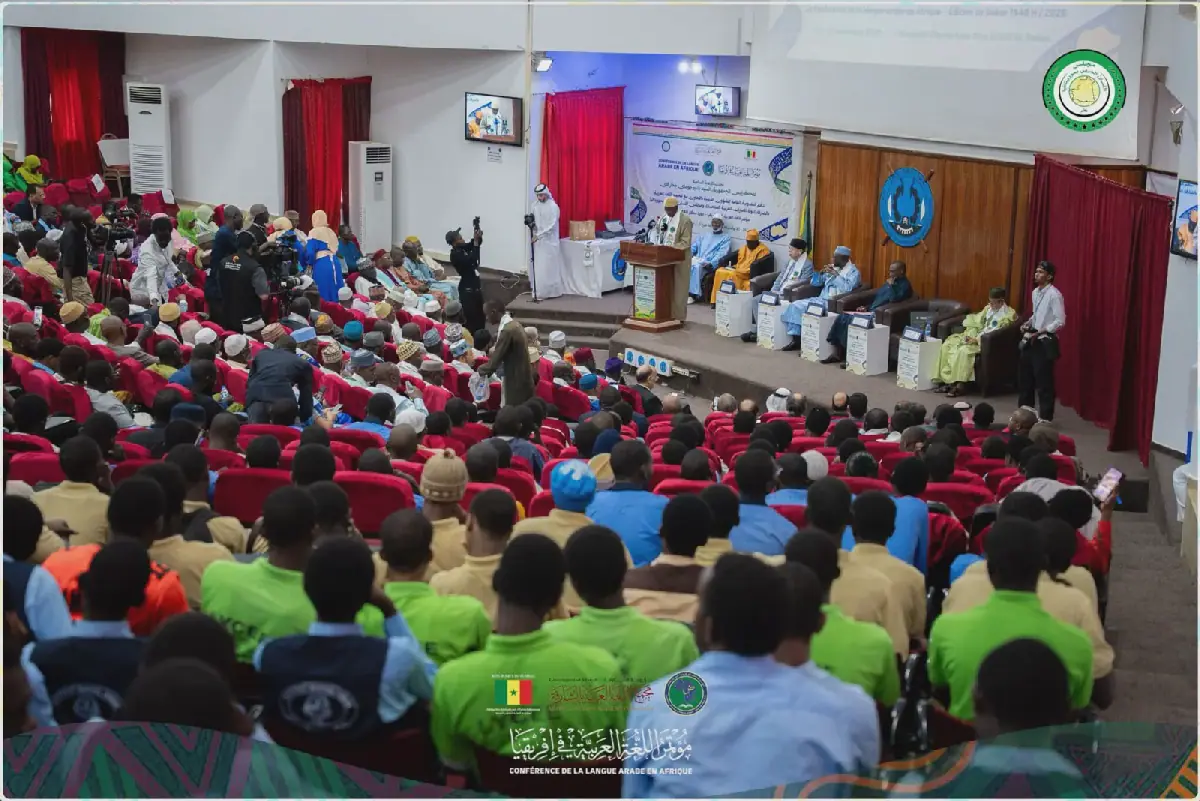
The third Arabic language conference in Africa began in Dakar, Senegal, with the participation of 40 countries. The event is organized by the Mauritanian Arabic Language Council, in cooperation with the Senegalese General Delegation for Religious Affairs and the Sharjah Arabic Language Complex. The conference is titled "Teaching Arabic in Africa: Gains and Challenges." It aims to explore the current state of Arabic language education in African countries and the challenges it faces.
The conference was inaugurated by Omar Aniyang, Director of the Senegalese Prime Minister's office, in the presence of government officials, scholars, and academics. Some notable attendees include Mali's Minister of Religious Affairs, Mohamedou Koni, and the Secretary-General of the Sharjah Arabic Language Complex, Mohamed Safi Al-Mesteghami. The Mauritanian Arabic Language Council's head, Khalil Al-Nahwi, also attended the opening ceremony, along with several Arab ambassadors, representatives of Islamic councils, universities, and associations concerned with Arabic education in Africa.
The three-day conference will address various topics, including the current state of Arabic language education in African countries, its benefits, and the challenges it faces. The event will also explore ways to utilize artificial intelligence in teaching Arabic, integrate graduates of Arabic educational institutions into public life, and preserve Arabic manuscripts and Islamic heritage in Africa. These discussions aim to promote the development of Arabic language education in Africa.
The conference features a poetry competition launched by the Mauritanian Arabic Language Council under the slogan "Language of the Letter.. Flute of Africa." The competition seeks to encourage young African poets to write in Arabic. The winners of the competition will be announced during the conference. This event provides a platform for young Africans to showcase their literary talents and celebrate the Arabic language.
The event brings together experts, scholars, and officials to discuss the importance of teaching Arabic in Africa. The conference aims to identify the challenges facing Arabic language education and explore ways to overcome them. It also seeks to promote cooperation and exchange of experiences among African countries in teaching Arabic. This cooperation can help improve the quality of Arabic language education in Africa.
The conference is a significant step towards promoting the Arabic language in Africa. It highlights the importance of preserving and promoting the language, which is an essential part of African cultural heritage. The event also underscores the need for cooperation and collaboration among African countries to develop Arabic language education. This cooperation can help to strengthen cultural ties between African countries and promote a deeper understanding of Arabic culture.
The third Arabic language conference in Africa provides a unique opportunity for participants to share experiences, expertise, and ideas on teaching Arabic in Africa. The event is expected to contribute to the development of Arabic language education in Africa and promote cultural exchange among African countries. The conference will conclude with recommendations and proposals to improve the teaching of Arabic in Africa.
Key points
- The conference aims to explore ways to utilize artificial intelligence in teaching Arabic.
- The event features a poetry competition launched by the Mauritanian Arabic Language Council.
- The conference seeks to promote cooperation and exchange of experiences among African countries in teaching Arabic.
Reporting sources
- دكار تحتضن المؤتمر الثالث للغة العربية في إفريقيا بمشاركة 40 دولة · saharamedias.net