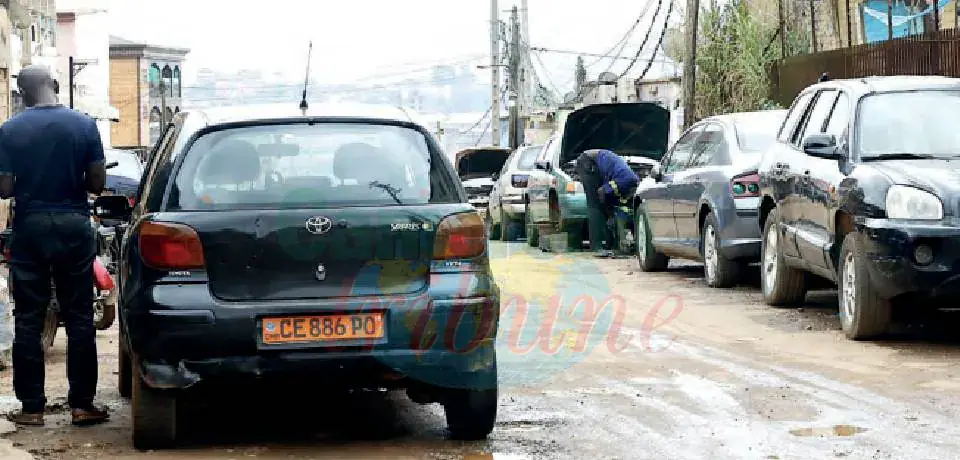
Several streets in Yaoundé have been transformed into informal garages, with motorcycles and cars parked haphazardly, much to the frustration of residents. On November 4, navigating the Mvog-Ada neighborhood, specifically the area known as "Casse," was nearly impossible due to the sheer number of vehicles and makeshift repair shops. The streets have given way to impromptu garages, with motorbikes, cars, and wrecked vehicles awaiting repair, all jumbled together in disarray.
In this chaotic scene, residents are forced to navigate through a maze of vehicles on blocks, worn-out tires, and exposed engines. Collins Mbe, a shoe manufacturer at Casse in Mvog-Ada, expressed his exasperation with the situation. He revealed that two weeks prior, his car had been vandalized, with the thieves making off with its turn signals. As a result, Mbe now parks his vehicle across the street from his shop. He also noted that the informal garage operators seem to be organized, with a president and a system of contributions.
According to Mbe, the makeshift garages were initially set up on one side of the road but eventually spread to both sides. The operators appear to have established a territorial claim, with a president overseeing the activities. This level of organization suggests that the informal garages are no longer simply makeshift repair shops but rather a more structured system. The proliferation of these garages has resulted in residents losing their courtyards and parking spaces.
The situation at Mvog-Ada's Casse is mirrored in other neighborhoods, such as the Briqueterie. Narrow streets in the area have been overrun by informal garages, further exacerbating the congestion and safety concerns. With no clear authority regulating these makeshift repair shops, residents are left to cope with the consequences. The lack of formal oversight also raises questions about the environmental and health impacts of these informal garages.
The growth of informal garages in Yaoundé highlights the challenges faced by urban residents in accessing basic services. While the garages provide a vital service for vehicle owners, they also create significant problems for the community. Residents like Collins Mbe are calling for a solution to this issue, which seems to be spiraling out of control. The situation demands attention from local authorities to find a balance between providing services and maintaining public order.
Cameroon Tribune was unable to obtain a statement from local authorities regarding the informal garages. However, it is clear that addressing this issue will require a multi-faceted approach that involves both the government and the community. Finding a solution will likely involve collaboration between residents, local leaders, and authorities to establish formal repair shops and regulate the existing informal ones.
The situation in Yaoundé's Mvog-Ada neighborhood serves as a microcosm of the broader challenges facing urban areas in Cameroon. As cities continue to grow, the need for effective urban planning and management becomes increasingly pressing. The informal garage operators may be providing a necessary service, but it is crucial that their activities are regulated to ensure public safety and well-being.
Key points
- Residents of Yaoundé's Mvog-Ada neighborhood are struggling with the proliferation of informal garages that have taken over the streets.
- The makeshift garages appear to be organized, with a president and a system of contributions.
- Local authorities have yet to comment on the situation, but finding a solution will likely require collaboration between residents, leaders, and authorities.