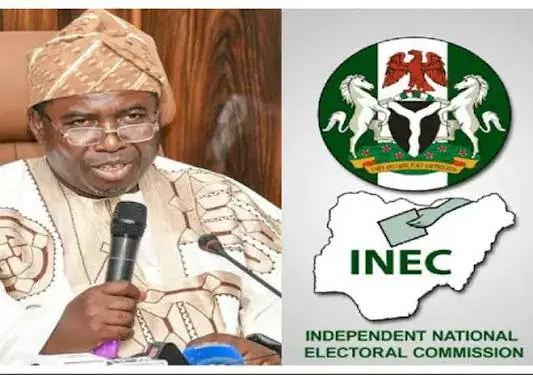
The Independent National Electoral Commission (INEC) has introduced new technological safeguards to prevent the uploading of inaccurate election results to its Result Viewing Portal (IReV) ahead of the 2027 general elections. INEC Chairman, Prof. Joash Amupitan, disclosed this in London, while announcing November 28, 2026, as the date for a nationwide mock accreditation and voting exercise to test the Commission’s upgraded electoral technology. This move aims to address controversies surrounding the 2023 general elections.
The new safeguards were designed to address discrepancies in election results uploaded to the IReV portal during the 2023 general elections. Amupitan acknowledged that the 2023 election had significantly damaged public confidence in the Commission. Since then, INEC has used subsequent off-cycle elections to identify operational weaknesses and improve its electoral processes. The Commission cited the governorship elections in Anambra, Osun, and Ekiti states as evidence of improvements in its performance.
INEC’s post-2023 assessment identified collation centres, rather than polling units, as major sources of discrepancies in election result management. The Commission has introduced a validation mechanism that would prevent inaccurate results and figures indicating over-voting from being uploaded to the portal. Amupitan explained that if a result is not accurate at the polling unit, it will not go to IReV at all. This new arrangement aims to strengthen public confidence in electronic result viewing and collation.
The INEC chairman disclosed that the Commission was upgrading its existing Bimodal Voter Accreditation System (BVAS) technology rather than introducing an entirely new electoral system. The Commission is also constructing climate-controlled storage facilities across the states to address device malfunctions previously associated with extreme heat and poor storage conditions during the 2023 elections. INEC has procured additional BVAS devices and reduced the maximum number of registered voters assigned to each machine from 1,250 to 850.
Under the revised arrangement, polling units with more than 850 registered voters would be provided with multiple devices to improve accreditation efficiency and reduce delays. Amupitan said the nationwide mock exercise scheduled for November 28 would test the upgraded accreditation and electronic result transmission systems ahead of the general elections. The Commission identified insecurity, logistics, and result management as its major operational priorities for the 2027 polls.
On funding, Amupitan disclosed that INEC had received a substantial portion of its 2027 election budget but was awaiting the release of the outstanding balance. Part of the outstanding funds would support the recruitment and welfare of ad hoc election personnel. The Commission received assurances that the money would be released before the end of November. Amupitan also addressed concerns about his political neutrality following social media allegations.
Amupitan denied ever operating an account on the platform and said an independent forensic review had been obtained and the matter referred to the Department of State Services (DSS) and the Inspector-General of Police for investigation. He urged Nigerians, particularly young people, to remain actively involved in the democratic process and resist the spread of misinformation and disinformation. The 2027 presidential and National Assembly elections are scheduled for January 16, 2027, while governorship and State Houses of Assembly elections will hold on February 6, 2027.
Key points
- INEC introduces new technological safeguards to prevent uploading of inaccurate election results to its Result Viewing Portal ahead of 2027 general elections.