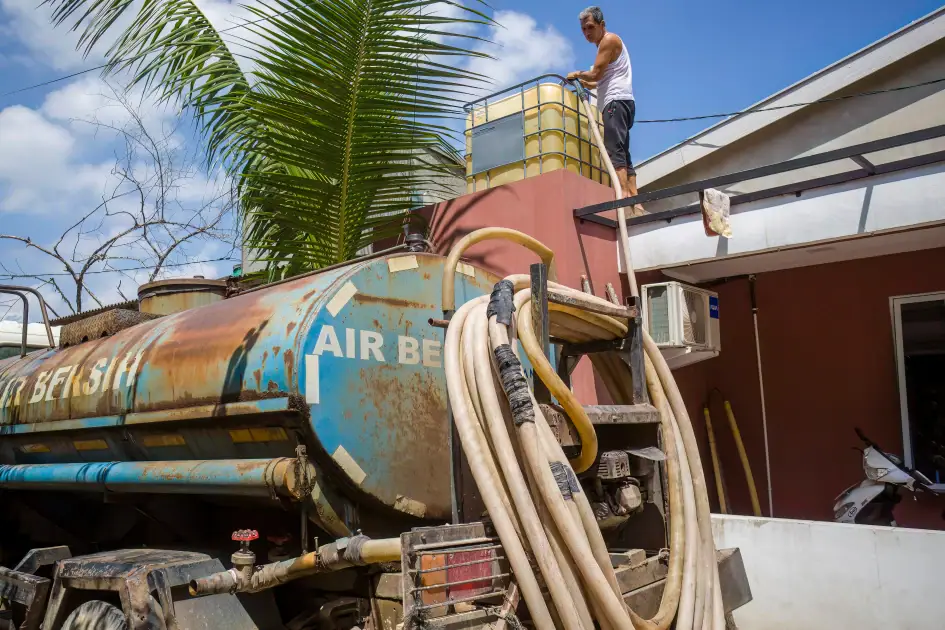
Residents in Batam, Indonesia, are protesting the construction of data centres in their area, citing severe water shortages and disruptions to daily life. The protests began after a long drought caused by low rainfall and exacerbated by a strong El Nino cycle. The local water utility operator, Air Batam Hilir, reported that the drought had caused the nearby Nongsa Reservoir to run very low, and supply systems were further disrupted by an electrical fault.
The data centres, which are part of the Nongsa Digital Park, a special economic zone, have been accused of contributing to the water shortages. Residents believe that the construction of the data centres has led to a significant increase in water demand, putting pressure on the already strained water supply. Juniardi Adinda Sembiring Gurukinayan, a 54-year-old tradesman, said that the water shortages had made everyday tasks like cooking and bathing difficult. "We cannot eat rice without water. We cannot cook vegetables without water," he said.
The authorities have responded to the protests by telling developers that they must build plants to desalinate seawater for cooling, to avoid straining local resources. Companies behind operational or planned data centres at Nongsa Digital Park, including BW Digital, DayOne, and Princeton Digital Group, have been informed of the new requirements. Gaw Capital Partners, a Hong Kong-based company, said it was "aware of the distress and frustration expressed by local residents" and would deploy advanced engineering and renewable energy sourcing to ensure sustainable operations.
The data centre construction boom in Indonesia and Malaysia began when Singapore halted new developments between 2019 and 2022 due to resource constraints. The boom has driven economic growth in both countries, but it has also put pressure on water and electricity supplies. According to a KPMG report, data centre capacity in Southeast Asia is projected to triple from 2025 levels by 2030, driven by a tenfold surge in AI use.
The environmental cost of the data centre boom could be high. In Malaysia's Johor region, data centres are forecast to swallow up one-third of the country's total energy consumption by 2035. The government has said it will only approve data centre projects after ensuring sufficient energy and water supply capacity. Johor residents have protested over dust pollution and flash floods linked to data centre construction.
Pushback from residents has sometimes been successful. In Kota Damansara, a plot of land intended for a data centre remains empty after local opposition. The developer withdrew its planning permission application in August, after neighbours spoke out online, lobbied their MP, and gathered more than 9,000 petition signatures. Jahaidi Harun, a 72-year-old retiree, said that the proposed data centre could be noisy and pressure existing infrastructure.
The Indonesian government has been distributing water from tanks driven around, but residents have complained that the water is "smelly" and "yellowish". The mayor of Batam, Amsakar Achmad, said that the recent disruption to water distribution was not caused by data centres or AI, but by weather and climate factors. However, residents remain sceptical, and the issue is likely to continue to be a source of tension between the government, data centre operators, and local communities.
Key points
- Data centre construction in Indonesia and Malaysia has led to water shortages and disruptions to daily life in some areas.
- The construction boom is driven by a surge in AI use and has put pressure on water and electricity supplies in the region.
- Residents have protested the construction of data centres, citing concerns about noise, pollution, and pressure on existing infrastructure.