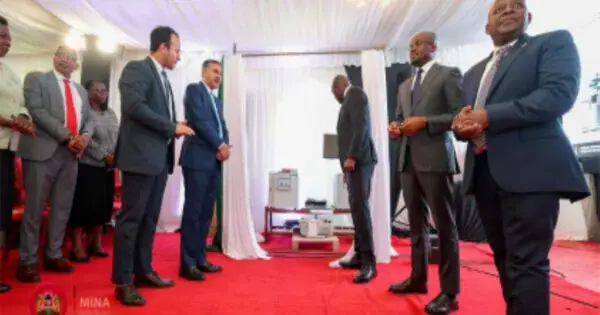
India has handed over a Gas Chromatography-Mass Spectrometry (GC-MS) system to Kenya as part of the Organisation for the Prohibition of Chemical Weapons (OPCW) mentorship programme. The initiative aims to enhance Kenya's capacity for specialised chemical analysis, forensic investigations, and chemical safety. The GC-MS system was handed over by Indian High Commissioner to Kenya Adarsh Swaika to Kipchumba Murkomen, Cabinet Secretary for Interior and National Administration.
The GC-MS system was provided by the Government of India to Kenya as a grant under the OPCW Mentorship Programme. The equipment will enable Kenya to undertake specialised chemical analysis, identify relevant chemical substances, and support investigations related to chemical safety and security. This assistance is part of India's commitment to strengthening bilateral cooperation with Kenya, as highlighted by the Indian Embassy in Kenya.
Under the OPCW Mentorship and Partnership Programme (MPP), India's National Authority Chemical Weapons Convention (NACWC) partnered with Kenya's National Authority in 2024 to strengthen the country's implementation capacity under the Chemical Weapons Convention (CWC). The programme involved reciprocal bilateral exchange visits in Nairobi and New Delhi, focusing on sharing India's technical expertise in digital declaration portals, Article VI compliance, customs enforcement, and chemical industry outreach.
The mentorship programme also included demonstrations of automated tracking systems and emergency response protocols, helping Kenya modernise its regulatory framework, improve chemical safety, and strengthen institutional capabilities. This initiative has deepened South-South cooperation between India and Kenya. The handover of the GC-MS system is part of broader efforts by India to strengthen its partnership with Kenya through technical assistance, capacity-building initiatives, and cultural exchanges.
The Indian Embassy in Kenya highlighted the significance of the assistance, stating that the equipment will reinforce Kenya's capacity to undertake specialised chemical analysis and support investigations related to chemical safety and security. India has been committed to partnering with Kenyan institutions on priorities that matter to Kenya, including forensic training, laboratory equipment, and medical supplies for Kenya's Ebola response.
The latest development is part of India's ongoing efforts to strengthen its partnership with Kenya. On November 5, the High Commission of India in Nairobi launched a special oral history podcast series titled 'The Bharat Connection: Living Memories, Shared History' to document the journeys and contributions of prominent members of Kenya's Indian-origin community. The series will feature conversations exploring the community's migration, settlement, achievements, and enduring connections with India.
The podcast series, hosted by University of Nairobi Professor of History Kenneth Ombongi, will feature industrialist and philanthropist Manu Chandaria in its first episode. This initiative showcases India's commitment to cultural exchanges and people-to-people connections with Kenya. The handover of the GC-MS system and the podcast series demonstrate India's continued engagement with Kenya in various fields.
Key points
- India hands over GC-MS system to Kenya under OPCW mentorship programme to strengthen chemical analysis and forensic investigation capabilities.
- The programme aims to enhance Kenya's capacity for specialised chemical analysis, forensic investigations, and chemical safety.
- India and Kenya have been strengthening bilateral cooperation through technical assistance, capacity-building initiatives, and cultural exchanges.