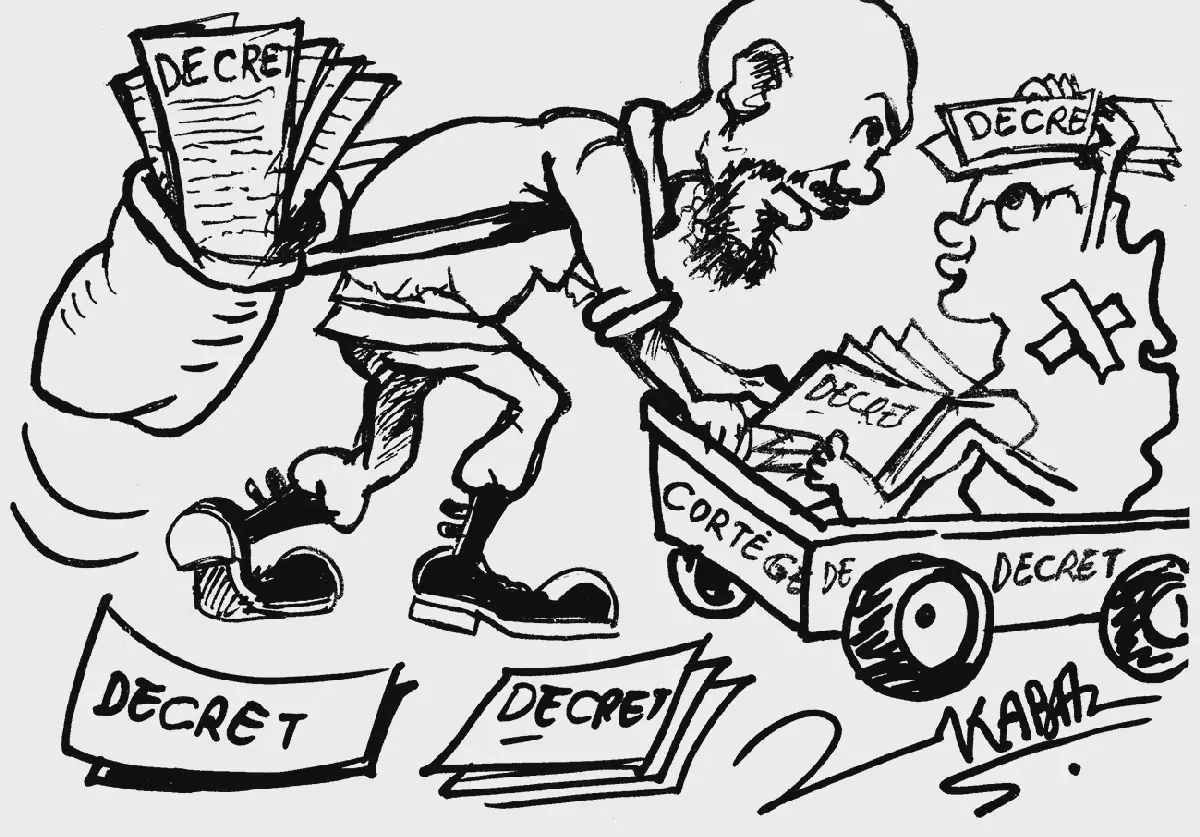
In Guinea, a peculiar phenomenon has taken hold, where citizens gather around their television sets each evening to listen to presidential decrees. This ritual, a mix of anticipation and skepticism, has become an integral part of daily life. The decrees, often related to appointments and changes in the judiciary, are read out without explanation, leaving viewers to interpret their significance. This unique dynamic has sparked conversations about the role of leadership, governance, and the intersection of politics and everyday life.
The country's judicial system is facing challenges, with only about 500 magistrates serving a population of 17.6 million people. This shortage has led to a creative solution: rotating judges to give the impression of a more robust system. The approach has been likened to musical chairs, where individuals are moved from one position to another, creating the illusion of change without truly addressing the underlying issues. This has raised questions about the effectiveness of the current system and the need for more substantial reforms.
Music has become an unlikely companion to Guinea's politics, with several prominent figures using their talents to navigate the complex landscape. The "Grimpeur" has released a single, while La Petite Cellule Dalein has gained recognition as an artist. Even Sidya, a well-known figure, has found success in the music world. This blending of politics and art has created a unique cultural landscape, where creativity and self-expression are used to cope with the challenges of everyday life.
The country's leader, a skilled dancer, has been known to use his charm and charisma to connect with the public. His visits to popular gathering spots, such as the ghetto, have been met with a mix of enthusiasm and skepticism. During one such visit, he was asked about distributing money or supplies, highlighting the public's expectations and the challenges of meeting their needs. The leader's ability to navigate these complex dynamics will be crucial in shaping the country's future.
The issue of education is a pressing concern in Guinea, with many schools and teachers facing significant challenges. The lack of resources, including textbooks and infrastructure, has hindered the development of the education system. This has led to discussions about the role of the government in providing for its citizens and the need for innovative solutions to address these challenges. The conversation has also turned to the topic of inheritance, with many wondering what the future holds for Guinea's children.
A recent earthquake, measuring 6.9 on the Richter scale, has raised concerns about the country's preparedness for natural disasters. The incident has highlighted the need for improved infrastructure and emergency response systems. As the country continues to navigate its complex politics and daily life, it must also confront the challenges posed by the environment. This will require a coordinated effort from leaders, citizens, and international partners.
As Guinea moves forward, its citizens will be watching closely to see how their leaders address these pressing issues. The intersection of politics, music, and everyday life will likely continue to shape the country's cultural landscape. With a focus on creative solutions, innovative thinking, and a commitment to progress, Guinea may yet find a path to addressing its challenges and building a brighter future for its people.
Key points
- Guinea's judicial system is facing challenges due to a shortage of magistrates.