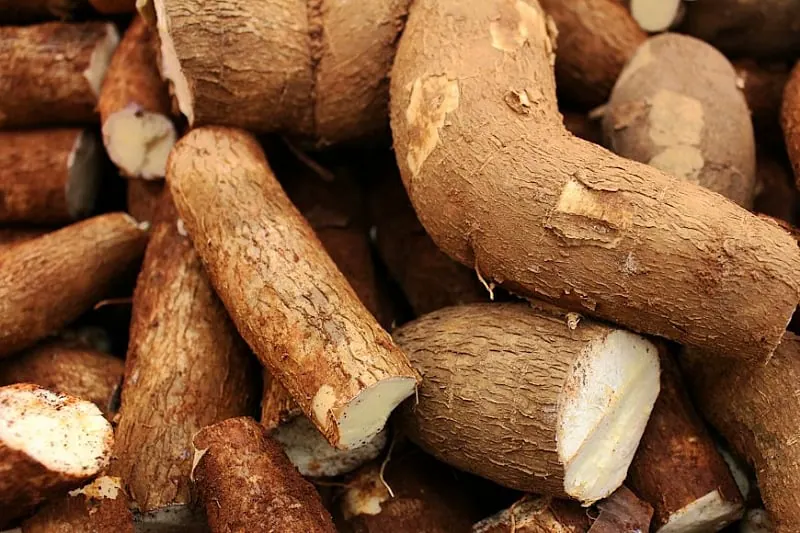
Cassava, a staple food in Ghana, can be a source of cyanide poisoning and konzo, a paralyzing neurological disease, if not properly processed. The plant naturally contains compounds called cyanogenic glycosides, which can release hydrogen cyanide when broken down. While cassava is not automatically poisonous, it must be properly processed to reduce cyanogenic compounds and make it safe for consumption. In Ghana, cassava is eaten in various forms, including fufu, gari, konkonte, akyɛkɛ, agbelima, agbelikaklo, and yakeyake.
Cassava is a versatile crop that can be processed into many different foods. In Ghana, it is used to prepare a range of traditional dishes, including fermented and dried foods. Akyɛkɛ is a familiar cassava-based food commonly eaten with stew and other accompaniments. Beyond Ghana, cassava is processed into products such as tapioca, attiéké, chikwangue, cassava flour, cassava bread, and various other fermented or dried foods. The safety of cassava depends on how it is processed before consumption.
Different cassava varieties contain different concentrations of cyanogenic glycosides, some of which have relatively low cyanogenic potential, while others, particularly bitter varieties, can contain much higher levels. The concern is cassava that contains significant cyanogenic compounds and has not been adequately processed to reduce them. The World Health Organization recognizes improperly prepared cassava as a potential source of acute cyanide poisoning.
Cyanide is a powerful poison that interferes with the body's ability to use oxygen for cellular energy production. At high exposure levels, it can cause severe toxicity affecting vital organs. Acute cyanide intoxication can cause dizziness, headache, confusion, nausea, vomiting, abdominal pain, diarrhea, rapid breathing, weakness, and seizures. Severe poisoning can progress to loss of consciousness, coma, and death.
Traditional cassava processing serves an important purpose, helping to reduce cyanogenic compounds and make the root safer for consumption. Processing may involve peeling, grating, crushing, soaking, fermentation, pressing, washing, drying, boiling, roasting, or other heating methods. Different products require different combinations of these steps. For example, gari production involves peeling, grating, fermentation, pressing, sieving, and frying or roasting.
Shortcuts in cassava processing can be dangerous, particularly when high-cyanogenic cassava is being used. If important processing stages are shortened or skipped, excessive cyanogenic compounds may remain in the finished food. The World Health Organization has noted that acute cyanide toxicity can result from inadequately processed cassava, especially in situations of food shortage.
Konzo is a neurological disease characterized by sudden-onset, symmetrical spastic weakness and paralysis that can become permanent and irreversible. Prolonged dietary reliance on inadequately processed, cyanogenic cassava has been consistently associated with konzo in parts of sub-Saharan Africa. Proper processing of cassava is crucial to prevent cyanide poisoning and konzo.
Key points
- Cassava must be properly processed before consumption to reduce cyanogenic compounds and prevent cyanide poisoning and konzo.
- Different cassava varieties contain different concentrations of cyanogenic glycosides, and some require more thorough processing than others.
- Traditional knowledge surrounding cassava preparation is essential to ensure safe consumption.