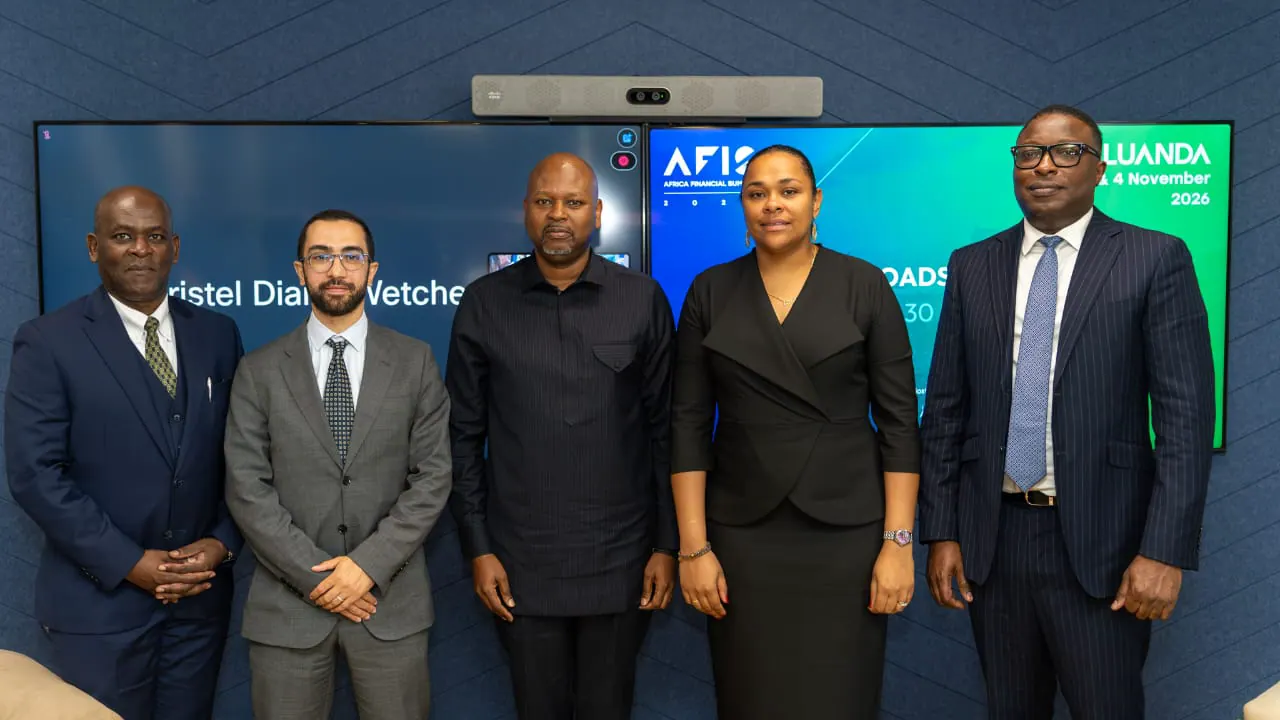
The International Finance Corporation (IFC) is working to connect Africa's financial capacity to investment, jobs, and growth. At the Africa Financial Industry Summit (AFIS), IFC and co-hosts will discuss ways to strengthen financial systems and mobilize domestic and private capital. This year's summit, now in its sixth year, takes place in Luanda, Angola, on 3 and 4 November 2026, and is expected to bring together over 1,250 financial-sector leaders.
In Nigeria, IFC is supporting digital platforms that enable financial institutions to purchase or discount approved invoices, providing small businesses with working capital. One such platform is CycleFlow, launched in April 2026, which connects buyers, suppliers, and financing institutions. This model allows suppliers to obtain financing against invoices accepted for payment, rather than relying on their balance sheet or property collateral.
The CycleFlow platform is projected to facilitate between US$25 billion and US$30 billion in annual financing for Nigerian businesses. By enabling faster payment, suppliers can fulfil larger orders, retain employees, invest in equipment, and participate more fully in formal value chains. IFC is also supporting Fiducia, a multi-financier marketplace for factoring and reverse factoring.
Access to capital is only part of the challenge; the currency, tenor, and pricing of that capital also matter. Many Nigerian businesses earn revenue in naira, while long-term financing is often denominated in dollars, exposing them to exchange-rate risks. IFC is expanding its naira-financing toolkit through swaps, domestic borrowing partnerships, guarantees, and investments in local capital markets.
In 2024, IFC signed an agreement with the Central Bank of Nigeria to help scale naira financing for key sectors. In May 2026, IFC and Access Bank signed a local-currency financing framework that could provide up to US$100 million equivalent in naira for on-lending. This partnership aims to match the currency and cash-flow realities of African businesses.
IFC is also sharing risk with local banks to unlock lending, particularly in sectors such as agriculture. In Ghana's cocoa sector, IFC partnered with Société Générale Ghana, Access Bank Ghana, and Absa Bank Ghana through unfunded risk-participation facilities. This approach enables local financial institutions to support entire value chains.
The World Bank Group emphasizes that the objective is not merely to increase the volume of finance, but to ensure capital reaches viable businesses and projects with the right tenor, currency, pricing, and risk management. By addressing these challenges, IFC aims to help Nigeria and other African economies convert their financial capacity into economic power and job creation.
Key points
- IFC supports digital platforms like CycleFlow to provide small businesses with working capital.
- IFC expands local-currency lending to reduce exchange-rate risks for Nigerian businesses.
- IFC shares risk with local banks to unlock lending in key sectors like agriculture.