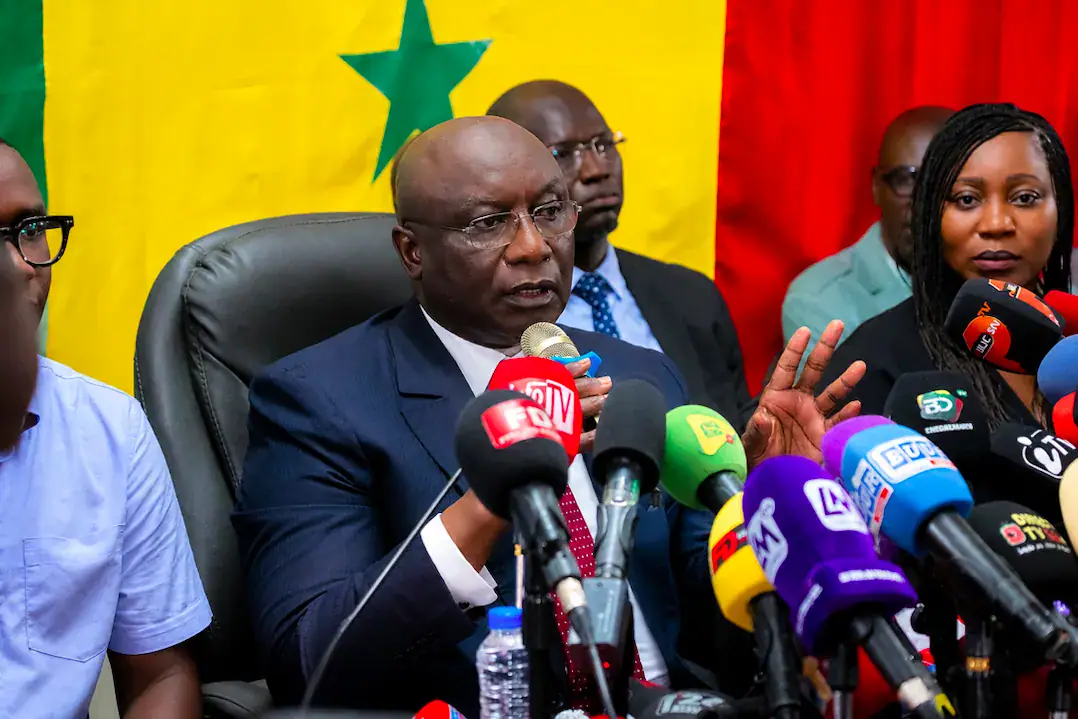
In a highly anticipated speech, Idrissa Seck, the former Prime Minister and president of the Rewmi party, has broken his two-and-a-half-year silence to address the Senegalese people. On October 27, 2026, Seck delivered a solemn address, calling for a national uprising against what he termed as "populist adventures" that have plagued the country. He justified his decision to speak out now, citing the need to assess the government's performance halfway through its term. Seck's address comes as the country faces significant economic and political challenges.
Seck painted a grim picture of Senegal's socio-economic and political landscape. He highlighted the country's degraded economy, citing downgrades by international rating agencies and a weakened economic fabric. The former PM also lamented the decline in diplomatic influence and the erosion of social cohesion. Seck criticized the current state of public debate, which he described as "unrecognizable," characterized by insults and dehumanizing language. He specifically mentioned the use of terms like "kulunas" and "moutons" to describe citizens.
The former president of the Conseil Economique et Social (CESE) also warned of an institutional crisis, referencing the current parliamentary deadlock over the 2026 Finance Bill. Seck expressed concern that this crisis could further exacerbate the economic situation and undermine the country's institutions. He called on citizens, youth, women, and the diaspora to take a stand against what he termed as "trompeuse" populist adventures. Seck's address was marked by a strong sense of urgency and concern for the country's future.
In response to the challenges facing Senegal, Seck called for a "cordon sanitaire" against populism. He urged the political class, civil society, unions, and the private sector to come together to "save the Republic, its institutions, and the common good." Seck emphasized the need for a collective effort to address the country's problems and restore hope. He also announced his intention to play an active role in this national recovery dynamic.
Seck's speech was well-received by some, who see it as a necessary intervention in the country's political landscape. The former PM's decision to break his silence has sparked a national conversation about the country's future and the need for collective action. As Senegal continues to navigate its economic and political challenges, Seck's call for a national uprising has added a new layer of complexity to the country's ongoing debates.
The Senegalese government has faced criticism for its handling of the economy and public services. Seck's address comes at a time when the country is grappling with significant development challenges. The government's response to Seck's speech remains to be seen, but it is clear that his words have struck a chord with many Senegalese citizens.
As the country looks to the future, Seck's call for a national uprising has raised important questions about the role of citizens in shaping Senegal's trajectory. The former PM's speech has sparked a renewed focus on the need for collective action and national dialogue. With the country's future hanging in the balance, Seck's words are likely to resonate with many Senegalese citizens.
Key points
- Idrissa Seck calls for a national uprising against populism in Senegal.
- Seck criticizes the government's performance, citing economic degradation and erosion of social cohesion.
- The former PM urges collective action to address the country's challenges and restore hope.