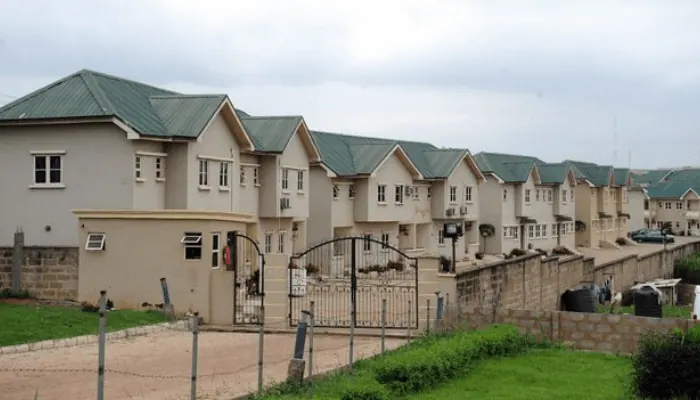
Nigeria's housing deficit and ongoing rent crisis have reached a critical point, with urban households facing unprecedented financial strain and developers navigating severe economic headwinds. According to Odunayo Ojo, managing director and CEO of UPDC Plc, the country's housing landscape is characterized by a significant demand-supply imbalance, particularly in urban hubs like Lagos and Abuja. This imbalance is driven by a growing population and rapid urbanization due to rural-urban migration.
Ojo highlighted key systemic challenges hindering the supply of housing in Nigeria, including sky-high construction costs driven by imported materials and currency devaluation. He also pointed out regulatory and legal bottlenecks surrounding foreclosure laws, which hinder the development of the real estate sector. Furthermore, Ojo emphasized the urgent need for robust public-private partnerships to unlock land access and long-term financing, which would help address the country's housing shortage.
The high cost of construction and the time it takes for real estate development to be delivered have resulted in a significant gap between the level of housing being delivered into the market and the level of demand. Ojo noted that this disparity has created considerable pressure on the housing market in Nigeria, with the demand-supply gap being a major challenge. He added that the combination of high construction costs and excessive demand for housing has led to a situation where it is difficult to keep the demand-supply gap in check.
Urban rental pressures have also become a major concern, with astronomical increases in rental rates in the last 24 months, particularly in urban areas like Lagos and Abuja. Ojo posited that the rental market is subject to the interplay of demand and supply, and wherever demand increases without a commensurate increase in supply, prices will rise. He noted that property owners are trying to recover the cost of their investment, and if they do not increase rents commensurate with the increase in property value, their rate of return on investment will drop.
Ojo emphasized that property owners view real estate as an investment, and to maintain their rate of return, they must increase rents to keep pace with the rate of return. He added that while there is a social angle to rentals, it is essential to understand that property owners need to maintain their rate of return on investment. The expert noted that the current situation has led to a situation where more and more people are willing to pay higher rents to maintain their current living arrangements.
The housing crisis in Nigeria has significant social impacts, with many households struggling to afford housing. Ojo's analysis highlights the need for strategic policy shifts to make housing accessible to everyday Nigerians. He canvassed for a more collaborative approach between the public and private sectors to address the country's housing shortage. This, he believes, will help unlock land access and long-term financing, which are essential for the development of the real estate sector.
To address the housing crisis, Ojo recommended that the government implement policies that would encourage the development of affordable housing. He also emphasized the need for a more efficient and effective system for delivering housing into the market. According to Ojo, this can be achieved through a combination of public-private partnerships and innovative financing models that would make housing more accessible to low-income households.
Key points
- The demand-supply imbalance in Nigeria's housing market is driven by a growing population and rapid urbanization.
- High construction costs and regulatory bottlenecks are major challenges hindering the supply of housing in Nigeria.
- The housing crisis in Nigeria has significant social impacts, with many households struggling to afford housing.