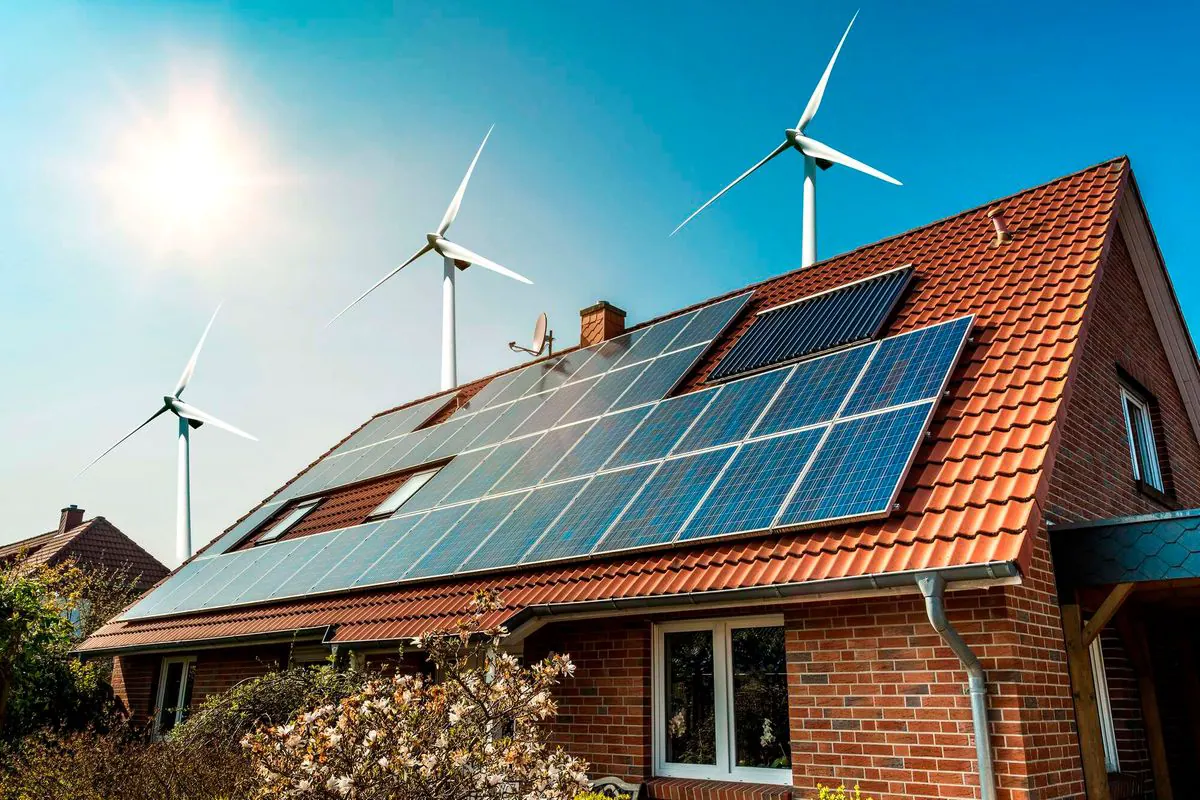
The Kenyan government has introduced new regulations to address the issue of unauthorized solar connections to the national grid. The Energy and Petroleum Regulatory Authority (Epra) has gazetted changes that allow consumers to supply excess electricity from their solar plants to Kenya Power, but with strict conditions. Homes and businesses with solar power plants that dump excess electricity into the grid without prior written authorization will face fines. The dumping surcharge is part of efforts to protect Kenya Power's distribution network and ensure public safety.
The new regulations, known as the Energy (Net-Metering) Regulations 2024, permit prosumers, or consumers who generate their own power and buy from the grid, to feed excess electricity to Kenya Power. However, they must have a prior agreement with the utility company. The regulations apply to solar plants with a capacity not exceeding 1 Megawatt (MW). Prosumers are connected to the national grid via a meter that records the amount of electricity they supply and buy from Kenya Power. This setup allows for the offsetting of future bills for power purchased from the grid.
Kenya Power has expressed concerns over the increasing number of unauthorized solar connections to the grid. The utility company has reported cases of fatalities and equipment damage due to uncontrolled grid-tied solar connections. Managing Director Joseph Siror stated that unauthorized connections pose a significant risk to the safety of Kenya Power's staff and can damage infrastructure. He emphasized that the sudden switch to the grid by customers with solar installations can trigger frequency dips and distort the supply-demand balance.
The Kenyan grid, which is aging and overstretched due to a surge in connections, is vulnerable to shocks. Kenya Power has warned against disruptions to the grid, which could have severe consequences. The utility company has urged consumers with solar installations to obtain prior authorization before connecting to the grid. The introduction of the dumping surcharge is part of efforts to regulate the growing number of solar connections and ensure grid stability.
The growth of solar energy in Kenya has been significant, with official data showing 326.7MW of solar energy as of December last year. This accounts for 51.9 percent of the total installed capacity of captive power in the country. Captive power capacity refers to privately established power generation plants for self-consumption. Large firms and wealthy individuals have increasingly turned to solar power plants as a backup to Kenya Power supplies.
Several big firms, including Bamburi Cement, Carbacid Investments, and GlaxoSmithKline, have set up their own solar plants. Wealthy families have also adopted solar power, with some homes running solely on solar energy. The shift to solar power is driven by the desire to cut power costs and reduce reliance on the grid. However, the lack of battery storage in many solar plants means that consumers must rely on the grid when solar generation dips.
The Kenyan government has emphasized the need for consumers to comply with the new regulations. The dumping surcharge will be measured and charged at the applicable base tariff. Consumers who fail to obtain prior authorization for their solar connections risk facing fines and other penalties. The regulations are aimed at promoting a safe and stable energy supply in Kenya.
Key points
- The Kenyan government has introduced a dumping surcharge for unauthorized solar connections to the national grid.
- The new regulations require consumers to obtain prior authorization before feeding excess electricity into the grid.
- The growth of solar energy in Kenya has been significant, with 326.7MW of solar energy as of December last year.