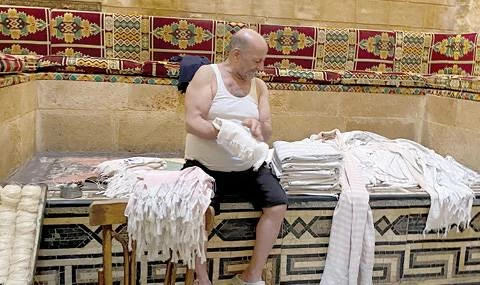
Located in the heart of Tripoli's old markets, Hammam Al-Abd is a historic public bathhouse that has been in operation for centuries. The bathhouse, which dates back to 1614-1615, is a testament to the city's rich history. With its traditional design, including domes and glass openings that allow natural light to enter, Hammam Al-Abd has been a staple of the community for generations. According to Abu Rashed, a 65-year-old attendant at the bathhouse, the establishment has been in operation for over 20 years, with all employees inheriting the profession from their ancestors.
The origins of the bathhouse's name are shrouded in mystery, with one popular story attributing it to an African servant who worked for a high-ranking Ottoman official. According to the tale, the servant fled and took refuge in the bathhouse, where he was killed on its threshold. Despite its uncertain origins, Hammam Al-Abd has played a significant role in the lives of Tripoli's residents, particularly during the Ottoman era. The bathhouse was an essential part of daily life, providing a space for socializing, relaxation, and hygiene.
In the past, Hammam Al-Abd welcomed numerous prominent figures, and it continues to attract a loyal clientele. According to Abu Rashed, the bathhouse currently receives around 70 to 80 visitors per month. The establishment has maintained its traditional practices, with visitors often coming to relax and socialize. The bathhouse also continues to play a role in local customs, with some brides and grooms still visiting the establishment as part of their wedding celebrations.
Hammam Al-Abd is one of the few historic public bathhouses in Tripoli that has managed to survive the test of time. Its enduring presence is a testament to the importance of such establishments in the city's history. As a hub of social activity, the bathhouse provided a space for people to gather, relax, and conduct daily business. Today, it remains a cherished part of Tripoli's cultural heritage.
The bathhouse's architecture is a notable feature, with its traditional design and historic elements. The establishment's facade bears an inscription dating back to 1023 AH, or 1614-1615. The bathhouse's interior is equally impressive, with its domed ceiling and glass openings allowing natural light to illuminate the space. As visitors enter the bathhouse, they are greeted by the aroma of soap and the sound of gentle chatter.
Abu Rashed, who has worked at the bathhouse for over 20 years, is deeply attached to the establishment. He takes pride in his work, carefully folding and drying the traditional towels used by visitors. According to Abu Rashed, the bathhouse has been a part of his family's history for generations, with all employees inheriting the profession from their ancestors.
As a historic landmark, Hammam Al-Abd continues to attract visitors from around the world. Its enduring presence is a testament to the importance of preserving cultural heritage sites. The bathhouse remains a vibrant part of Tripoli's community, offering a glimpse into the city's rich history and traditions. With its unique architecture and historic significance, Hammam Al-Abd is a must-visit destination for anyone interested in exploring the city's cultural heritage.
Key points
- The historic Hammam Al-Abd in Lebanon's Tripoli has been in operation for centuries, offering a glimpse into the city's rich past.