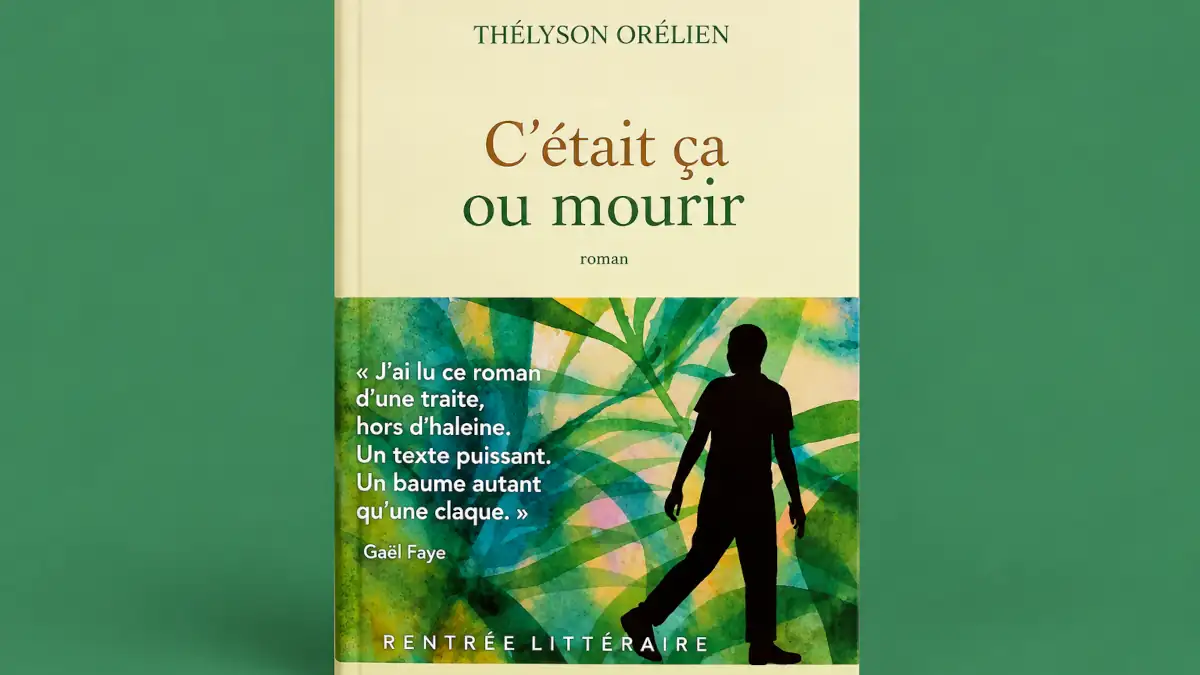
A controversy surrounding Beninese-Canadian author Thélyson Orélien's novel, C'était ça ou mourir, has sparked a heated debate in France. Historian Amzat Boukari-Yabara recently drew comparisons between the accusations against Orélien and those faced by black authors in the 18th century. Boukari-Yabara noted that authors such as Olaudah Equiano were accused of not being the true authors of their works, with some titles including the words "authentic" or "veritable" to verify their authenticity.
Boukari-Yabara argues that the skepticism towards black authors in the 18th century was rooted in the idea that they were intellectually inferior. He claims that this ideology is still present today, with the use of artificial intelligence (AI) in writing sparking concerns about authorship. According to Boukari-Yabara, the concept of a "black literary author" is still questioned, and the use of AI has added a new layer of complexity to this issue.
Orélien has denied the accusations that he used AI to write his novel, stating that he began working on the book in 2017 and completed a first draft in 2019, before the widespread use of generative AI tools. His French publisher, Grasset, has confirmed this account. Despite this, the controversy has led to significant consequences, including the suspension of the book's promotion by the Canadian publisher, Éditions du Boréal, and its removal from the Goncourt Academy's selection.
The controversy has not seemed to affect the book's sales, however. According to data from the GfK institute, 18,256 copies of the book were sold between September 21 and 27, compared to around 12,000 per week before the controversy. The total number of copies sold since the book's release on August 19 has reached 64,966, making it the top-selling novel in France.
Boukari-Yabara's comments have added fuel to the fire, with some arguing that the accusations against Orélien are rooted in racism. The historian's comparison to 18th-century accusations against black authors has sparked a wider debate about the challenges faced by authors from diverse backgrounds. Orélien has canceled his promotional tour in France and returned to Canada, but the controversy has not seemed to affect his reputation.
The use of AI detection tools, such as Pangram, has also been called into question. Some experts have questioned the reliability of these tools, and others have found that the passages in question are likely to have been written by a human. Despite this, the accusations have had significant consequences for Orélien and his publisher.
The controversy surrounding Orélien's novel has highlighted the ongoing challenges faced by authors from diverse backgrounds. As the debate continues, it remains to be seen how this will affect Orélien's career and the wider literary landscape. One thing is certain, however: C'était ça ou mourir remains a bestseller in France, and the controversy has sparked a much-needed conversation about authorship, racism, and the role of AI in writing.
Key points
- Historian Amzat Boukari-Yabara draws parallels between accusations against Thélyson Orélien and 18th-century suspicions against black authors.
- Orélien denies using AI to write his novel, and his publisher has confirmed his account.
- The controversy has not affected the book's sales, which have continued to soar despite the accusations.