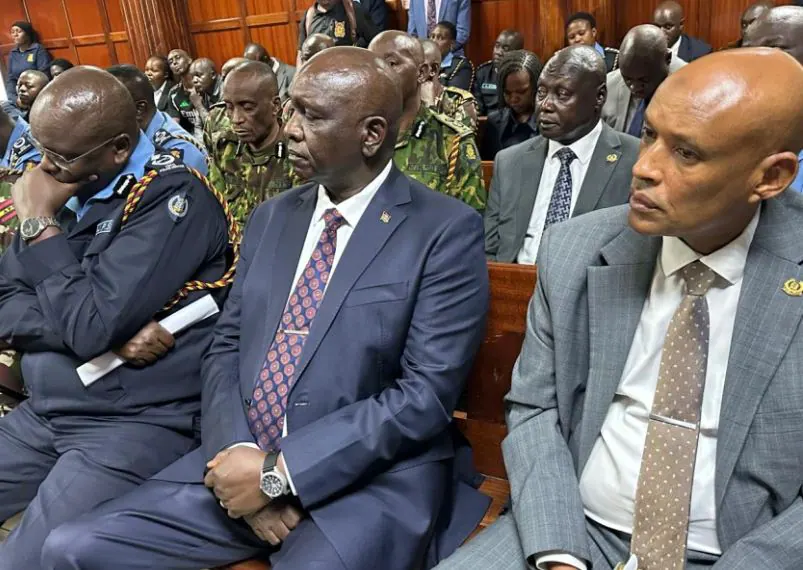
The High Court of Kenya on Monday, September 29, 2026, ruled in favor of Inspector General of Police Douglas Kanja, sparing him from contempt proceedings. Kanja appeared in person before Justice Patricia Nyaundi, accompanied by high-ranking officials, including Deputy Inspectors General Eliud Lagat and Gilbert Masengeli, as well as Director of Criminal Investigations Mohamed Amin. The court had been anticipating the security officials' appearance, as Kanja faced potential sanctions for the National Police Service's actions during public demonstrations.
The case centered on the police's use of roadblocks during protests, which the court determined directly violated citizens' constitutional right to freedom of movement. Justice Nyaundi emphasized that contempt proceedings are essential in protecting the authority of the judiciary and safeguarding the rule of law. The court's earlier order had prohibited officers from barricading roads during public demonstrations, but the National Police Service failed to comply.
Kanja's personal appearance and commitment to abide by judicial directives going forward influenced the court's decision to grant clemency. The police chief demonstrated a clear plan for implementing the injunction during future protests and confirmed that he had already instructed his officers to obey judicial directives. Justice Nyaundi appreciated Kanja's undertaking and assurance that the infraction would not recur.
The court's decision to pardon Kanja was conditional on the National Police Service's future compliance with judicial directives. Justice Nyaundi warned that any new violation of the order could result in a custodial sentence against the police chief. The High Court directed the National Police Service to respect and fully comply with the ban on blocking roads during demonstrations.
The ruling highlighted the delicate balance between maintaining public order and upholding citizens' constitutional rights. Justice Nyaundi noted that the police service has a constitutional responsibility to maintain public order while strictly upholding judicial decisions. The court's forthcoming detailed ruling is expected to further outline the police service's responsibilities in this regard.
The case has significant implications for the relationship between the police and the judiciary in Kenya. The court's warning against future non-compliance suggests that the judiciary is committed to enforcing its orders and protecting citizens' rights. The police service must now demonstrate its commitment to upholding judicial directives and respecting citizens' constitutional rights.
In conclusion, the High Court's ruling on Monday, September 29, 2026, has provided a reprieve for IG Kanja and the National Police Service. However, the court's strict warning against future non-compliance and the potential for custodial sentences serves as a reminder of the importance of upholding judicial directives and respecting citizens' constitutional rights.
Key points
- The High Court of Kenya pardoned IG Douglas Kanja for violating a court order on roadblocks during protests, but warned of potential jail time if the infraction is repeated.
- The court's ruling emphasized the importance of upholding citizens' constitutional rights, particularly the right to freedom of movement.
- The National Police Service must comply with the ban on blocking roads during demonstrations, and the police chief may face a custodial sentence if the infraction is repeated.