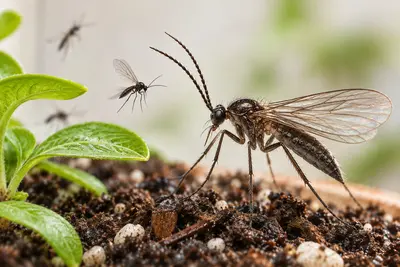
The investigation into the sudden surge of flying insects that engulfed parts of Buffalo City in late August is continuing, with municipal officials and entomologists confirming that the swarms belong to the Sciaridae family, commonly known as black fungus gnats. Although insect numbers have noticeably declined across the metro, authorities are working with specialists to pinpoint the precise species and underlying environmental causes.
Municipal spokesperson Luzuko Buku and leading entomologists have reassured residents that the non-biting insects pose no threat to human health and do not transmit diseases. Environmental experts suggest that recent weather conditions, including above-average rainfall followed by warm temperatures, coupled with stagnant water and organic runoff, created optimal breeding grounds for the temporary population explosion.
Entomologist Prof Terence Bellingan noted that black fungus gnats do not bite, carry diseases or complete life cycles in merely three to four days. Bellingan said identifying insects from descriptions or photographs alone could be difficult, particularly given the diversity of true flies. He also cautioned against claims that the insects could complete their life cycle in three to four days.
Buffalo City Metropolitan Municipality confirmed the recent insect surge involves non-biting gnats from the Sciaridae family. The municipality reported a noticeable drop in insect numbers but continues species-level investigations with scientific partners. Officials cautioned against blaming specific municipal facilities without field evidence and urged residents to report lingering issues.
Environmental specialist Kevin Cole said warmer weather followed by rainfall could create favourable conditions for the insects to reproduce. Recent above-average rainfall had resulted in standing water, saturated soils and swampy areas, he said, while organic material associated with sewage and contaminated runoff could provide food for midge larvae.
Marile van Niekerk of Biodynamic Women Farmers said the surge could also be viewed as an indication of changing environmental conditions rather than simply a pest problem. She suggested that moisture, decaying organic matter, disturbed soil, stagnant water, changes in vegetation and the weather could all influence insect populations.
Experts attribute the swarm to recent heavy rainfall, warm weather and organic runoff creating optimal breeding conditions. The municipality and scientific partners continue to investigate the occurrence of unusually high numbers of these insects across multiple areas of Buffalo City municipality to determine the actual source and curtail future incidents.
Key points
- Black fungus gnats identified as cause of Buffalo City insect surge
- Insects pose no health threat to residents
- Environmental factors contribute to population explosion