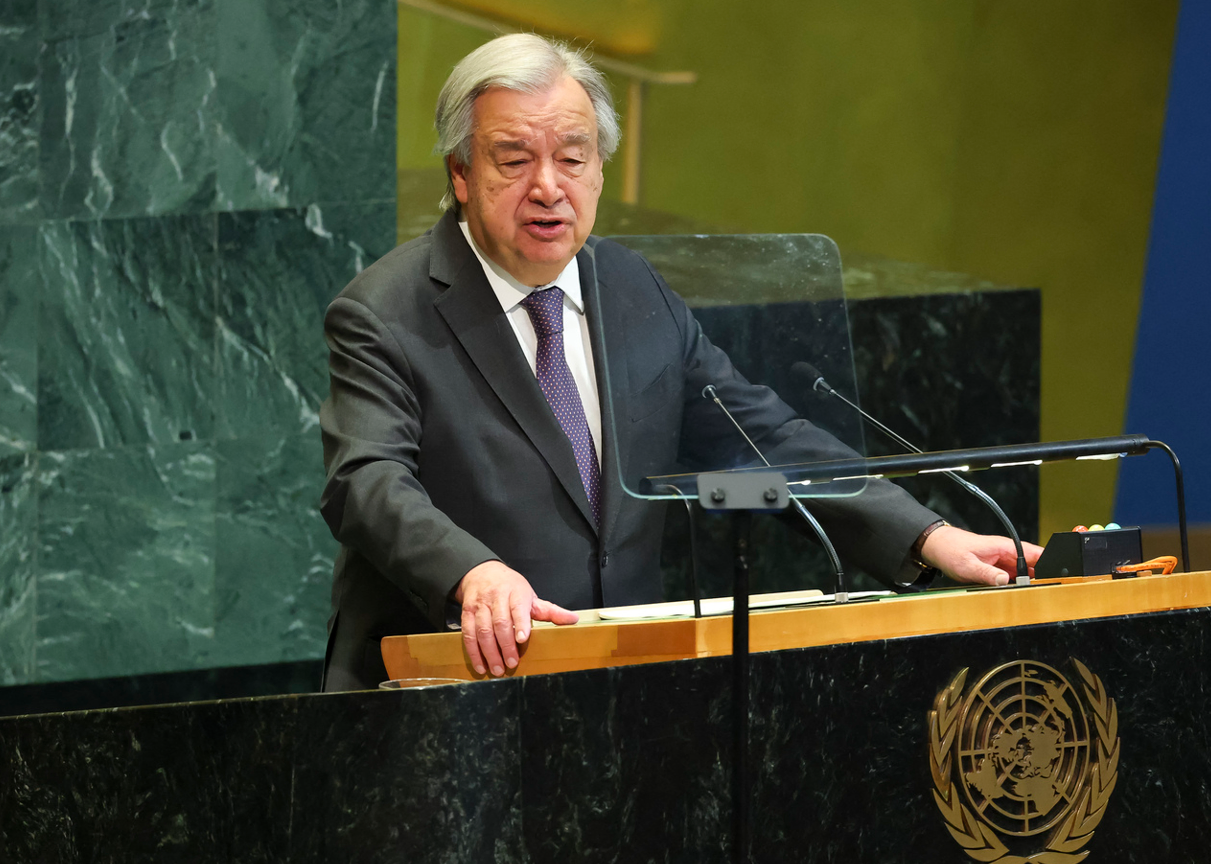
United Nations Secretary-General António Guterres has released a report reiterating the importance of Morocco's autonomy plan in resolving the Sahara conflict. The report, dated October 1, 2026, is the first since the adoption of Resolution 2797 by the UN Security Council in 2025. It highlights the centrality of the Moroccan plan in the relaunch of the political process.
The report confirms that Morocco's autonomy initiative is now the basis for discussions between parties, including Morocco, Algeria, Mauritania, and the Polisario Front. These discussions have taken place over three cycles of direct negotiations in early 2026, under the joint supervision of the UN and the United States. The negotiations aim to achieve a just, durable, and acceptable political solution.
Guterres' report notes that the situation in the Sahara has been marked by low-intensity tensions and clashes between Morocco and the Polisario Front, supported by the Algerian military junta. However, the adoption of Resolution 2797 has given new momentum to the political process led by the UN's Personal Envoy, Staffan de Mistura.
Morocco has developed an expanded version of its 2007 autonomy plan, titled "Project of Autonomy Status," which was communicated to the UN Envoy, the US, Algeria, Mauritania, and the Polisario Front in January 2026. This document has not been made public, as it is intended to serve as a basis for negotiations rather than a definitive agreement.
De Mistura, along with US Representative Michael Waltz, has led the negotiations, which have involved high-ranking officials from the US. The parties have discussed the possibility of establishing a transitional council to manage certain processes during a transitional period. The goal is to create a framework conducive to negotiating the details of a political settlement.
Guterres considers the resumption of direct contacts between parties, for the first time in nearly seven years, as an encouraging development. He calls on the parties to seize this opportunity to make progress toward a political solution, engaging in coordinated and good-faith negotiations under the supervision of his Personal Envoy.
The report also proposes measures to build trust, including an initiative allowing Sahrawis in Tindouf camps to make individual and voluntary visits to Laâyoune and Dakhla. Guterres recommends extending the mandate of the UN's MINURSO mission for another year, citing the need to prevent escalation and maintain contacts with the parties.
Key points
- The UN Secretary-General's report emphasizes the Moroccan autonomy plan as the basis for negotiations in the Sahara conflict.
- The report notes an encouraging development in the resumption of direct contacts between parties.
- Guterres recommends extending the mandate of the UN's MINURSO mission to maintain stability in the region.