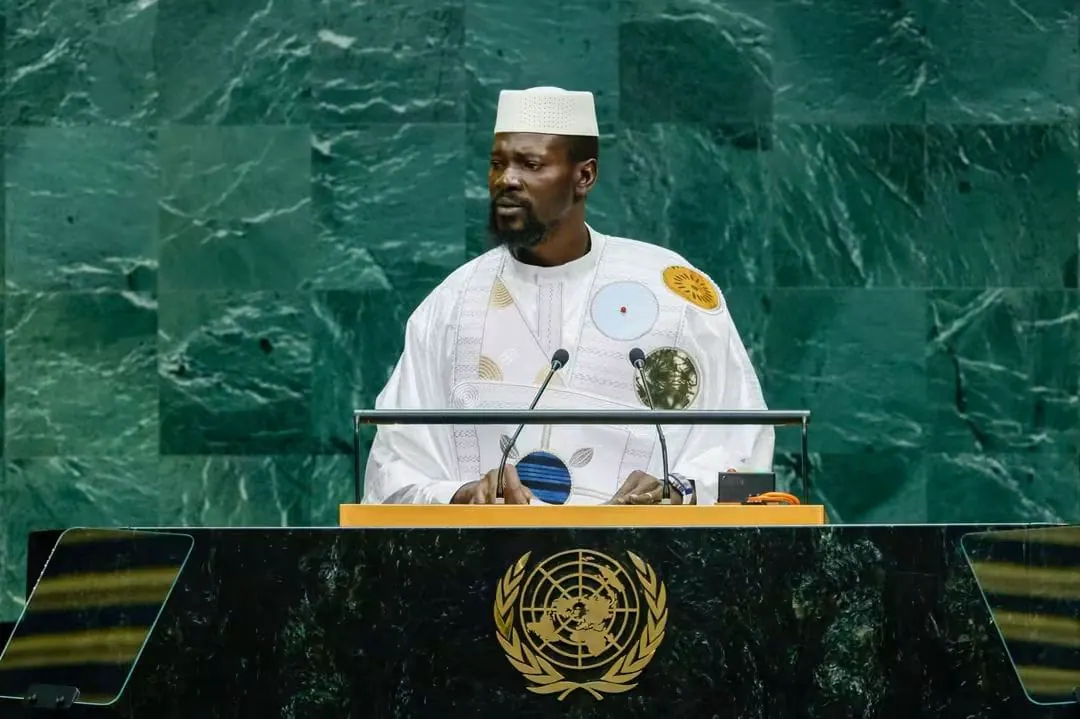
Guinean President Mamadi Doumbouya recently spoke at the 81st session of the United Nations General Assembly, where he emphasized his country's commitment to self-determination and development. This address marked a significant moment for Guinea, as it followed up on a speech made three years prior by the President, who had then called for an end to paternalistic treatment of Africa by other nations. The President's words were seen as a bold statement, with some viewing them as a provocation, while others saw them as a fleeting posture.
However, President Doumbouya's 2026 speech was not a repetition of his previous statements, but rather a demonstration of the progress Guinea has made in achieving its goals. The President highlighted the country's new institutional architecture, which includes a constitution adopted by referendum and an independent financial system that has enabled Guinea to fund its own electoral cycle. These developments mark a significant shift towards greater autonomy and self-reliance for the nation.
The President also pointed to the progress being made on various development projects across the country. These include the construction of roads, schools, and hospitals, as well as the development of the Simandou megaproject, which has been transformed from a dream into a reality. Additionally, Guinea is building alumina refineries and a gold refinery, which will help to increase the value added to its natural resources.
A key aspect of Guinea's development strategy is its focus on youth empowerment. The Simandou Academy, launched as part of the Simandou 2040 vision, aims to equip young Guineans with the skills and knowledge needed to drive the country's growth and development. This initiative is part of a broader effort to convert Guinea's mineral wealth into a lever for growth in areas such as agriculture, energy, education, and healthcare.
President Doumbouya's address to the UN General Assembly was not just about showcasing Guinea's progress, but also about redefining the country's relationships with other nations. The President emphasized that Guinea is not opposed to cooperation, but seeks a new type of partnership based on mutual respect and dignity. This message resonated with the Guinean diaspora, who gathered in New York to show their support for the President and the country's new direction.
The President's appearance at the UN General Assembly was also notable for his attire, which was a traditional Guinean boubou. This garment, made from textiles representing the country's four main regions, was seen as a symbol of national pride and a celebration of Guinea's cultural heritage. By wearing the boubou, the President was making a statement about the importance of preserving and promoting Guinea's unique identity.
Overall, President Doumbouya's address to the UN General Assembly was a significant moment for Guinea, as it highlighted the country's progress and commitment to self-determination. The President's consistency in his message and actions has been seen as a hallmark of his leadership, and his speech was widely seen as a rebuke to those who had doubted Guinea's ability to chart its own course.
Key points
- Guinea has made significant progress in achieving its development goals, including the construction of roads, schools, and hospitals, and the development of the Simandou megaproject.