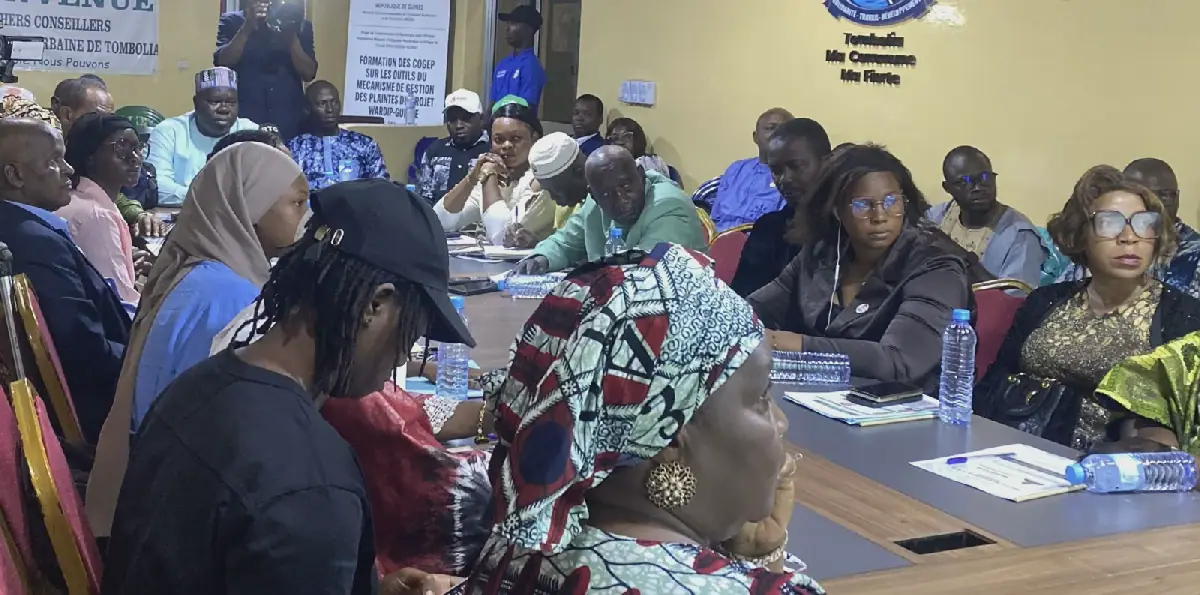
The municipal councillors of Tombolia, Guinea, have unanimously adopted the 2027 participatory budgeting project for the Annual Investment Program (PAI). The adoption took place during a meeting at the town hall, chaired by Mayor Cheick Mohamed Cissé. The meeting was attended by municipal councillors, the interim secretary-general, and technical and financial service officials. The project aims to involve citizens in identifying priority micro-projects to improve their living conditions.
The director of the Communal Plan, Amara Kaba, presented the document, highlighting that participatory budgeting is a tool for local governance. It enables citizens to participate in identifying priority micro-projects. The commune has initiated the process by setting up a steering committee to organize consultations in the districts. The needs expressed by the populations will be examined and prioritized during a communal forum.
The 2027 PAI process will involve residents of Tombolia's 14 districts and representatives of technical and financial partners. The process, expected to last 15 days, consists of three stages: a launch and awareness meeting, forums in the 14 districts to gather citizen concerns, and a communal forum for analysis and validation of priority micro-projects. The process will involve district heads and councils, women, youth, elderly, and people with disabilities in identifying needs and choosing priority investments.
Mayor Cheick Mohamed Cissé welcomed the unanimous adoption of the project, encouraging the councillors' commitment to participatory governance and local development that meets the population's aspirations. Municipal councillor Aïcha Sy Savane expressed her satisfaction with the initiative, believing it will better address citizens' real needs and contribute to the commune's development.
The project, valued at 16 million 780 thousand Guinean francs, aims to strengthen citizen participation in choosing communal investments and promote transparency in managing local priorities. The Guinean Press Agency reported that the project will allow for more inclusive decision-making and better allocation of resources.
The participatory budgeting process is a significant step towards improving local governance in Tombolia. By involving citizens in the decision-making process, the commune hopes to address the needs of its residents more effectively. The project's success will depend on the active participation of citizens and the commitment of local authorities.
The adoption of the 2027 participatory budgeting project marks a positive development in Tombolia's efforts to promote transparency and citizen engagement. The project's implementation will be closely watched, as it has the potential to serve as a model for other communes in Guinea.
Key points
- The project aims to involve citizens in identifying priority micro-projects to improve their living conditions.
- The process will involve residents of Tombolia's 14 districts and representatives of technical and financial partners.
- The project is valued at 16 million 780 thousand Guinean francs.