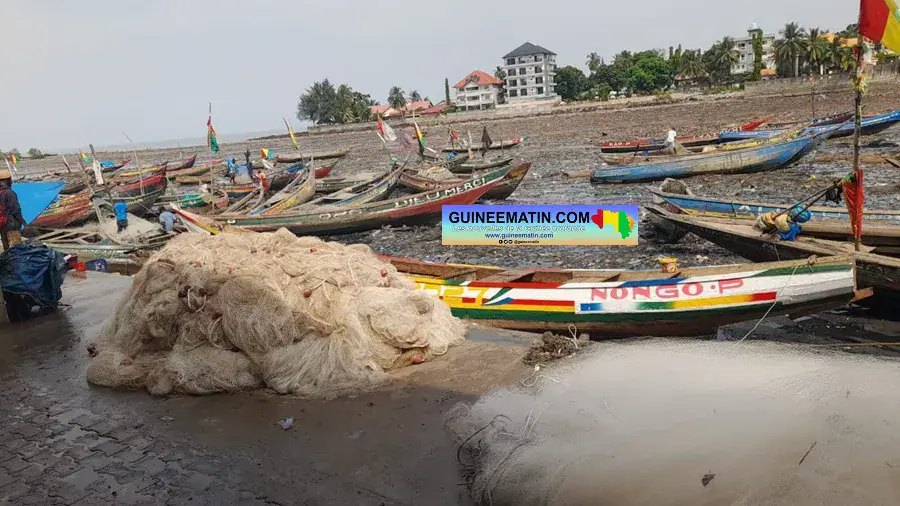
On November 21, the World Day of Artisanal Fishermen and Sea Workers, Guinean fishermen gathered at the Kaporo fishing port in Conakry to highlight the challenges they face. They appealed to the authorities for better support, citing the lack of ice production facilities as a major concern. Without access to ice, fishermen struggle to preserve their catches after a day at sea, leading to significant losses. Mohamed Bangoura, a fisherman, emphasized the need for an ice production unit at Kaporo to help them store their catches.
The lack of ice production facilities at Kaporo port is a pressing issue for fishermen. Alsény Soumah, who handles conflicts at the port, acknowledged that several problems have been resolved, but access to ice remains a significant challenge. He urged the authorities to provide assistance, stating that it is the primary concern for fishermen at the port. The absence of ice production facilities forces fishermen to rely on alternative, often inadequate, methods to preserve their catches.
In addition to conservation challenges, fishermen at Kaporo port also face financial and equipment shortages. Issiaga Soumah, a fisherman known as "Soumah Solidaire," called for the establishment of a microfinance mechanism to provide easier access to credit for sector actors. He suggested that the government could provide 100% support to fishermen, rather than the current 50%. This would help address the lack of equipment, including nets and engines, which hinders the productivity of many fishermen.
The financial constraints faced by fishermen in Guinea are significant. Many struggle to access credit, which limits their ability to invest in equipment and improve their livelihoods. The proposed microfinance mechanism could help alleviate these challenges, providing fishermen with the resources they need to operate more effectively. By addressing these financial and equipment shortages, the government could help support the growth and sustainability of the artisanal fishing sector.
Fishermen at Kaporo port also highlighted the need for better infrastructure and support from the government. They emphasized that the establishment of an ice production unit and a microfinance mechanism would greatly alleviate their challenges. These initiatives would enable them to focus on their work, rather than worrying about how to preserve their catches or access credit. By addressing these concerns, the government can help improve the livelihoods of artisanal fishermen and their families.
The artisanal fishing sector is a vital part of Guinea's economy and culture. However, it faces numerous challenges, including conservation, financial, and equipment shortages. The concerns raised by fishermen at Kaporo port are a call to action for the government to provide more support to the sector. By addressing these challenges, the government can help ensure the long-term sustainability of artisanal fishing in Guinea and improve the livelihoods of those who depend on it.
As the World Day of Artisanal Fishermen and Sea Workers came to a close, fishermen at Kaporo port expressed hope that their concerns would be taken into account by the authorities. They emphasized the importance of collaboration and support in addressing the challenges they face. By working together, the government and fishermen can find solutions to the conservation, financial, and equipment shortages that hinder the sector's growth and sustainability.
Key points
- Fishermen in Guinea's Kaporo fishing port call for an ice production unit to address conservation challenges.
- The lack of access to credit and equipment is a significant challenge for artisanal fishermen in Guinea.
- The Guinean government is urged to provide more support to the artisanal fishing sector to ensure its long-term sustainability.