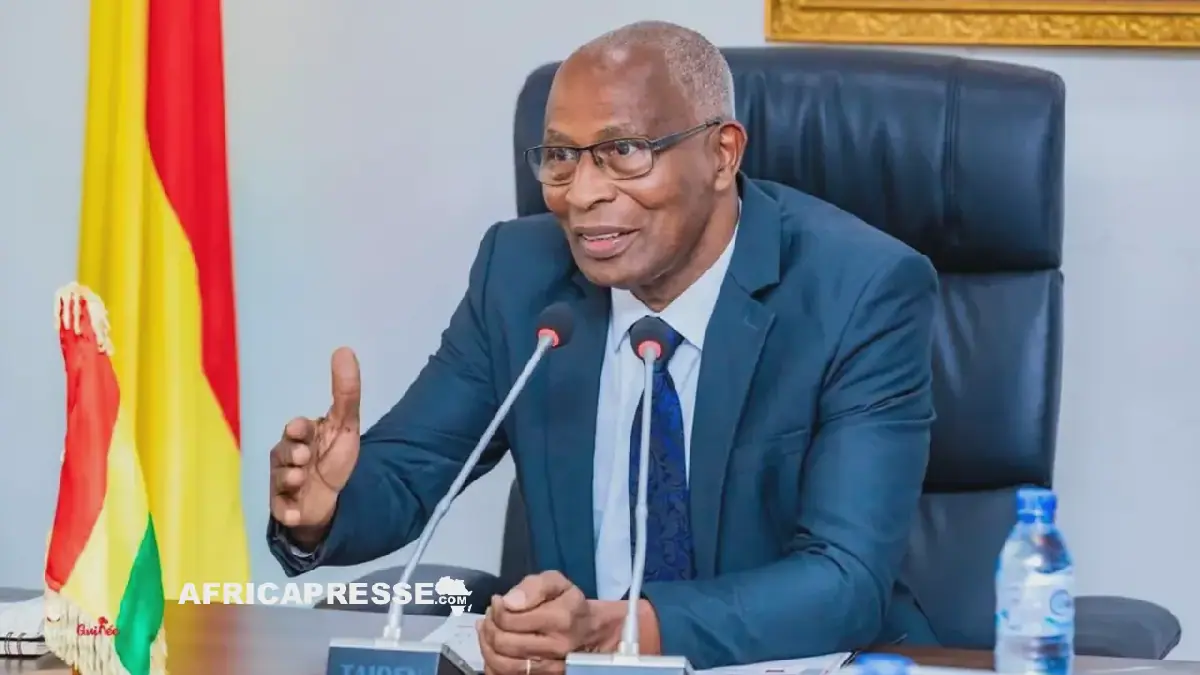
Guinea's Prime Minister, Amadou Oury Bah, has presented a new doctrine of strategic neutrality as the guiding principle for the country's public action until 2027. This doctrine, unveiled at the end of the government's retreat, aims to prioritize national sovereignty in its diplomacy and economic governance. The doctrine, titled "Mamadi Doumbouya: Strategic Neutrality for Sustainable Stability," is a framework for the state's action, focusing on independence in diplomatic choices and prioritizing national interest.
The doctrine seeks to formalize a foreign policy based on independence and national interest, refusing to align with rival powers. According to Prime Minister Bah, this doctrine will serve as a compass for economic and administrative governance. The government plans to review public project blockages in each ministry before the end of 2026 and link budget credits to identified responsible parties and measurable objectives starting in 2027.
The Prime Minister has announced his personal involvement in resolving reported blockages, indicating a desire to strengthen inter-ministerial coordination. This approach is part of a historical trajectory that Prime Minister Bah himself has claimed, drawing on the heritage of Guinea's four natural regions: Haute-Guinée, Fouta-Djalon, Basse-Guinée, and Guinée forestière. Their diversity is presented as the foundation of a common identity, with the proclaimed sovereignty of 1958 serving as a reference.
The new doctrine places political and economic sovereignty at the heart of the national strategy, with the Simandou 2040 program as the primary transformation horizon. The executive aims to convert the country's resources and assets into development levers while preserving its autonomy. Prime Minister Bah has praised the approval of Guinea's economic and financial program for 2026-2029 by the International Monetary Fund's Board of Directors on November 23.
The Prime Minister attributes this decision to the reforms undertaken by the authorities and the work of government teams, emphasizing that this progress must translate into perceptible improvements in the daily lives of the population. The government's calendar reflects a desire to move from a declaration of intent to a binding device. The review of blockages and the indexing of budget credits to identified responsible parties and measurable objectives are designed to create a logic of accountability.
A crucial question remains: will the "strategic neutrality" doctrine produce a lasting effect if it does not translate into concrete arbitration in major contracts and mining partnerships, particularly around Simandou? The scope of the text will depend on its ability to survive changes and external pressures. Guinea intends to develop relations with all its partners without aligning itself, but this posture requires a solid administration and professionalized diplomacy.
The doctrine's effectiveness will be tested by its budgetary and administrative implementation: if the letters of mission and the review of blockages produce visible results by 2027, the strategic neutrality will acquire credibility. Otherwise, it will remain a slogan from the government retreat. The true challenge lies in the doctrine's ability to be institutionalized beyond individuals and withstand future changes.
Key points
- The doctrine of strategic neutrality prioritizes national sovereignty in Guinea's diplomacy and economic governance.
- The government plans to review public project blockages and link budget credits to identified responsible parties and measurable objectives.
- The doctrine's effectiveness will depend on its implementation and ability to withstand external pressures and future changes.