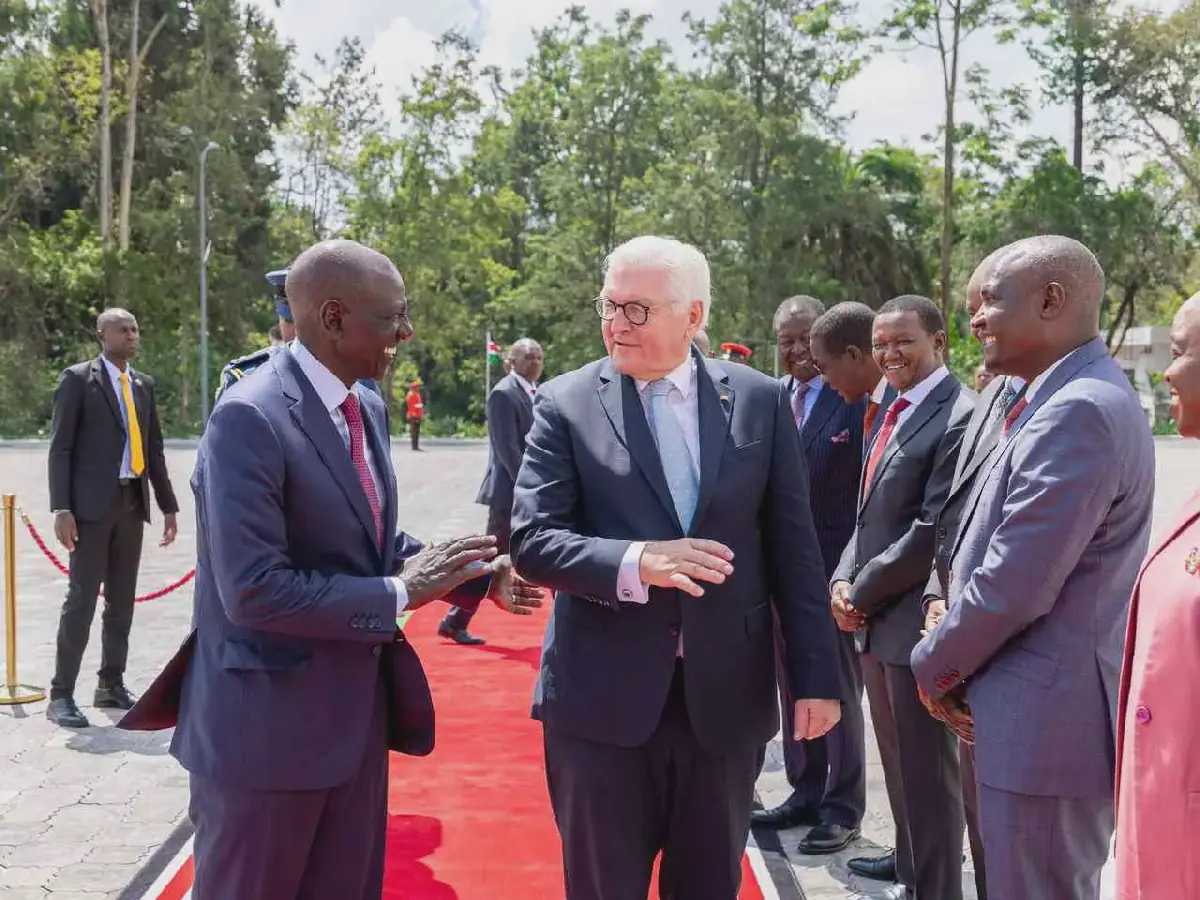
The number of Kenyans employed in Germany has risen to 9,500 in March 2026 from 7,000 two years earlier, President William Ruto announced. He attributed the increase to growing employment opportunities under the Comprehensive Migration and Mobility Partnership Agreement (CMMPA) between Kenya and Germany. The agreement seeks to create pathways for skilled workers and trainees. Ruto made the announcement during a joint press conference with German President Frank-Walter Steinmeier at State House, Nairobi.
The CMMPA was signed in Berlin on September 13, 2024, and came into force on October 18, 2024. It establishes a framework for cooperation in employment, vocational training, skills development, and protection of migrant workers. The agreement also provides for cooperation in addressing irregular migration and the return of people who do not have the legal right to remain in either country. Germany has been seeking skilled workers to address shortages in its labour market as its population ages.
In addition to the growth in employed Kenyans, the number of Kenyan trainees contributing to Germany's social security system increased from 820 in March 2024 to 1,260 in March 2026. Ruto and Steinmeier discussed measures to streamline visa and recruitment procedures, expand language training, and speed up the recognition of professional qualifications. The discussions also covered vocational training programmes aimed at equipping Kenyans with skills that respond to the needs of the German economy.
The two leaders explored further opportunities for Kenyan seafarers through specialised training, sea-time placements, and partnerships with German shipping companies. Their discussions also covered sustainable shipping, maritime logistics, and investment in the sector. Ruto invited German companies to increase investment in Kenya, identifying manufacturing, agro-processing, infrastructure, healthcare, renewable energy, and digital technology as priority sectors.
Ruto also pointed to opportunities for expanding Kenyan exports to Germany and the wider European market under the Kenya-European Union Economic Partnership Agreement (EPA). He identified cut flowers, avocados, and fresh vegetables among products with export potential. The President called for efforts to address market access barriers and help Kenyan exporters meet international quality standards.
The two countries also discussed agricultural cooperation in mechanisation, irrigation, climate-smart farming, post-harvest management, and food chain infrastructure. Ruto said the objective was to improve agricultural productivity, raise farmers' incomes, create jobs, and strengthen food security. The President also announced the conclusion of technical negotiations on a mutual data adequacy arrangement between Kenya and the European Union (EU).
Ruto thanked Germany for supporting the government's Shirika Plan, which seeks to move refugees from prolonged encampment and humanitarian dependency towards integrated settlements and self-reliance. The two leaders discussed cooperation in counter-terrorism, maritime security, military training, and peace-support operations.
Key points
- The number of Kenyans employed in Germany rose to 9,500 in March 2026 from 7,000 two years earlier.
- The Comprehensive Migration and Mobility Partnership Agreement (CMMPA) was signed in Berlin on September 13, 2024.
- Kenya and Germany discussed measures to streamline visa and recruitment procedures, expand language training, and speed up the recognition of professional qualifications.