The Nigeria Midstream and Downstream Petroleum Regulatory Authority (NMDPRA) has identified gas penetration, energy security, and operational efficiency as its major priorities. These priorities align with President Bola Tinubu's agenda to deepen gas utilization, improve access to natural gas, and expand infrastructure across the country. The authority's focus on increased domestic gas supply and improved distribution aims to reduce cooking gas prices and strengthen Nigeria's energy security.
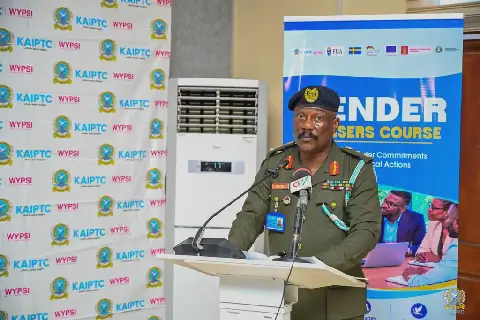
The NMDPRA Chief Executive, Rabiu Abdullahi Umar, visited the Nigerian Liquefied Natural Gas (NLNG) plant and Train 7 project site in Bonny, emphasizing the authority's commitment to ensuring the adequate availability of cooking gas and natural gas, particularly in underserved areas. This commitment will be achieved through infrastructure development and increased supply. The ongoing Ajaokuta-Kaduna-Kano (AKK) gas pipeline project is part of efforts to expand gas infrastructure and extend supply to more locations.
Umar noted that cooking gas prices have started declining by between N300 and N400 per kilogramme following increased supply and interventions to address distribution challenges. He attributed fluctuations in cooking gas prices to demand and supply dynamics, as well as logistical challenges associated with product transportation, shipping, and vessel availability. The authority is working with operators to address these constraints, which affect domestic supplies despite some gas being produced locally.
The engagement with NLNG aimed at increasing the volume of cooking gas available in the domestic market to ease supply pressure and moderate prices. Umar urged NLNG to expand its production capacity through additional LNG trains, assuring the company of the authority's commitment to providing an enabling regulatory environment. This collaboration is expected to promote industry growth, improve domestic gas utilization, and deliver greater benefits to Nigerians.
The Managing Director and Chief Executive Officer of NLNG, Adelaye Falade, stated that the company is working to increase gas production and the domestic supply of Liquefied Petroleum Gas (LPG) to improve availability and address price distortions. NLNG's major priority is to operate its production facilities at full capacity, although inadequate feed gas supply has affected optimal utilization of the plant. The ongoing Train 7 project will increase the company's LNG production capacity by an additional 7.5 MTPA.
The Train 7 project will also increase NLNG's domestic LPG supply capacity by 50 per cent, from the current 500,000 tonnes to about 750,000 tonnes annually. This additional capacity will help bridge the gap between domestic LPG supply and national demand, reducing the country's dependence on imported cooking gas. Improved domestic production, efficient distribution, and continued collaboration with the regulator are expected to reduce the disparity between loading and retail prices.
NLNG's General Manager, Production, Nnamdi Anowi, highlighted the company's success stories, including the loading of 6.485 LNG cargoes in November 2026 and the supply of 500,000 tonnes of LPG annually to the Nigerian market. The company has six LNG trains with a combined capacity of 22 MTPA, Train 7+, 22 dedicated LNG vessels and LPG vessels, an asset base of 22.9 billion dollars, revenue of 149.6 billion dollars, dividends of 47.2 billion dollars, and tax payments of 10.8 billion dollars.
Key points
- The NMDPRA is prioritizing gas penetration, energy security, and operational efficiency to deepen gas utilization and improve access to natural gas in Nigeria.
- The authority is working with operators to address logistical challenges affecting domestic gas supplies and to increase the volume of cooking gas available in the domestic market.
- The ongoing Train 7 project by NLNG will increase the company's LNG production capacity and domestic LPG supply capacity to meet growing demand and reduce dependence on imported cooking gas.