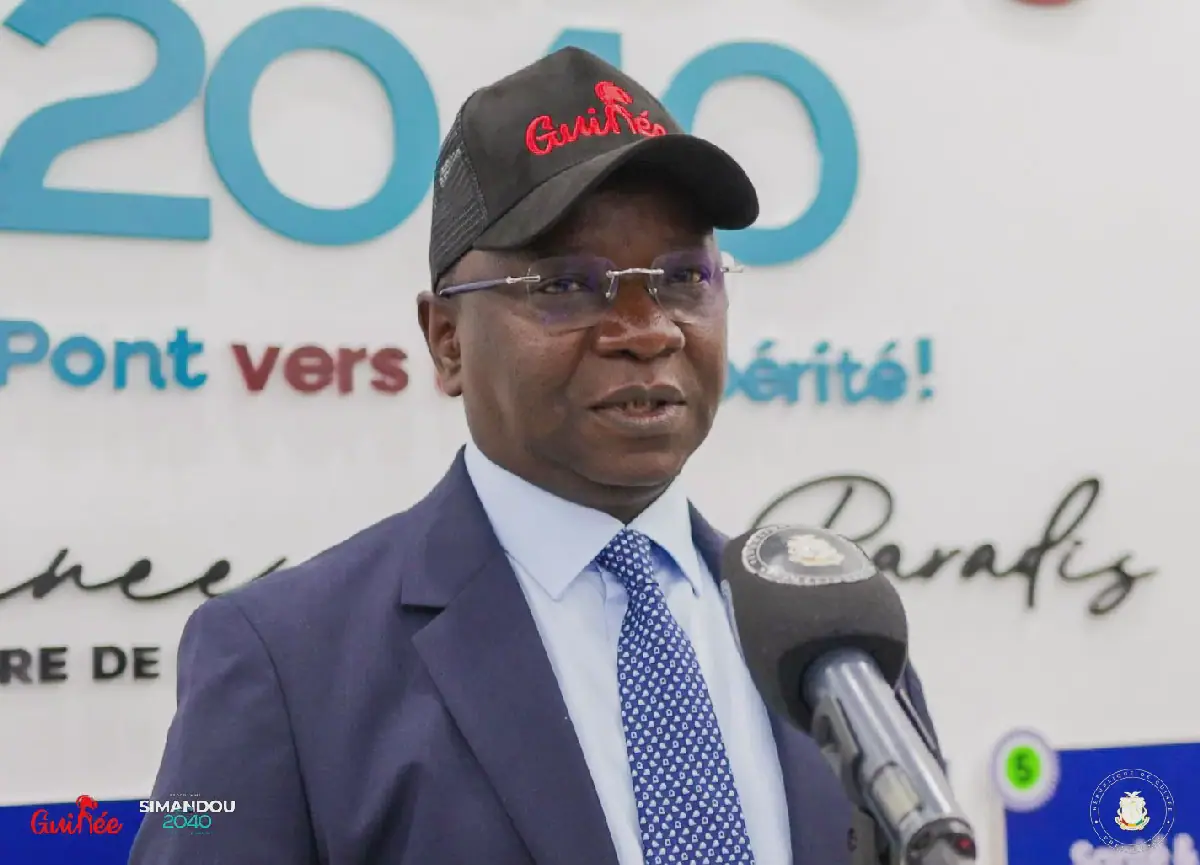
Guinea's Minister of Mines and Geology, Bouna Sylla, has outlined the country's ambition to develop a prosperous and diversified economy by leveraging its abundant mineral resources. During a recent parliamentary session, Sylla cited Canada, Australia, Norway, and other countries as examples of successful economic transformation through effective management of natural resources. He emphasized the need to use mining revenues as a catalyst for economic diversification and human capital development.
Sylla highlighted Canada and Australia as prime examples of countries that have successfully transitioned from mining-based economies to diversified ones. Despite being among the world's top mining powers, the mining sector accounts for only 4% and 9% of their economies, respectively. In contrast, their per capita GDP stands at $60,000 to $75,000. Sylla noted that these countries have used their mining resources as a springboard for growth, rather than a sole destination.
The Minister also drew inspiration from Norway's model of managing natural resource revenues. Norway has chosen to save its oil revenues for future generations, resulting in the world's largest sovereign wealth fund, valued at $2,300 billion. Sylla praised Norway's discipline in managing its resources, which has enabled the country to become a significant investor. He emphasized that Guinea aims to follow a similar path.
Sylla also cited the Gulf countries as examples of successful economic diversification. Through their sovereign wealth funds and strategic investments in logistics, services, finance, and tourism, these countries have transformed their hydrocarbon resources into sustainable prosperity. He noted that Saudi Arabia and the United Arab Emirates have achieved per capita GDP of $35,000 and $51,000, respectively.
Chile is another country that Sylla sees as a relevant model for Guinea. As a mining country heavily dependent on copper, Chile has created a copper fund to protect its budget from price fluctuations. This fund has contributed to Chile's economic growth, with per capita GDP rising from $2,500 in 1990 to nearly $18,000 in 2025. Sylla attributed Chile's success to its institutions, discipline, and national ambition.
In addition to financial resources, Sylla stressed the importance of human capital in building a sustainable economy. He cited Singapore as an example of a country that has invested in its citizens, transforming them into its primary resource. Singapore's per capita GDP has risen from $500 in 1965 to $110,000, surpassing that of Germany. Sylla emphasized that this vision is at the heart of Guinea's Simandou project.
The Simandou project, led by President Mamadi Doumbouya, aims to ensure that mining activities directly benefit the national economy and local populations. A portion of the taxes, dividends, and royalties generated by the project will fund education and provide scholarships to top students from across the country. Sylla distinguished these resources from those allocated to the sovereign wealth fund, which will be managed through a special allocation budget to guarantee their use in line with set objectives.
Key points
- Guinea aims to emulate Canada and Australia's economic diversification models to transform its natural resources into sustainable wealth.