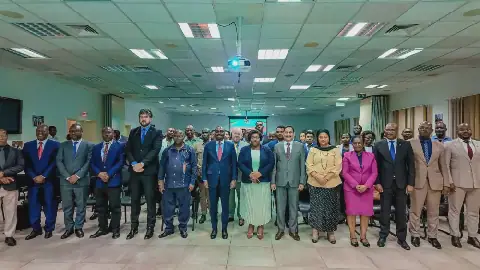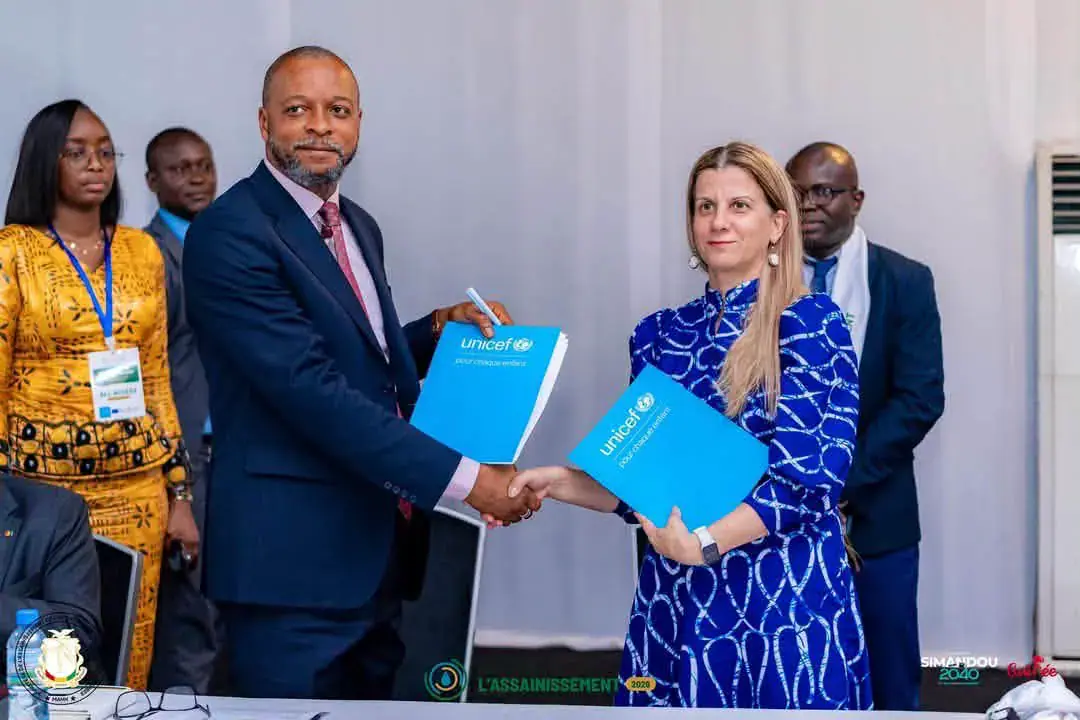
The Ministry of Sanitation, Hydraulics, and Hydrocarbons in Guinea has initiated concrete results from its sanitation forum, signing three significant agreements on the sidelines of the first day of the roundtable discussion held on November 25, 2026, in Conakry. These partnerships aim to support and accelerate the implementation of structuring projects linked to the Simandou 2040 program. The agreements were signed with the UNICEF, the World Bank-supported Project Water and Sanitation in Guinea (PEAG), and the company SODIAPLAST.
One of the agreements is a convention between the Ministry and UNICEF to support the implementation of components related to the Simandou Megaprojects, in line with the organization's mandate and capacities. Another agreement is between the General Directorate of Sanitation and the PEAG, which includes a $10 million school sanitation project and a $2 million institutional reform project for the General Directorate of Sanitation and ANASP.
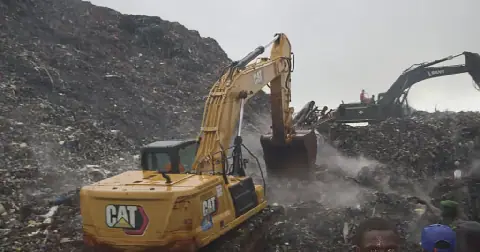
The third agreement is a partnership convention between the Ministry and SODIAPLAST, a company specializing in plastic waste valorization. This partnership involves installing several plastic purchase kiosks in Greater Conakry. According to Minister Aboubacar Camara, these kiosks will enable households to more easily access plastic waste collection and valorization circuits.
The Minister of Sanitation, Hydraulics, and Hydrocarbons, Aboubacar Camara, emphasized that the objective of these kiosks is to bring populations closer to the opportunities offered by the sanitation sector and to associate them more closely with the improvement of their living environment. He stated that through this mobilization, the Ministry reaffirms its commitment to strengthening partnerships, coordinating interventions, and mobilizing the necessary resources to achieve its ambitions.
During the first day of the forum, eight large-scale projects were presented to technical and financial partners to accelerate the transformation of the sector. These projects, part of the Simandou Megaprojects (MPS), reflect the department's strategic priorities in sanitation. The discussions, which included various partners such as UNICEF, the World Bank, and the European Union, among others, showed that the partners welcomed the relevance of the presented projects.
The partners expressed their availability to accompany the implementation of these projects and showed interest in in-depth technical discussions to identify collaboration opportunities and strengthen interventions already underway on the ground. This forum and the signed partnerships demonstrate the Ministry's efforts to address sanitation challenges in Guinea and to involve various stakeholders in the process.
The Ministry's efforts, as highlighted during the forum, focus on improving sanitation and living conditions in Guinea. With the Simandou 2040 program, the Ministry aims to implement comprehensive projects that can transform the sanitation sector. The partnerships signed will play a crucial role in achieving these goals, and the Ministry's commitment to collaboration and resource mobilization will be essential in realizing these ambitions.
Key points
- The Ministry of Sanitation in Guinea has signed three key partnerships to support the Simandou 2040 program, focusing on sanitation projects and plastic waste valorization.