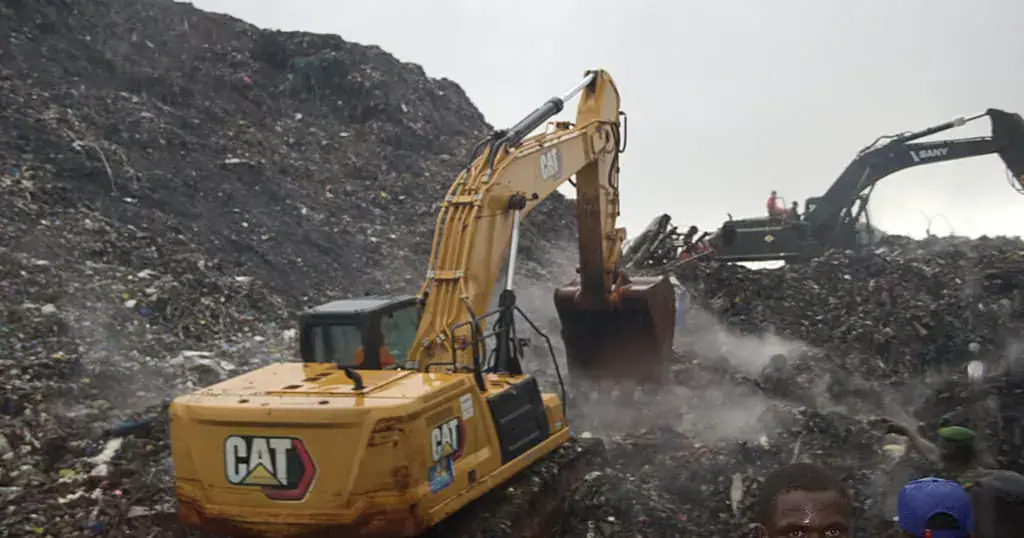
The government of Guinea has announced a massive clean-up operation in the capital city of Conakry, with a deadline set for the end of the year. This move comes after heavy rainfall triggered the collapse of a rubbish landfill, resulting in the deaths of at least 31 people. The incident led to the permanent closure of the Conakry site, causing an increase in illegal dumping of garbage across the capital.
Sanitation Minister Aboubacar Camara stated that the city generates about 3,000 tonnes of waste every day, with much of it ending up in the streets due to weaknesses in the collection system. The minister's comments highlight the severity of the waste management issue in Conakry. The situation has prompted the government to take measures to improve waste collection and recycling.
Prime Minister Amadou Oury Bah has called on local authorities to become more involved in organizing waste collection, suggesting that this could create jobs. The government is also establishing a national sanitation fund to guarantee financing for the sector. This initiative aims to improve the overall waste management situation in Conakry and its suburbs.
The first phase of the national clean-up policy, covering the period from this year to 2030, is estimated at $610,000 and has been finalized with a waste collection operator. The government plans to provide equipment to move waste from transit and sorting centers to a new disposal site outside the capital. This move is expected to help alleviate the waste management challenges in Conakry.
In addition to the clean-up operation, the government reported plans to transform the closed waste site in Conakry into an urban park. This project aims to provide a green space for residents and help mitigate the environmental impact of the former landfill. The transformation of the site is seen as a positive step towards sustainable development.
The clean-up operation and subsequent measures are aimed at addressing the weaknesses in the waste collection system and reducing the amount of waste that ends up in the streets. The government is working to improve waste management in Conakry, with a focus on creating jobs and promoting sustainable practices.
The situation in Conakry highlights the challenges of waste management in urban areas, particularly in the face of natural disasters and infrastructure failures. The government's response and initiatives aim to provide a sustainable solution to the waste management issue, with a focus on improving the quality of life for residents.
Key points
- The government has set a deadline of year-end for the clean-up operation in Conakry.
- The city generates about 3,000 tonnes of waste every day, with much of it ending up in the streets.
- The first phase of the national clean-up policy is estimated at $610,000.