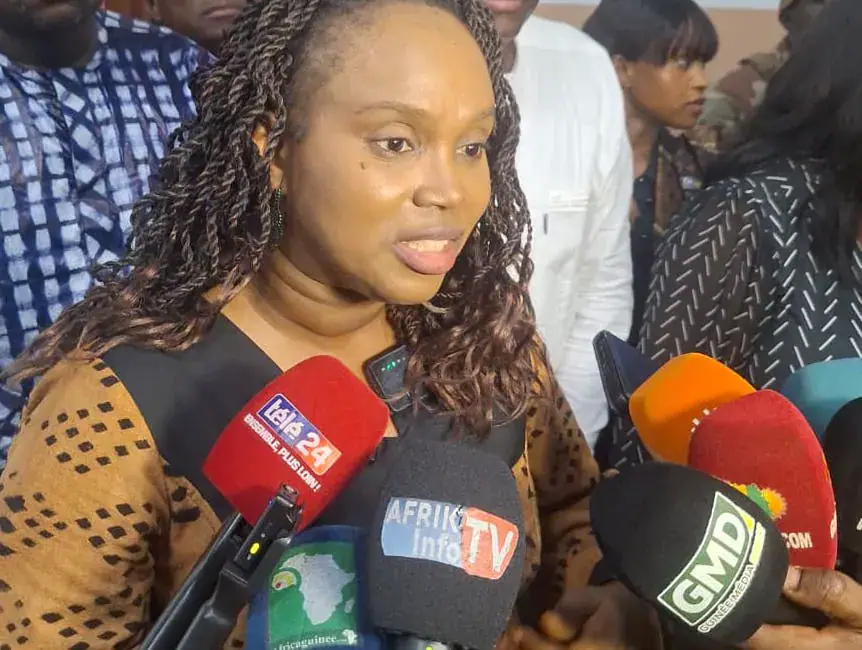
The National Assembly of Guinea has adopted the 2026 Rectified Finance Law, with a focus on key adjustments to the state's budget. The Minister of Economy, Finance, and Budget, Mariama Ciré Sylla, highlighted that these adjustments aim to address the evolving international context and urgent population needs. The new budget allocates 67,925 billion francs, a 5.8% increase, and 60,060 billion francs in revenue, a 7.5% increase.
A significant portion of the budget is dedicated to social sectors, including health and education. The plan involves reinforcing the operational capacity of 155 health posts and over 2,500 health centers nationwide. Additionally, the budget includes equipment for hemodialysis centers and regional hospitals, enhancing the availability of medicines and vaccines. In the education sector, the government will support 4,500 teachers to strengthen their presence, particularly in rural schools.
The 2026 Rectified Finance Law also focuses on protecting the purchasing power of Guineans. A substantial subsidy of approximately $500 million will maintain fuel prices at 12,000 francs per liter. This decision aligns with President Mamadi Doumbouya's priorities to shield the population from the impacts of the international crisis. Several neighboring countries have increased fuel prices due to global events, but Guinea has opted to maintain stability in this regard.
The budget not only addresses social needs but also supports structural investments in infrastructure, agriculture, and energy. These sectors are crucial to the president's agenda, which includes the local transformation of produced resources. The program, known as Simandou 2040, aims to drive development through strategic investments.
Despite the ambitious budget, a deficit of 2.01% remains, though it is lower than the initially projected 2.07%. The government plans to finance this deficit through external financing and other resources. The minister expressed satisfaction with the National Assembly's recommendations, which were beneficial in adjusting the investment projects.
Some deputies expressed concerns about low or absent disbursements in certain sectors, such as agriculture. The minister explained that delays were due to various factors, including a lack of preliminary studies, issues with land occupation, and difficulties related to fiber optic and electrical installations. The Rectified Finance Law allowed for the reorganization of investment projects to focus on those ready for execution and likely to yield short-term results.
The government has implemented several reforms to enhance budget execution, including the digitalization of public markets and financial control systems. These reforms aim to accelerate payment execution and improve the capacity of sectoral ministries to absorb financing effectively. The goal is to ensure the successful implementation of projects outlined in the Simandou 2040 program.
Key points
- The 2026 budget for Guinea has been adjusted to 67,925 billion francs, marking a 5.8% increase.
- A significant portion of the budget is dedicated to social sectors, including health and education.
- The government has maintained a substantial subsidy to keep fuel prices stable at 12,000 francs per liter.