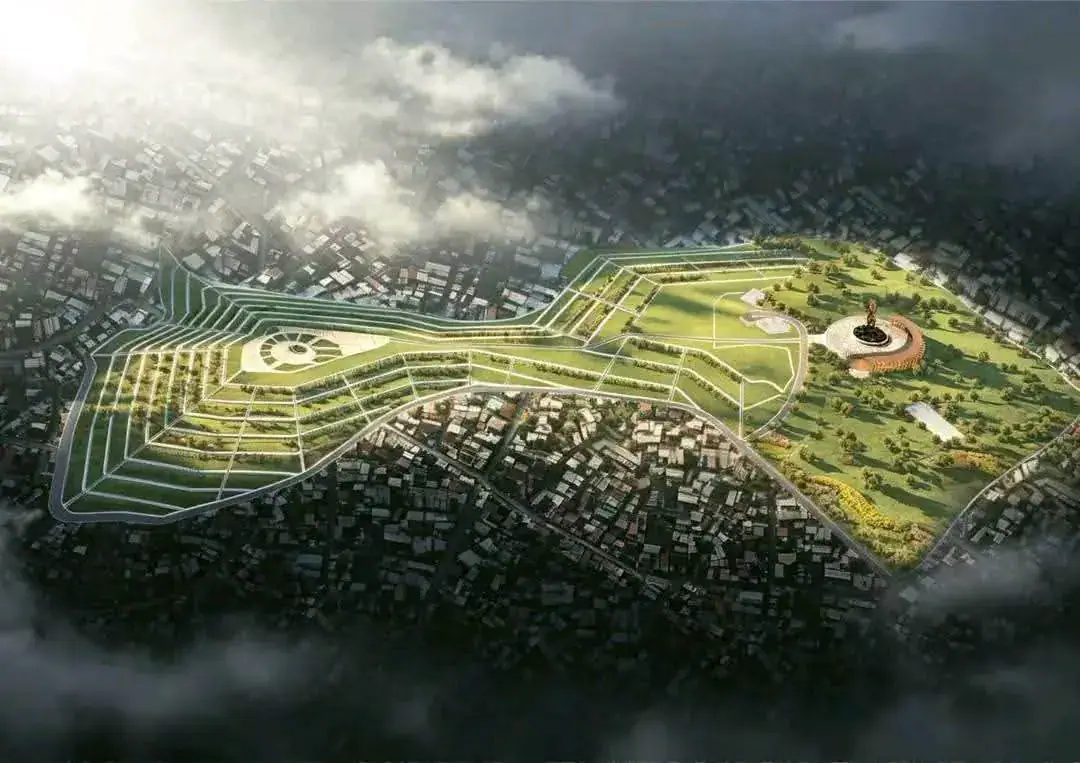
The government of Guinea has officially launched a project to rehabilitate the Dar-Es-Salam landfill, located in the Gbessia commune of Conakry. The project, fully funded by Winning International Group, aims to secure the landfill, reduce health and environmental risks, and transform the site into a urban park. The ceremony was attended by Prime Minister Amadou Oury Bah, representing President Mamadi Doumbouya. The landfill has been a source of concern for years, with 7.2 million tons of waste accumulated over nearly three decades.
The Dar-Es-Salam landfill has had severe environmental and health consequences, including methane emissions, leachate infiltration, and risks of fires and landslides. A tragic incident on August 23, which claimed the lives of six people, including Sierra Leonean nationals, highlighted the urgency of addressing the situation. Minister of Sanitation, Hydraulics, and Hydrocarbons Aboubacar Camara expressed his condolences to the families of the victims and emphasized the need to mitigate the dangers associated with the landfill.
Minister Camara described the landfill as a "national shame" and stressed that its closure is a crucial step in Conakry's sanitation policy. He noted that efforts to improve the living environment will be insufficient as long as the landfill remains operational. The minister highlighted the importance of a sustainable financing mechanism for waste management, including the "polluter-pays" principle, sanitation contributions, and public-private partnerships.
The rehabilitation project will involve stabilizing the 280,000-square-meter waste mass, installing a waterproof cover, drainage system, and gas capture and treatment system. These interventions aim to reduce the risks of landslides, fires, and pollution. Winning International Group's president, Sun Tsun, stated that the company's decision to fund the project was motivated by its commitment to improving the living environment of Guineans and its attachment to the country.
Sun Tsun assured that the works will be executed in accordance with international engineering and environmental protection standards. He envisioned that the former landfill will be transformed into a green urban park, open to the public, where people can relax, children can play safely, and trees can provide shade. The project's realization is expected to have a positive impact on the living conditions of nearby residents.
Prime Minister Amadou Oury Bah emphasized the social and environmental significance of the initiative, highlighting the need to ensure a safer environment for the inhabitants of surrounding neighborhoods. He called for increased vigilance during the construction process, particularly regarding site stability, polluted water, and gas emissions. The Prime Minister announced that he will personally oversee the project's execution and ensure that the authorities coordinate the works and respect the commitments made.
The rehabilitation of Dar-Es-Salam is a significant step towards addressing Guinea's sanitation challenges, but authorities acknowledge that it will not be enough to resolve the country's insalubrity problems. Minister Camara advocated for a sustainable financing mechanism covering the entire waste management chain, from collection to valorization. The project's success will depend on the involvement of local populations and the effective coordination of stakeholders.
Key points
- The Dar-Es-Salam landfill rehabilitation project is fully funded by Winning International Group and aims to transform the site into a green urban park.
- The project will reduce health and environmental risks associated with the landfill, which has accumulated 7.2 million tons of waste over nearly three decades.
- The Guinean government has emphasized the need for a sustainable financing mechanism to address the country's broader sanitation challenges.