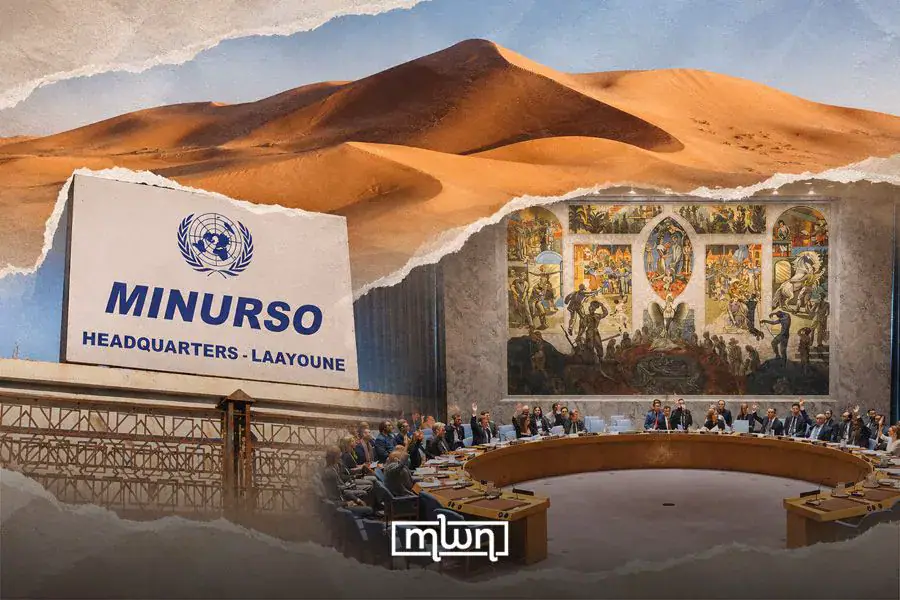
The United Nations Secretariat's recent farewell statement for the MINURSO mission has exposed the organization's 35-year bias and diplomatic failure in the Western Sahara conflict. The statement, which marked the effective demise of MINURSO, asserted that the mission was established "to protect and serve the people of Western Sahara, in particular to allow them to realize their inalienable right to self-determination." This assertion has been disputed by Morocco, which has long lost faith and trust in the UN Secretariat.
The UN Security Council failed to renew MINURSO's mandate, leading to the mission's cessation of operations. The mission was established in 1991 to monitor the ceasefire, verify military arrangements, and identify and register eligible voters. Its mandate also included organizing and supervising a referendum offering a choice between independence and integration with Morocco. However, the mission's purpose was gradually distorted to serve the separatist camp's reading of self-determination, rather than implementing the agreed arrangements.
The UN Secretariat's bias in favor of the separatist camp has been a major obstacle to a genuine political resolution of the Sahara dispute. Morocco has long advocated for its Autonomy Plan, which has gained significant momentum over the past two decades. However, the UN Secretariat has continued to abide by ideological distortions that make the organization an obstacle to a lasting settlement of the conflict.
The author, Samir Bennis, who worked at the United Nations for nine and a half years, has firsthand experience of the Secretariat's bias. He claims that many UN officials were more interested in securing a coveted posting and enjoying a cozy life in Morocco than in resolving the conflict. Bennis has consistently advocated for either a fundamental reconfiguration of MINURSO's mandate or its outright termination.
The conflict's survival had become a professional interest for some UN officials, who benefited from the continued existence of MINURSO. The mission's failure to end the conflict has been attributed to the Secretariat's selective blindness in New York. The UN bureaucrats have been accused of placing a sovereign state on an equal footing with a separatist movement that emerged over 16 years after Morocco began pressing Spain to end its occupation of the territory.
The Secretariat's failures have been evident in its reluctance to implement the political process and address inconvenient facts. The embezzlement of humanitarian aid intended for the Tindouf camps by Algerian officials and Polisario leaders has been documented by the European Anti-Fraud Office (OLAF). However, the Secretariat has systematically chosen to look the other way. Similarly, the Secretariat has remained impassive in the face of evidence that most inhabitants of the Tindouf camps are not natives of the disputed portion of the Sahara.
The demise of MINURSO marks a significant shift in the Western Sahara conflict. Morocco's Autonomy Plan is gaining momentum, and the UN Secretariat's bias has been exposed. The future of the conflict remains uncertain, but one thing is clear: the UN Secretariat's failure to address the conflict has had significant consequences for the people of Western Sahara.
Key points
- The UN Secretariat's farewell statement for MINURSO reveals 35 years of bias and diplomatic failure in the Western Sahara conflict.
- Morocco's Autonomy Plan has gained significant momentum over the past two decades, but the UN Secretariat's bias has hindered its implementation.
- The conflict's survival had become a professional interest for some UN officials, who benefited from the continued existence of MINURSO.