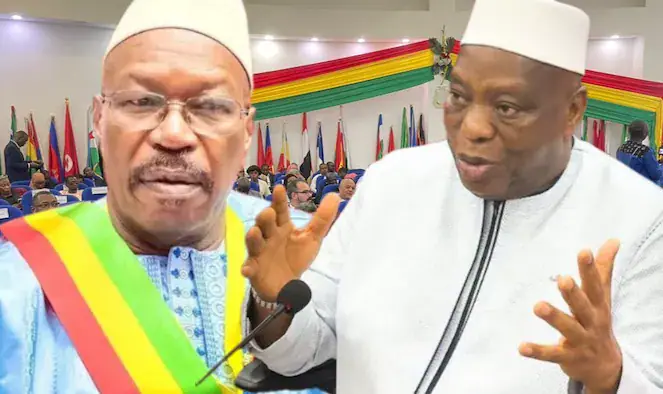
A heated debate has erupted in Guinea over the government's decision to export electricity to neighboring countries, including Gambia, Senegal, and Guinea-Bissau. The issue has sparked a war of words between the opposition and the government, with Deputy Ousmane Kaba criticizing the move as a paradox. He argued that Guinea's capital, Conakry, and other parts of the country still struggle with frequent power outages, making it illogical to export electricity.
Deputy Ousmane Kaba's comments were made during a plenary session on the examination and adoption of the 2026 revised budget. He expressed concerns that Guinea was selling electricity to other countries while its own population lacked access to reliable power. Kaba described the situation as a "great paradox," highlighting the challenges faced by the country's energy sector.
The government's response came swiftly, with Foreign Minister Morissanda Kouyaté delivering a strong rebuke. Speaking to accredited diplomats in Guinea on November 5, 2026, Kouyaté did not mention Kaba by name but criticized those who claimed Guinea was an electricity exporter while facing its own power shortages. Kouyaté accused these individuals of being uninformed and trying to appear intellectual.
In a more measured response, Economy Minister Mariam Ciré Sylla provided technical clarification on the electricity sales. She explained that the countries purchasing electricity from Guinea paid well, despite some arrears. Sylla noted that the partnership aimed to benefit not only Guinea but also the other countries involved, with the revenue generated used mainly for maintaining the country's power plants.
The debate highlights the challenges facing Guinea's energy sector. The country's power infrastructure has struggled to meet domestic demand, leading to frequent outages. The government's decision to export electricity has raised questions about priorities and the management of the sector. As the debate continues, stakeholders are calling for a more comprehensive approach to addressing Guinea's energy needs.
Minister Sylla's comments also shed light on the financial aspects of the electricity sales. She confirmed that Guinea also had arrears to pay, emphasizing that the partnership was designed to benefit all parties involved. The revenue generated from electricity sales was being used to maintain the country's power plants, ensuring a stable supply of electricity.
The clash between the government and opposition on this issue underscores the complexities of Guinea's energy sector. As the country navigates its energy challenges, it must balance domestic needs with regional cooperation and economic opportunities. The debate is likely to continue, with stakeholders pushing for more transparency and effective management of the sector.
Key points
- Deputy Ousmane Kaba criticized the government's decision to export electricity to neighboring countries while Guinea's own population faced power shortages.
- Foreign Minister Morissanda Kouyaté responded strongly to Kaba's comments, accusing critics of being uninformed.
- Economy Minister Mariam Ciré Sylla provided technical clarification on the electricity sales, highlighting the benefits and financial aspects of the partnership.