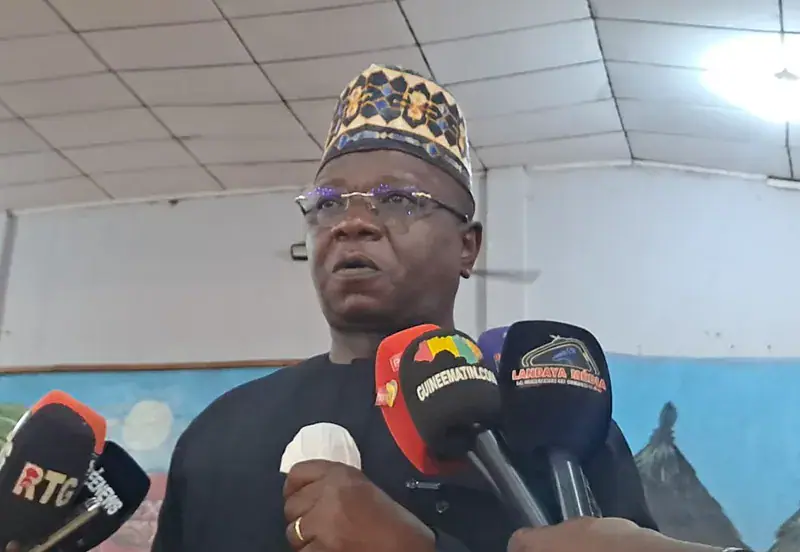
Guinea's government has reaffirmed its commitment to ending illegal gold mining in the country, particularly in the Siguiri region. On November 9, 2026, Minister of Mines and Geology Bouna Sylla led a delegation to Siguiri to discuss the implementation of the ban with local authorities. The move aims to address concerns over security, environmental degradation, and the impact on local communities. Sylla emphasized that the operation will be a long-term effort to eradicate illegal mining and promote sustainable economic activities.
The ban on illegal gold mining is part of a broader strategy to reform the mining sector in Guinea. Sylla stated that the activity has significant consequences for national security, environmental destruction, and the future of local communities. The government plans to provide support for young people and women who depend on artisanal mining, with a focus on vocational training and alternative livelihoods. This approach aims to reduce the reliance on informal mining and promote more sustainable economic activities.
The government has announced plans to reserve semi-industrial gold mining exclusively for Guinean operators. This move is intended to promote the emergence of national champions in the sector, capable of operating in compliance with environmental and social regulations. Sylla also highlighted the importance of industrial mining, citing the example of AngloGold Ashanti, which has been granted permits to operate in the region. The goal is to increase the economic benefits of mining for local communities and the state.
Another key aspect of the government's strategy is the development of a local refining capacity. The construction of the Nimba Gold Refinery is part of this effort, aiming to add value to Guinea's mineral resources and create jobs. Sylla emphasized that the refinery will enable the country to transform and sell its gold on international markets, generating more revenue and promoting technology transfer.
The government faces significant challenges in implementing the ban, particularly in terms of providing alternative livelihoods for those affected. Sylla called on local authorities to contribute to the identification of solutions tailored to the needs of their communities. The government has launched initiatives to support the transition, including programs in agriculture and livestock. These efforts aim to provide sustainable income-generating activities for the thousands of people who depend on artisanal mining.
The ban on illegal gold mining in Siguiri is part of a broader effort to promote sustainable development in Guinea. The government has emphasized its commitment to protecting the environment and promoting social responsibility in the mining sector. Sylla's statements highlight the complexities of addressing the issue, which requires a comprehensive approach that balances economic, social, and environmental concerns.
The success of the government's strategy will depend on its ability to engage local communities and provide effective support for those affected by the ban. The initiative has been endorsed by President Mamadi Doumbouya, who has emphasized the need for a long-term approach to addressing the issue. The government's efforts to promote sustainable mining practices and provide alternative livelihoods will be crucial in determining the outcome of this ambitious program.
Key points
- The government aims to end illegal gold mining in Siguiri and promote sustainable economic activities.
- Semi-industrial gold mining will be reserved exclusively for Guinean operators.
- The Nimba Gold Refinery will enable Guinea to transform and sell its gold on international markets.