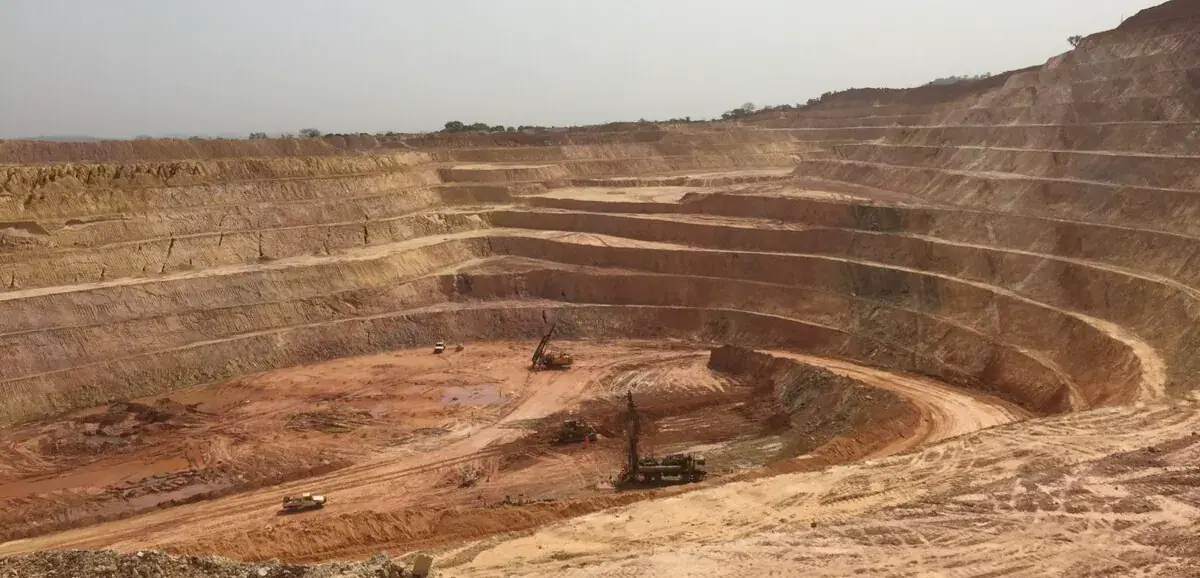
The Guinean government has taken a firm stance on artisanal gold mining in the Siguiri region, a major gold-producing area in the north-east of the country bordering Mali. As of early November, the government has prohibited artisanal gold mining, leading to the expulsion of thousands of foreign miners. The move has been accompanied by the deployment of the army in the region to maintain order.
The decision to ban artisanal gold mining follows a series of clashes between miners and security forces, resulting in at least 10 fatalities. The government has also taken action against 22 former territorial administrators in the region, who were sentenced to two years in prison for complicity in environmental degradation, destruction of property, and water pollution.
Oumar Totiya Barry, director of the Guinean Observatory for Mines and Metals, attributes the government's crackdown to growing concerns over environmental degradation. According to Barry, the region has faced large-scale environmental destruction due to artisanal gold mining activities, including the use of chemical products and heavy machinery.
The Siguiri region is home to significant hydrological resources, including the Niger and Tinkisso rivers. Barry suggests that the government is taking steps to prioritize environmental concerns and capitalize on the economic benefits of gold mining. The global rise in gold prices has also prompted the government to seek greater control over the industry and capture more of the added value.
Corruption has been a longstanding issue in the region, with many artisanal mining operations conducted illegally and without official authorization. Barry notes that a substantial portion of artisanal gold production evades government control and is smuggled across porous borders to neighboring countries.
The ban on artisanal gold mining is seen as a first step towards addressing the environmental crisis in the region. The government has introduced new regulations to govern the industry and plans to gradually liberalize the sector with stricter environmental and regulatory oversight.
The artisanal gold mining sector in Guinea employs hundreds of thousands of people, many of whom are vulnerable to economic and social hardship following the ban. Barry emphasizes the need for the government to provide alternative livelihoods for those affected by the ban, warning that the social and humanitarian consequences of the crackdown must be addressed.
Key points
- The Guinean government has prohibited artisanal gold mining in the Siguiri region, expelling thousands of foreign miners and deploying the army amid clashes that killed at least 10 people.
- The ban is part of a broader effort to address environmental degradation and corruption in the region, with 22 former territorial administrators sentenced to two years in prison for complicity in environmental degradation and other crimes.
- The government plans to gradually liberalize the artisanal gold mining sector with stricter environmental and regulatory oversight, while providing alternative livelihoods for those affected by the ban.