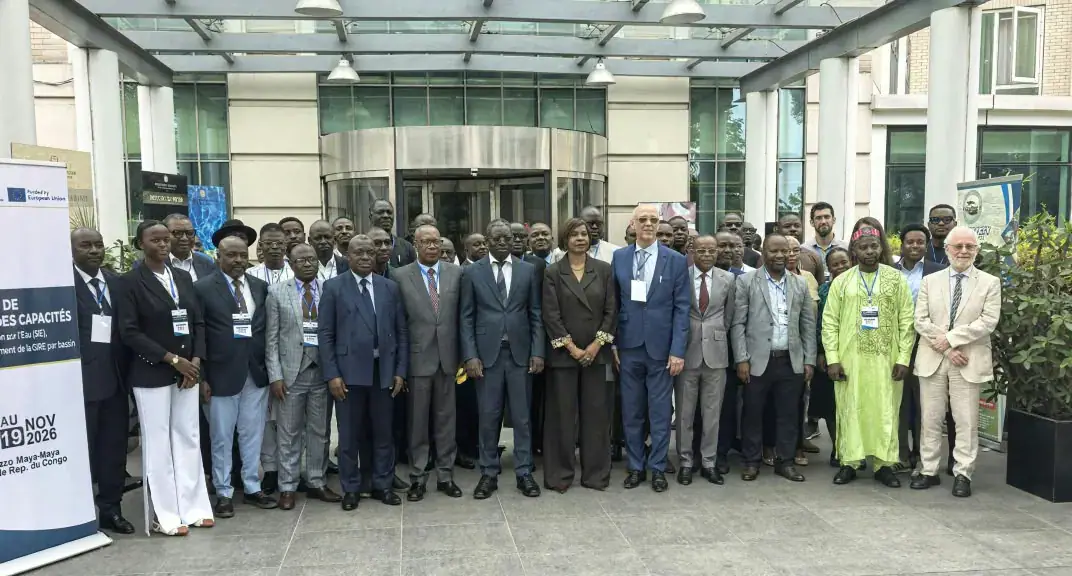
A regional workshop organized by the Peer-to-Peer project, also known as P2P, kicked off on November 17, 2026, at the Pefaco Hotel in Brazzaville, Congo. The project, funded by the European Union and implemented by the International Network of Basin Organizations (RIOB) and the African Network of Basin Organizations (RAOB), aims to improve water management and financing. The workshop brings together 60 officials from 20 African countries to share experiences and best practices in water management.
The workshop focuses on three main themes: water information systems, spatial hydrology, and financing of integrated water resources management (GIRE) by basin. Participants will engage in discussions, case studies, and group work to identify challenges and develop solutions for effective water management. The Peer-to-Peer project facilitates learning among basin organizations through 21 pairings, webinars, and a pedagogical pathway to enhance technical and institutional capacities.
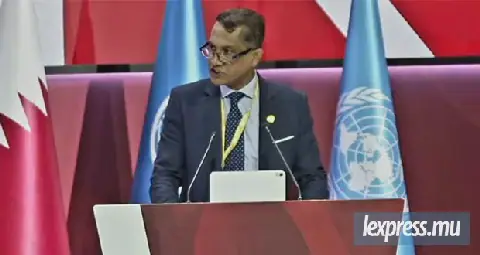
The workshop's opening session featured speeches by Christophe Brachet, RIOB representative and P2P project leader; Niokhor Ndour, Secretary General of the OMVS and technical secretary of RAOB; and Rachelle Ndolo, Chief of Staff to the Congolese Minister of Energy and Hydraulics. They emphasized the importance of collaboration, knowledge sharing, and sustainable financing for effective water management. Brachet highlighted that the project is about creating a community of destinies, while Ndour stressed that water is a common resource that requires collective management.
On the first day, participants focused on financing GIRE by basin, listening to four case studies from different basins: ABAKIR, ABV, LIMCOM, and OMVG. They analyzed the different approaches to water management and financing, and then worked in groups to develop a typology of situations, identifying roles, responsibilities, and funding mechanisms. The goal was to enable each basin organization to develop a clear approach to identifying its context, defining priorities, and mobilizing adapted financing.
The workshop's interactive sessions include group work, case studies, and a World Café on leveraging funding opportunities. Participants aim to develop concrete solutions to challenges faced in water management, such as securing funding, coordinating priorities, and attracting investments. The project's approach encourages peer-to-peer learning, enabling basin organizations to share experiences and best practices.
The Congolese government has expressed its commitment to improving water management, with the country's president, Denis Sassou-N'Guesso, emphasizing the importance of water resources in the country's development. The workshop provides a platform for experts from Congo and other African countries to share knowledge and expertise, with the goal of promoting sustainable water management practices.
The three-day workshop will conclude on November 19, 2026, with participants expected to develop concrete solutions and recommendations for improving water management and financing in their respective countries. The Peer-to-Peer project's efforts aim to contribute to the achievement of sustainable development goals, particularly those related to water resources management and poverty reduction.
Key points
- The workshop focuses on three main themes: water information systems, spatial hydrology, and financing of integrated water resources management (GIRE) by basin.