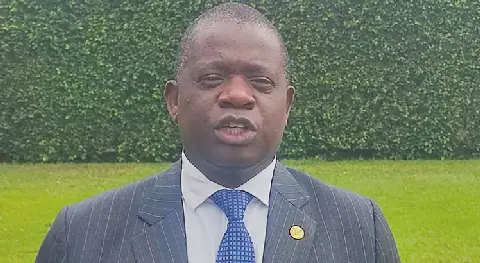
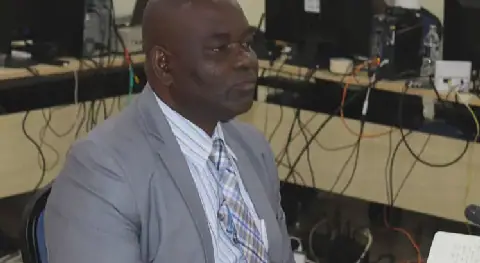
Guinea-Bissau's military junta announced on Thursday that security conditions are not met for the return of exiled former President Umaro Sissoco Embalo. Embalo had planned to return from Morocco on Sunday, despite the junta's warning. The junta, established under General Horta N'Tam, cited national security, public order, and social stability as reasons for the decision. Embalo had vowed to return and run for office in the upcoming presidential and legislative elections.
The junta's decision comes as the country prepares for elections on December 6, aimed at restoring civilian rule. General N'Tam, who serves as transitional president, is barred from running for president under the country's transitional charter. Embalo had told AFP that he would stand in the elections, but the junta's announcement has put his participation in doubt. The country's military high command stated that it had analyzed the national situation and current security environment before making the decision.
The junta's announcement contradicts General N'Tam's previous statement that every Guinean is free to return to their country if they have nothing to be ashamed of. Activists had posted on social media that they were planning for Embalo's return, but the junta's statement has likely dampened those plans. The country's restrictions on demonstrations, gatherings, and meetings for political purposes remain in place, as implemented after the junta came to power.
Guinea-Bissau has experienced five coups and numerous attempted putsches since independence from Portugal in 1974. The nation's crippling poverty and political chaos have made it a fertile ground for corruption and drug smuggling. Many observers suspected Embalo of orchestrating the November 26 coup to halt an election process he appeared to be losing. The coup occurred one day before provisional results were to be announced.
The military justified its move by stating it was ensuring national order following what it said was the discovery of a plot to destabilise the country involving drug lords. Embalo's planned return had sparked concerns among some Guineans, with reports of unrest within the country's presidential guard. Several social media accounts had reported discontent among members of the guard after a number of troops were reportedly transferred to another army unit.
The Portuguese-speaking country, wedged between Senegal and Guinea, has struggled with stability and security. The junta's decision to block Embalo's return has raised questions about the country's electoral timetable and the participation of other exiled politicians. It is unclear whether the junta's announcement will affect the electoral process, but the country remains under military rule.
The international community has been watching Guinea-Bissau's transition closely, with many urging a return to civilian rule. The country's instability has raised concerns about the impact on regional security and the potential for further instability in West Africa. The junta's decision has highlighted the ongoing challenges facing Guinea-Bissau as it navigates a complex and fragile transition.
Key points
- The junta cited national security, public order, and social stability as reasons for blocking Embalo's return.
- General N'Tam is barred from running for president in the upcoming elections under the country's transitional charter.
- Guinea-Bissau has experienced five coups and numerous attempted putsches since independence from Portugal in 1974.