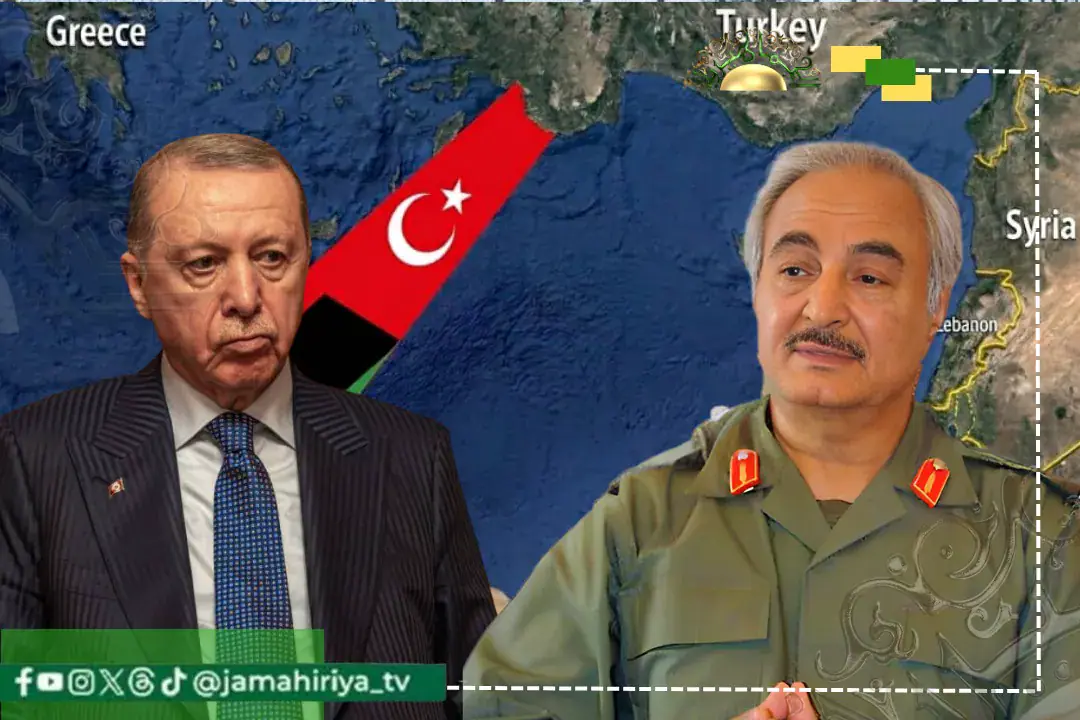
A recent report by the Greek newspaper Kathimerini has expressed alarm over the Libyan parliament's decision to ratify the exclusive economic zone agreement with Turkey, which was signed seven years ago. The report suggests that Turkey's efforts to influence Libyan politics have been paying off, with Ankara using both legitimate and illegitimate means to pressure Khalifa Haftar and gain support from his political successors.
According to the report, Turkey's approach in Libya has been to build relationships with key figures and invest in the country's future. This has included deploying regular troops and mercenaries, as well as engaging in diplomatic efforts to reunify the country. The report also notes that Turkey has collaborated with Italy on energy sector interests, ensuring that Rome's concerns are addressed.
The report highlights Turkey's ability to adapt and navigate the complex Libyan landscape, where the rule of law is weak and tribal allegiances play a significant role. By establishing a strong presence and building relationships with influential figures, Turkey has been able to exert significant influence over Libyan politics.
The Greek report also suggests that many Libyan lawmakers who voted in favor of the agreement were motivated by personal gain. In response to Greece's concerns, Turkey may choose to conduct seismic surveys and exploratory drilling in coordination with Libyan authorities, potentially in response to Greek moves or to assert its claims.
The agreement has significant implications for the region, with Greece seeking to establish its own maritime boundaries. In 2019, Greece responded to Turkey's agreement with Libya by signing a deal with Egypt, which partially addressed its concerns. However, Greece now seeks to expand this agreement to include the island of Rhodes.
To navigate these complex developments, Greece must approach maritime boundary delimitation with caution, avoiding knee-jerk reactions and prioritizing a strategic approach. This includes engaging the private sector in projects to establish a strong presence in Libya, as well as developing more effective intelligence capabilities to support its efforts.
The report concludes that Greece must be more cautious in its public statements about its influence in Libya and prioritize building strong relationships with key figures. By doing so, Greece can better navigate the complex Libyan landscape and protect its interests in the region.
Key points
- Turkey used coercion and bribery to secure the Libyan parliament's approval of the maritime border agreement.
- The agreement has significant implications for the region, with Greece seeking to establish its own maritime boundaries.
- Greece must approach maritime boundary delimitation with caution and prioritize a strategic approach to protect its interests.