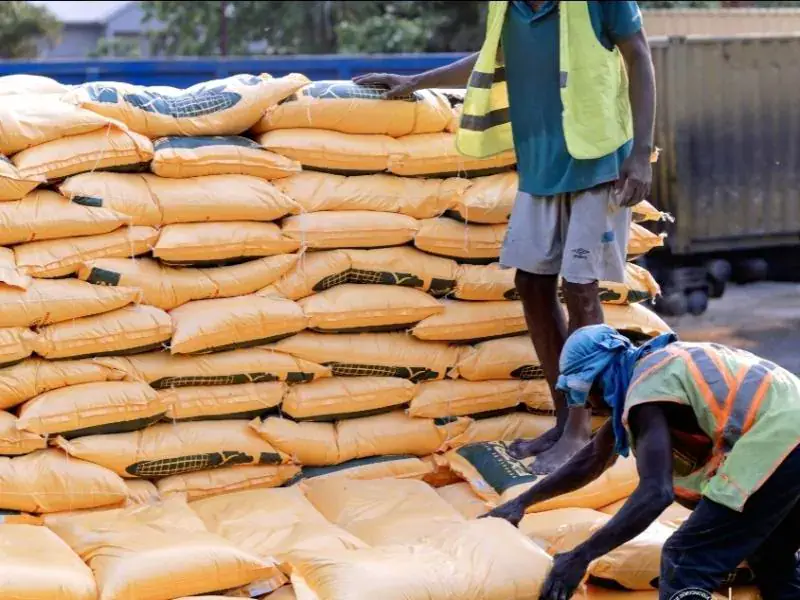
The government of the Democratic Republic of the Congo has taken action to mitigate the impact of rising maize flour prices on households in Mbuji-Mayi, the capital of Kasaï-Oriental province. The move follows alerts from the TALO price monitoring system, which reported a concerning increase in the cost of maize flour, a staple food for many Congolese families.
The price of maize flour, commonly known as "méka," had risen to 5,000 Congolese francs from 2,500-3,000 francs previously. In response, the government, under the leadership of President Félix-Antoine Tshisekedi Tshilombo, has decided to increase the supply of maize flour to the province to encourage price reductions and limit the effects of the price hike on households.
As part of this initiative, the Fonds de régulation économique (FOREC) signed an agreement with local maize processing industries on October 8, 2026. The goal is to supply approximately 2,500 tonnes of maize flour to the Kasaï-Oriental market monthly. This quantity aims to meet consumer needs during the lean season, characterized by supply difficulties and increased pressure on food prices.
A first shipment of over 7,500 bags of maize flour, transported by five trucks, arrived in Mbuji-Mayi on October 22. Sales of this shipment began on October 24 at a subsidized price of 20,000 Congolese francs per 25-kilogram bag. The government has designated specific sales points to make the subsidized maize flour available to consumers at a controlled price.
Initial observations indicate a calming of prices in the Mbuji-Mayi market following the arrival of the subsidized maize flour. However, sustaining this trend will depend on the regularity of deliveries, stock availability, and adherence to the fixed sales price. Provincial authorities are tasked with monitoring the operation, ensuring the application of the subsidized tariff, and preventing speculative practices.
The government aims to stabilize prices by increasing the supply of maize flour and making it accessible to consumers at an affordable price. The effectiveness of this measure will be evaluated based on its lasting impact on market prices and households' ability to procure this essential food item at a reasonable cost.
The operation's success also relies on the opening of new sales points across the city to bring subsidized maize flour closer to consumers. Additional shipments are planned to reinforce stocks and guarantee a continuous supply, ultimately contributing to the stabilization of prices in Kasaï-Oriental.
Key points
- The government has committed to supplying 2,500 tonnes of maize flour monthly to Kasaï-Oriental province.
- The subsidized maize flour is being sold at 20,000 Congolese francs per 25-kilogram bag.
- Provincial authorities are responsible for monitoring the operation and ensuring adherence to the fixed sales price.