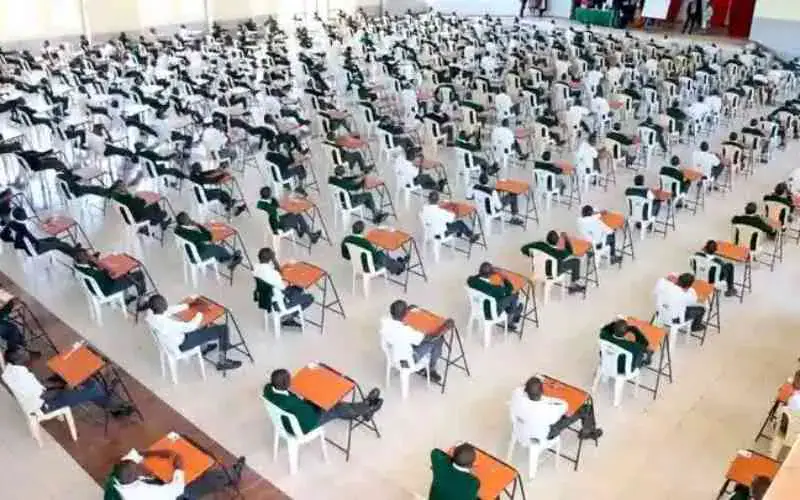
The Kenyan government has announced a crackdown on individuals seeking to compromise the national examination system, with over 1.1 million candidates sitting for the Kenya Certificate of Secondary Education (KCSE) exams. Interior Principal Secretary Raymond Omolo warned that those involved in examination leakage, impersonation, collusion, or sale of fake examination papers will face the full force of the law. The government has invested heavily in the education sector and aims to prevent fraudulent schemes designed to make quick money at the expense of candidates.
According to Omolo, individuals exploiting anxious parents and teachers with promises of obtaining examination papers are being monitored by law enforcement agencies. He cautioned parents and teachers against falling into the trap, warning that those who engage in such dealings risk destroying their children's academic future as well as their own professional careers. The government has identified social media and other communication platforms as channels used by scammers to convince parents and teachers that they can access or leak examination papers in exchange for money.
Education Cabinet Secretary Julius Ogamba has also warned that centre managers, supervisors, invigilators, and other officials entrusted with administering the examinations must maintain the highest standards of integrity. He emphasized that the government will not tolerate any examination malpractice in any form or manner and that those found engaging in irregularities will face criminal or administrative action. Ogamba's warning comes as the government seeks to reinforce the crackdown on examination fraudsters.
To ensure the secure transportation of examination materials, the government has deployed police officers to guard examination containers and escort the transportation of papers to designated examination centres. In areas facing insecurity and difficult terrain, additional security personnel, specialized vehicles, and helicopters have been deployed to ensure examination materials reach their destinations safely and on time. This move aims to prevent examination materials from being compromised or stolen.
The Kenya National Examinations Council (KNEC) has also warned candidates against engaging in examination malpractice, with Chief Executive Officer Dr. David Njengere stating that candidates found involved in irregularities risk having their examination results cancelled. Teachers and other examination officials involved in malpractice will face disciplinary and legal consequences, including action through the Teachers Service Commission (TSC). The KNEC is taking steps to prevent examination irregularities and ensure the credibility of the national examinations.
The government's efforts to prevent examination fraud are part of a broader strategy to improve learning outcomes and invest in the education sector. With the credibility of the national examinations at stake, authorities are working to prevent unscrupulous individuals from undermining the education system through fraudulent schemes. The government has recruited additional teachers and is working to improve the quality of education in Kenya.
As the KCSE exams continue, the government has established contingency measures to address disruptions arising from heavy rainfall, flooding, and insecurity. These measures include relocating candidates from threatened areas to safer examination centres. The government's goal is to ensure that all candidates can sit for their exams safely and securely, and that the integrity of the examination process is maintained.
Key points
- The Kenyan government has deployed additional security personnel to prevent examination fraud during the KCSE exams.
- Candidates found engaging in examination malpractice risk having their results cancelled.
- The government has warned teachers and examination officials against engaging in irregularities, citing disciplinary and legal consequences.