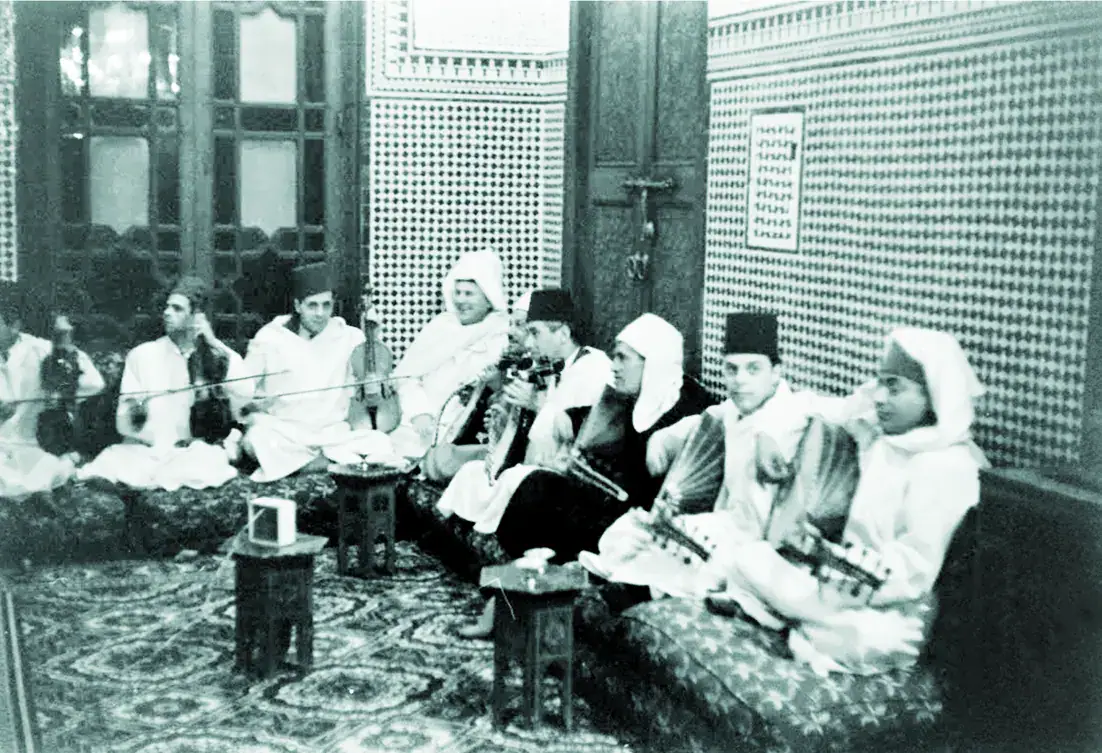
In the spring of 1956, a significant cultural event took place at the royal palace in Morocco. The Sultan, Mohammed bin Yusuf, had just returned from exile, and to celebrate his homecoming, various festivities were organized. Among these celebrations, a traditional Moroccan music ensemble performed for the Sultan. This ensemble, consisting entirely of men dressed in traditional Moroccan attire, played local instruments, including Arabic musical instruments.
The photograph of this performance was taken by Thomas McAvoy, a photographer who had a keen interest in documenting Moroccan life, especially within the royal palace. McAvoy had previously taken pictures of musical groups in the Pasha of Marrakech's palace in 1953, which were later compiled into an album titled "French Morocco." After Morocco gained independence, McAvoy's interest in Moroccan culture, particularly its music, intensified.
The ensemble that performed for the Sultan was part of a larger tradition of Moroccan music that was gaining recognition. During that period, the royal palace primarily featured groups that played Andalusian music and practiced the art of "Malhun," a traditional form of Moroccan poetry and song. These groups were often invited to perform specific pieces favored by the Sultan or his courtiers.
The photograph taken by McAvoy is significant because it documents a moment before the modernization of musical instruments and the unification of attire for royal ensemble members. It showcases a time when traditional Moroccan music and attire were central to celebrations within the palace. This image, part of a special album covering the independence celebrations, highlights the importance of local music in official receptions.
McAvoy's photographs, preserved in his archive, are valuable for their documentation of post-independence Morocco. They provide insight into the early days of the country's independence celebrations and the role of traditional music within the royal court. The images also reflect the fascination of foreign visitors, particularly Europeans, with Moroccan music and culture.
The ensembles that performed in the palace, like the one in the photograph, were precursors to the official royal ensembles that gained fame later. These early groups played a crucial role in preserving and promoting Moroccan musical heritage. Their performances at official and private events helped establish a connection between the Sultan, his courtiers, and the broader Moroccan culture.
The story of this music ensemble and its performance for the Sultan after his exile is a testament to the enduring power of music in Moroccan culture. It highlights the significance of traditional music in official celebrations and the interest of international observers in Morocco's rich cultural heritage.
Key points
- The photograph documents a traditional Moroccan music ensemble performing at the royal palace in 1956.
- The ensemble consisted of men dressed in traditional Moroccan attire, playing local instruments.
- The performance was part of the celebrations following Sultan Mohammed bin Yusuf's return from exile.