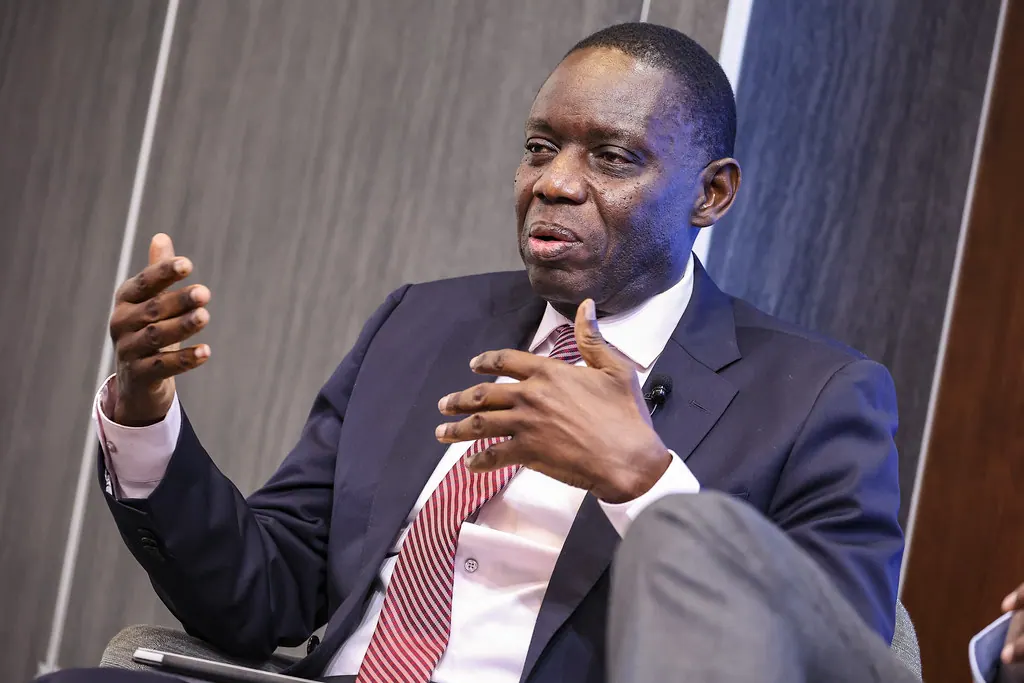
Bank of Uganda Governor Michael Atingi-Ego has cautioned that the government's planned borrowing for the 2026/2027 financial year could have significant implications for the country's interest rates and private sector credit access. He presented the central bank's assessment of Uganda's Charter of Fiscal Responsibility before Parliament's Budget Committee on September 21, 2026. The Governor emphasized that the Charter's projections rely on the government maintaining fiscal discipline and managing petroleum revenues prudently.
According to Atingi-Ego, the government plans to raise approximately Shs12.7 trillion in net domestic financing for the 2026/2027 financial year, which is equivalent to 4.6 percent of non-oil GDP. This represents a decrease from the Shs15.1 trillion borrowed domestically in the previous financial year. The Governor expressed optimism that the domestic financial market has sufficient capacity to absorb the planned borrowing without disrupting private-sector financing, citing improved liquidity in the banking system and lower yields on government securities.
Atingi-Ego warned, however, that borrowing beyond the projected level could lead to upward pressure on interest rates and crowd out private-sector borrowers. He noted that private-sector credit grew by 16.1 percent year-on-year to June 2026, with an average monthly growth of about 11.5 percent during the financial year. The Governor projected an average private-sector credit growth of about 13 percent in 2026/2027.
The Governor also stated that interest rates could gradually decline if the government maintains fiscal consolidation. Conversely, significant deviations in government spending or taxation could put pressure on inflation and financial markets. Atingi-Ego provided clarification on petroleum revenues, stating that the Petroleum Revenue Investment Reserve remains a government asset, although it is operationally managed by the Bank of Uganda.
Budget Committee Chair Gabriel Okumu urged Parliament's Finance, Budget and National Economy committees to closely scrutinize government borrowing and advise the government accordingly. Members of Parliament raised concerns about the assumptions underlying the fiscal framework, including potential delays in oil revenues and the management of domestic arrears.
The Bank of Uganda Governor's warning comes as the government prepares to implement its budget for the 2026/2027 financial year. The government's borrowing plans have significant implications for the country's economic growth and development. Atingi-Ego's comments highlight the need for careful management of the country's finances to ensure that borrowing does not negatively impact the private sector.
The Bank of Uganda will continue to monitor the government's borrowing and its impact on the economy. The central bank's assessment of Uganda's Charter of Fiscal Responsibility will inform its monetary policy decisions in the coming months. The government's commitment to fiscal discipline and prudent management of petroleum revenues will be crucial in maintaining economic stability and promoting growth.
Key points
- The government's planned borrowing for the 2026/2027 financial year could lead to increased interest rates and reduced private sector credit access if not managed carefully.
- The Bank of Uganda Governor emphasized the need for fiscal discipline and prudent management of petroleum revenues to maintain economic stability.
- The government's borrowing plans have significant implications for the country's economic growth and development.