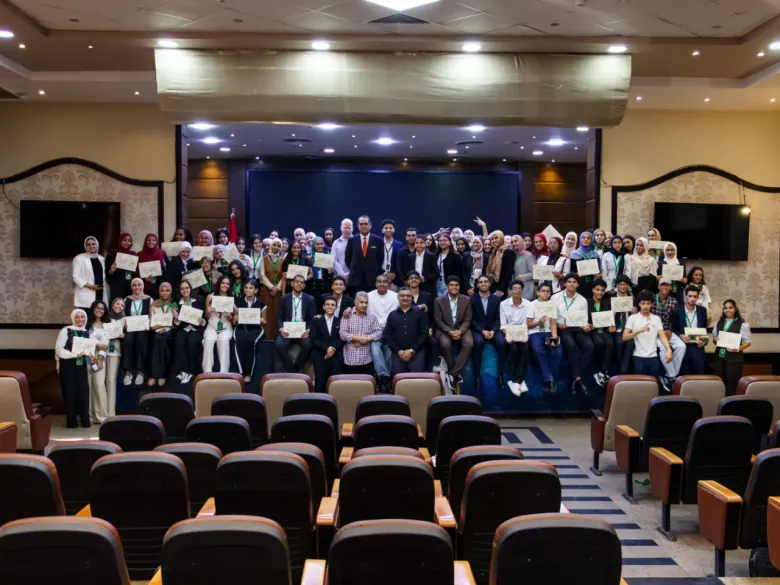
The Global Solidarity Network recently concluded its training program for the African Union Simulation Model, designed for students of the Schools of Excellence in Science and Technology. The program, which took place throughout August 2026, brought together 120 male and female students from governorates across Egypt. The training aimed to introduce students to how African Union institutions work, how decisions are made, and how African countries cooperate.
The program offered specialized training sessions, pairing theoretical knowledge with practical application through the simulation model. It was organized around three main tracks: Peace and Security, Intra-African Trade, and African Civil Society. Experts and specialists in African affairs took part, focusing on the African Union’s institutional mechanisms and the role of different stakeholders in supporting development and continental integration.
Ambassador Amr El Gawaly, Director of the Directorate of African Diaspora Organizations and Civil Society at the African Union Commission, opened the program with a lecture on the economic role of the African diaspora in supporting development across the continent. The Peace and Security Track covered conflict management, peacebuilding, and strengthening governance across Africa. Sessions were led by Hassnaa Tammam, African Union Youth Ambassador for Peace for the North Africa Region, and Dr. Heba Assem, a governance and peacebuilding specialist.
The Economic Track examined opportunities for economic integration among African countries and the challenges facing African economies. Dr. Mohamed Hassan Khodairy discussed the African Continental Free Trade Area and its role in enhancing trade and economic integration. Dr. Samar El Bagoury and Dr. Raed Salama also presented sessions on the resilience of African economies and the impact of geopolitical developments on the global and African economies.
The African Civil Society Track introduced students to the role of the Economic, Social and Cultural Council of the African Union in enhancing the participation of civil society organizations and youth in joint African action. Ambassador Mohamed Haroun delivered a session on conscious African leadership, while Farouk Deif and Dr. Abdel Latif Gouda reviewed ECOSOCC’s role in shaping Africa’s future and the accreditation of civil society organizations.
Hassan Ghazaly, founder of the Global Solidarity Network, stated that the program reflects the network’s vision of enhancing Egyptian youth awareness of African issues. He explained that the model is an integrated educational platform that gives young people the opportunity to understand decision-making mechanisms within the African Union through a simulation combining academic knowledge and practical application.
The program equipped participants with the knowledge and skills to become active partners in issues of peace, development, and African integration. Ghazaly congratulated the model’s team of researchers and students for overseeing the implementation of the program’s activities and tracks, helping achieve the program’s educational and training objectives and maximizing the participants’ benefit from the experience.
Key points
- The program focused on African Union institutions, decision-making, and continental integration.
- The training was organized around three main tracks: Peace and Security, Intra-African Trade, and African Civil Society.
- The program aimed to equip participants with the knowledge and skills to become active partners in issues of peace, development, and African integration.