The Asian development landscape is undergoing a significant shift, with the region's growth rate expected to decline to 5.0% in 2026, according to the Asian Development Bank (ADB). This marks a decrease from 5.5% in 2025, and a slight increase to 5.1% is projected for 2027. Despite this slowdown, Asia remains a key driver of global growth, with the South Asian region expected to grow at 6.4% in 2026, driven by India's projected growth rate of 7.0%.
The ADB attributes Asia's growth to several factors, including private investment, public sector stimulus, and strong technological exports fueled by the global artificial intelligence investment cycle. However, risks such as high energy prices, geopolitical tensions, and trade uncertainties are accumulating, which may impact the region's growth trajectory. The ADB also notes that internal disparities within Asia are significant, with Southeast Asia expected to grow at 4.7% in 2026.
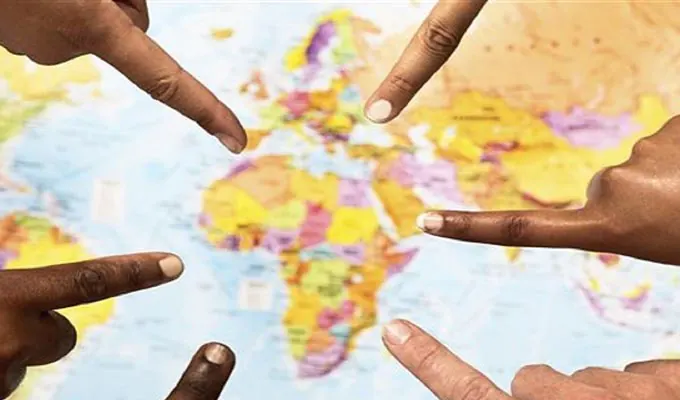
On the other side of the Indian Ocean, Africa's economic landscape is also evolving. The African Development Bank estimates that Africa's average growth rate was 4.4% in 2025 and is projected to be 4.2% in 2026, before rising to 4.4% in 2027. While the continent is not expected to experience a significant acceleration in growth, its economic geography is becoming increasingly interesting. East Africa is expected to remain the most dynamic region, with a growth rate of 5.9% in 2026.
West Africa is projected to grow at around 4.7%, while Southern Africa is expected to lag behind. The African Development Bank notes that the continent faces significant challenges, including a financing gap of over $1.3 trillion per year to achieve the Sustainable Development Goals. This highlights the need for Africa to transform its growth into investments, infrastructure, productivity, and jobs.
A comparison of Asia and Africa's growth trajectories reveals that the two regions are not necessarily competing for global attention, but rather, they are diversifying their growth drivers. Asia is expected to maintain its lead in growth rate, while Africa has several high-growth poles, but faces significant constraints. The African Development Bank emphasizes that the continent's growth story will depend on its ability to transform its economy.
The global economy is witnessing a shift in growth dynamics, with both Asia and Africa facing challenges and opportunities. As the Asian growth engine slows down, Africa's persistence in growth is noteworthy. However, the continent's growth story is not without its challenges, and the need for investments, infrastructure, and economic transformation is critical.
Key statistics highlight the growth prospects of both regions, with Asia's developing economies expected to grow at 5.0% in 2026, and Africa's economy projected to grow at 4.2% this year. India's growth rate is expected to be 7.0% in 2026, while East Africa is projected to grow at 5.9%. The African Development Bank estimates that the continent faces a financing gap of over $1.3 trillion per year.
Key points
- Asia's growth rate is expected to slow down to 5.0% in 2026.
- Africa's economy is projected to grow at 4.2% in 2026.
- The African continent faces a significant financing gap of over $1.3 trillion per year.