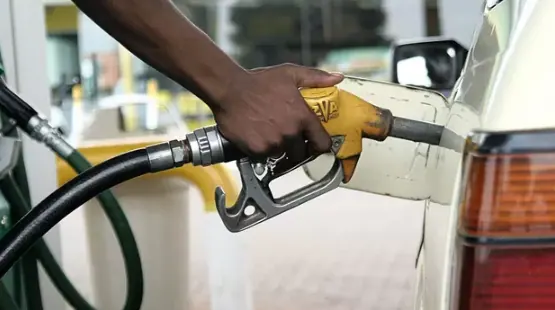
The Ghanaian government has announced the suspension of the GH¢1-per-litre Energy Sector Shortfall and Debt Repayment Levy, also known as the D-Levy, on diesel for the months of October and November. This move aims to mitigate the impact of projected fuel price increases during the first pricing window for October. According to the Chamber of Petroleum Consumers (COPEC), petrol prices are expected to rise by 5.21%, while diesel prices could increase by 22.91% from October 1, 2026.
Under the new arrangement, the existing GH¢2-per-litre relief for diesel consumers will remain in place, with GH¢1 coming from reductions in statutory margins and the remaining GH¢1 from the suspension of the D-Levy. As a result, the price of petrol is expected to rise from GH¢16.90 to GH¢17.78 per litre, while diesel is expected to increase from GH¢18.24 to GH¢22.42 per litre. The government had implemented the GH¢1 fuel levy on petroleum products last year, under the Energy Sector Levies (Amendment) Act, 2025 (Act 1141), to address energy-sector shortfalls, reduce legacy debts, and stabilize power supply.
The Energy Sector Levies (Amendment) Act, 2025, was assented to by President John Dramani Mahama on June 5, following parliamentary approval. The levy was intended to allow the government to keep the lights on and address energy-sector challenges. However, the opposition has questioned the use of the revenue generated from the levy, citing the persistence of power outages, or "dumsor," across the country.
President Mahama had previously stated that the revenue from the levy would be used to purchase fuel to ensure a stable power supply. He also expected the levy to help reduce the use of liquid fuel in the energy mix, as more gas is expected from the ENI, Sankofa, Jubilee, and TEN fields, as well as the West African Gas Pipeline. The resources generated by the levy were to be channeled to pay accumulated legacy debts in the power sector.
The government has assured Ghanaians that funds generated from the newly approved GH¢1 fuel levy will undergo regular audits to ensure accountability and transparency. The funds will not be subject to the hazards of the Consolidated Fund, and audit reports will be made public to ensure transparent use. However, the opposition has called for clarity on the use of the revenue, citing concerns about the persistence of power outages.
The Chamber of Petroleum Consumers (COPEC) had projected significant increases in fuel prices during the first pricing window for October. The expected price hikes have prompted the government to suspend the D-Levy on diesel for October and November, in an effort to mitigate the impact on consumers. The suspension of the D-Levy is expected to provide temporary relief to diesel consumers.
The fuel price adjustments are expected to take effect from October 1, 2026. The government's decision to suspend the D-Levy on diesel for October and November is aimed at cushioning the impact of the projected price increases on consumers. The move is also expected to help stabilize the fuel market and provide relief to consumers.
Key points
- The Ghanaian government suspends the GH¢1-per-litre D-Levy on diesel for October and November amid projected fuel price hikes.
- The existing GH¢2-per-litre relief for diesel consumers will remain in place, with GH¢1 coming from reductions in statutory margins and the remaining GH¢1 from the suspension of the D-Levy.
- The government had implemented the GH¢1 fuel levy on petroleum products last year to address energy-sector shortfalls, reduce legacy debts, and stabilize power supply.